
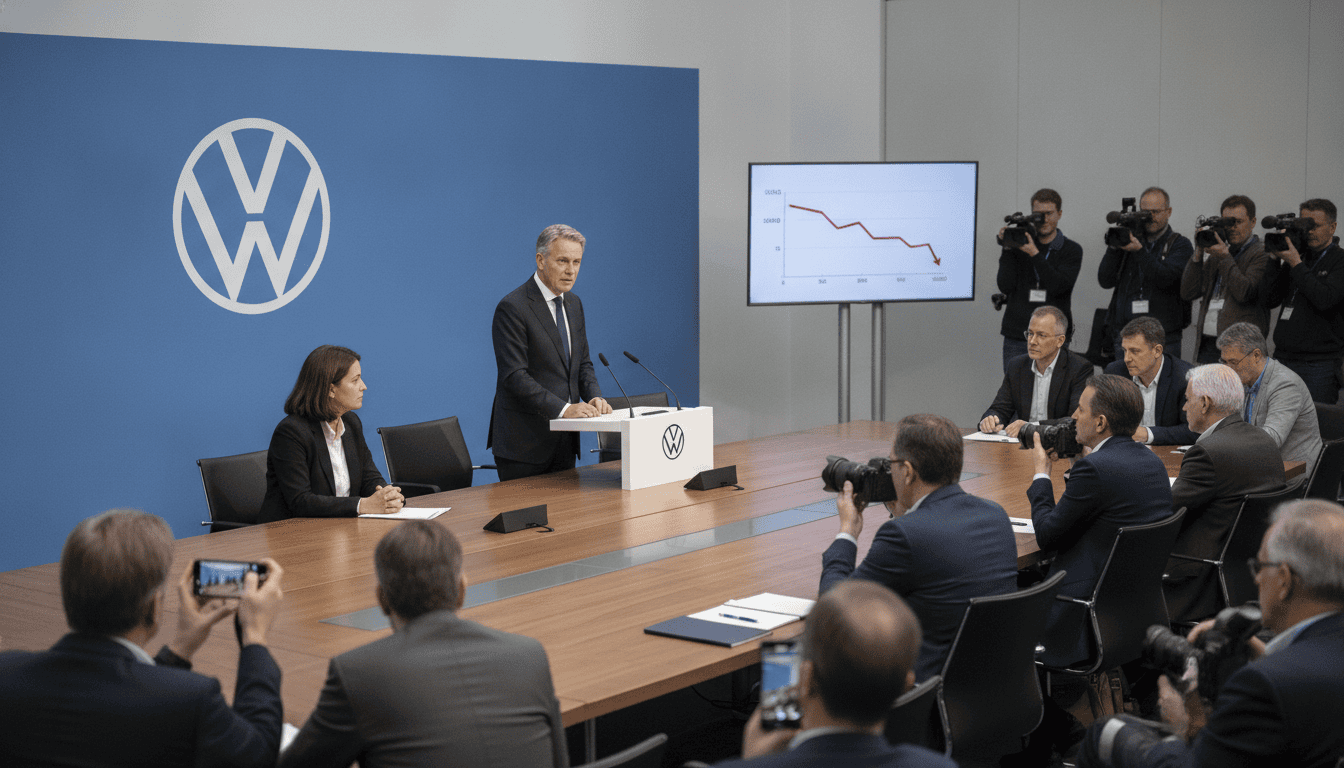
Volkswagen job cuts could reach 50,000 as CEO signals broad cost reset
Volkswagen job cuts: CEO Oliver Blume told staff that up to 50,000 additional roles could be eliminated by 2030 as VW pursues a reduction in overheads and European capacity.
Volkswagen CEO Oliver Blume’s internal interview has put a new figure on the company’s workforce review, saying the group could eliminate roughly 50,000 additional positions worldwide by 2030. The comment, made in an intranet interview, follows a corporate mandate to bring Volkswagen’s overheads down toward levels seen at peers. The announcement immediately intensified concern among workers, unions and regional governments about plant futures and the scale of upcoming restructuring.
Blume frames the cuts as a cost-target response
Blume linked the potential Volkswagen job cuts to a target to reduce the company’s overheads, which he said are materially higher than comparable manufacturers. He described a “theoretical derivation” that, without changes to direct labor costs, would translate the overhead gap into a headcount figure of about 50,000 globally. Company executives are now assessing which brands, entities and regions will face concrete adjustments and which cost measures can be implemented instead.
Blume’s remarks stressed that the number is an estimate tied to a financial objective rather than a final decision on specific sites or roles. Volkswagen said it was conducting a detailed review to determine what is “necessary and possible” across its operations, indicating further analysis and local consultations are planned before firm measures are announced.
Blume warns of 500,000-unit overcapacity in Europe
In the same interview the CEO warned that Europe faces a structural overcapacity of roughly 500,000 vehicles that must be addressed. He said the factory network currently lacks competitive utilization in certain locations, a shortfall that has implications for production plans and long-term plant viability. The overcapacity calculation underpins the urgency behind the cost reset and the workforce review.
Blume highlighted the need to rebalance production footprint and explore alternatives to simply shuttering factories. He framed the problem as an industrial challenge requiring options such as repurposing sites, pursuing partnerships, or reassigning production where feasible, rather than automatic closures.
Four German plants singled out as having uncertain futures
Volkswagen identified four German sites—Zwickau, Emden, Hannover and Audi’s Neckarsulm plant—as locations where a competitive level of production cannot currently be guaranteed. Company comments indicate that vehicle production at these sites could wind down between 2031 and 2034 if no viable alternatives are found. That timeframe leaves several years for negotiations, redeployment plans and potential commercial solutions.
Local managers and works councils will be central to any decisions on how to manage capacity at those plants, the company said. Blume explicitly described a preference for “intelligent solutions” that preserve employment where possible, signaling an intent to seek alternatives to outright closures.
Supervisory board vote falters, summer talks expected
Blume presented his future-oriented plan to Volkswagen’s supervisory board but did not secure approval after pushback from employee representatives and the state of Lower Saxony. The failed vote has set the stage for negotiations over the summer between management, unions and regional authorities. Officials have said they expect intensive talks aimed at narrowing differences and finding compromise solutions.
The company has framed the process as consultative, but critics argue that internal deliberations should have included more stakeholder engagement before publicizing potential job reductions. Both sides now face a compressed timetable to reach a framework that can be approved by corporate governance bodies.
Unions and politicians voice strong opposition
Reports that the group could cut far larger numbers in some scenarios have already prompted sharp criticism from trade unions and political leaders. Union representatives described the prospect of mass layoffs as unacceptable and vowed to defend jobs and plant operations vigorously. Regional political leaders, particularly in Lower Saxony where the state holds a stake in Volkswagen, expressed concern about the social and economic fallout of large-scale job losses.
Some outlets had previously circulated higher estimates of job losses at Volkswagen in coming years, prompting an immediate backlash from labor organizations and calls for clearer commitments from management on safeguarding employment where possible.
Options for workers and potential mitigation measures
Volkswagen has signaled that the company will evaluate a range of measures to limit the social impact of workforce reductions, including redeployment within the group, retraining programs and alternative site uses. Management has also mentioned seeking partners for certain facilities and considering different business models for underutilized sites. The company’s approach appears aimed at combining cost reductions with social safeguards, but concrete package details have yet to be negotiated or confirmed.
For employees the coming months will be a period of uncertainty, with proposals subject to works council consent and regional political oversight. Any final measures are likely to be phased over several years to align with production timelines and contractual obligations.
The company’s announcement has refocused attention on how Europe’s auto sector will reconcile capacity with accelerating shifts in technology and market demand, and it has underlined the political sensitivity of industrial restructuring in Germany. The next steps will hinge on negotiations between Volkswagen leadership, employee representatives and regional governments as they seek a compromise that balances competitiveness with social responsibility.
