
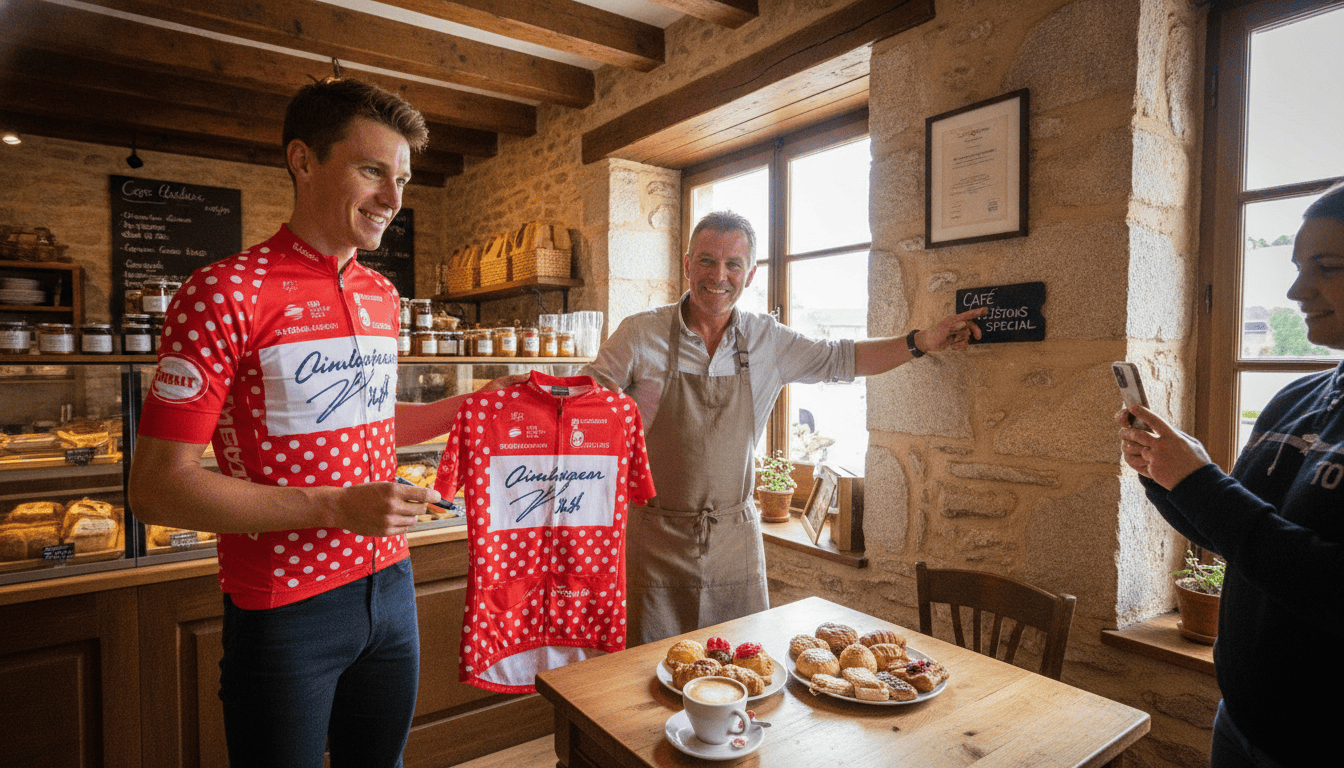
Jonas Vingegaard Offers Signed Polka-Dot Jersey for Égletons Coffee and Cake Tip
Jonas Vingegaard asks Égletons locals for “very good coffee and cake” on a rest day, offering his signed polka-dot jersey as reward for the best recommendation.
Jonas Vingegaard turned to his online channel to request a local tip for coffee and cake while the team paused in the small central French town of Égletons, and he sweetened the appeal by promising his signed polka-dot jersey as a prize. The rider said he and his squad were seeking “a very good coffee and a very good cake” during a scheduled team rest day, and he invited knowledgeable residents to submit their recommendations in exchange for the collectible garment. The brief request quickly resonated beyond the town’s roughly 4,500 inhabitants, drawing attention from fans and local businesses alike.
Vingegaard posts request from Égletons
Jonas Vingegaard made the appeal publicly via his social media presence, asking for guidance on where his team might find notable coffee and cake while stopped in Égletons. He framed the search as a simple local favor on a rest day, but attached a tangible incentive—a signed jersey used in the race—to encourage a prompt and quality response. The post emphasized appreciation for authentic recommendations and offered the prize to whoever provided the best tip.
Polka-dot jersey offered as incentive
The garment Vingegaard offered is the polka-dot jersey traditionally awarded to the leader of the mountains classification, and he presented it as a signed memento rather than the race lead. He noted that he was wearing the jersey at this point in the race because the actual mountains classification leader was also occupying the overall leader’s yellow jersey, creating a temporary overlap in kit allocation. By offering the signed polka-dot shirt as a reward, Vingegaard combined a fan-facing gesture with a collectible that carries visible race symbolism.
Team rest day and route context in central France
Égletons, positioned in the Corrèze department of central France, served as the team’s waypoint on a planned recovery day, and the stop allowed riders and staff a break from consecutive racing stages. Team rest days are typically used for light riding, maintenance, and local reconnaissance, and Vingegaard’s appeal reflected a commonplace rider interest in sampling regional hospitality. The request demonstrated how even brief pauses during major stage races can generate attention and spotlight small towns along the route.
Local cafés and bakeries respond to the call
Local cafés and patisseries in and around Égletons reacted to the appeal with interest, viewing the request as an opportunity to showcase regional specialties and welcome visiting riders. Small businesses often see measurable upticks in attention when professional teams stop nearby, and a signed jersey offered by a prominent rider can amplify that exposure significantly. The interaction created a low-stakes contest for proprietors and residents to recommend their best establishments and potentially gain recognition from an international cycling audience.
Cultural backdrop: coffee, cake and regional identity
Corrèze’s culinary profile leans on traditional French baking and warm café culture, and a publicized search for “very good coffee and a very good cake” aligns naturally with local pride in those staples. For riders and teams on the road, such simple procurement becomes part of a broader cultural exchange where regional tastes are sampled and shared on social platforms. The exchange therefore functions both as a momentary personal preference and as a soft form of regional marketing.
Fan engagement and promotional value
Vingegaard’s request highlights a trend in which athletes directly engage communities to generate authentic, shareable moments that benefit fans, hosts and sponsors simultaneously. By inviting public input and making a collectible prize available, the rider bridged professional sport and grassroots participation, turning a routine rest day into a promotional opportunity for local businesses. The approach benefits the rider’s visibility and brings attention to towns like Égletons that might otherwise receive only passing mention in race route maps.
The simple appeal for a recommended café and cake in Égletons, coupled with the offer of a signed polka-dot jersey, underscored how modern cycling intersects with social media, local economies and fan culture, giving a brief rest day an outsized splash of publicity and community interaction.
