
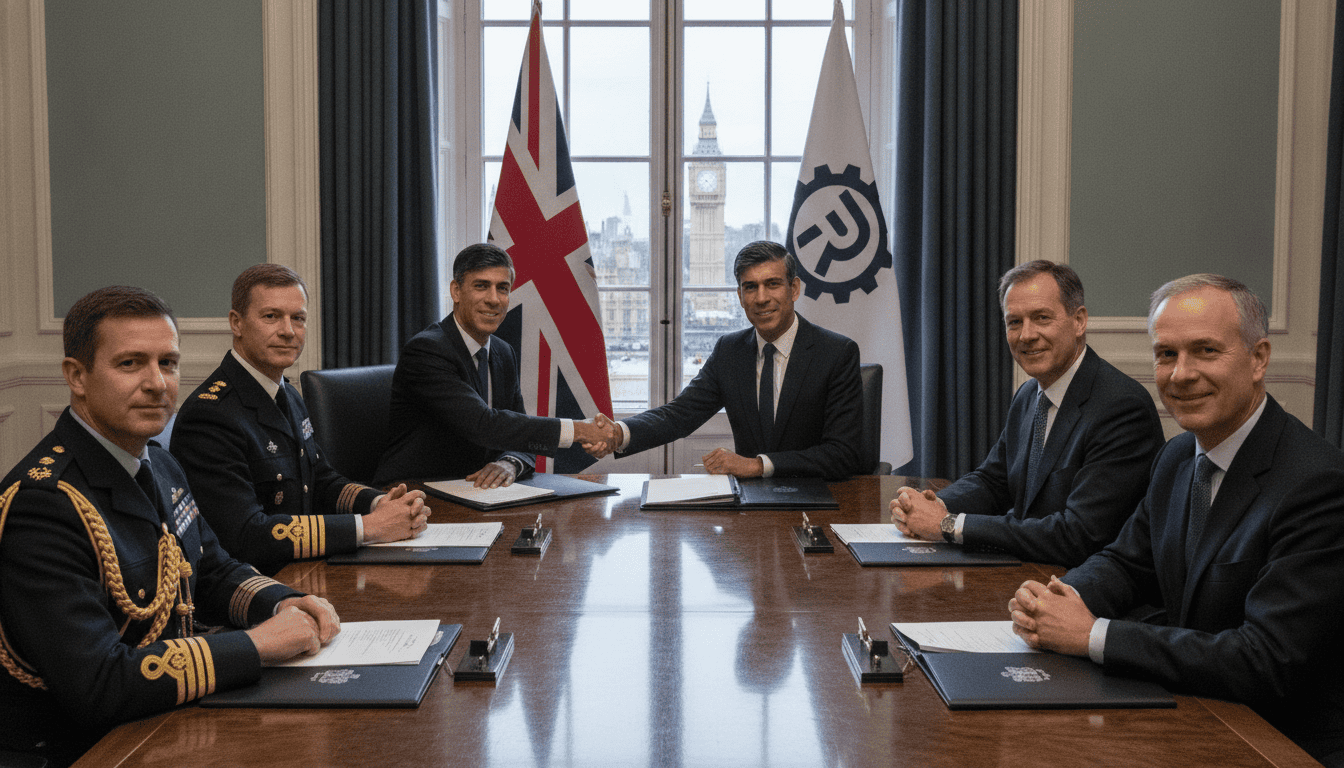
Rheinmetall wins €1bn role in UK combat training digitalisation with Raytheon
Rheinmetall joins Raytheon on a 15-year, €1bn programme to digitalise British combat training, expanding its UK footprint and workforce while defence tech firms rise in value.
Rheinmetall said on Monday it has joined US-based Raytheon, part of RTX, on a programme to digitalise British combat training that runs for 15 years. The Rheinmetall digitalisation role in the UK training effort is worth about €1 billion to the German group and will support an expansion of its facilities and staff in Britain. Company statements cited the long-term contract as a strategic win as demand for advanced training systems grows across allied forces.
Contract partners and structure
Rheinmetall is participating in the programme in partnership with Raytheon, the defence unit of the US RTX group, according to the company. The arrangement covers delivery of simulation, sensor and training systems that integrate with existing British Army training architectures. Rheinmetall’s involvement includes software-enabled systems alongside hardware components produced at the company’s established defence divisions.
Scope and duration of the work
The project has a 15-year term and is intended to modernise how British troops conduct live and simulated exercises. Officials described the programme as encompassing training design, digital simulation, and sustainment services, enabling continuous upgrades over the contract lifetime. Rheinmetall expects recurring workstreams for system updates, maintenance and personnel training during the full term.
Economic impact and UK expansion
Rheinmetall says the €1 billion share of the contract will allow it to expand sites and recruit staff in the United Kingdom. The company expects to scale local operations to meet installation, integration and support demands tied to the training systems. Executives framed the award as part of a broader industrial strategy to deepen on-the-ground presence in partner countries where long-term defence programmes deliver sustained revenue.
Implications for British training and readiness
Digitalised training systems are designed to increase realism, accelerate unit readiness and reduce costs associated with large-scale live exercises. For the British Army, officials anticipate faster training cycles and improved interoperability with allied forces using similar architectures. Analysts say such programmes also make it easier to test doctrines and hardware in complex, networked scenarios without exposing personnel or platforms to the wear of constant live-fire activity.
Rheinmetall’s recent growth and market position
Rheinmetall has expanded production capacity sharply since the Russian invasion of Ukraine, a period during which its share price rose more than 1,200% over four years. The company produces drones, military vehicles and naval systems and has benefited from elevated European defence spending. Rheinmetall’s CEO has signalled that the current surge in demand is expected to ease only in the mid-to-late 2030s, reflecting a long-term market shift for the group.
Drone industry momentum and Helsing’s valuation
The broader defence-technology market is showing parallel momentum, with European drone makers drawing major investment. Helsing, a German drone manufacturer whose systems have been used in Ukraine since 2022, secured $1.8 billion in fresh funding in its latest round and is now valued at $18 billion. Investors in Helsing include US venture and banking firms, while majority control remains with European stakeholders; the startup has also moved to acquire aircraft manufacturer Grob to build both airframes and autonomous systems.
Rheinmetall’s push into UK training ties into a larger commercial environment where simulation, autonomy and AI are increasingly convergent. Defence primes and startups alike are pitching integrated packages that pair hardware with software, and long-term service contracts provide predictable cashflows that investors prize in a volatile geopolitical landscape.
Rheinmetall and Raytheon did not disclose detailed technical specifications or a full implementation timeline for the UK training programme. The firms indicated that initial phases will focus on capability delivery and workforce build-out, with iterative system upgrades planned over the contract’s duration. Officials emphasised the programme will be implemented in compliance with customer security requirements and national procurement rules.
Long-term, the contract strengthens Rheinmetall’s strategic positioning in the UK market and signals continued demand for digital training solutions among NATO partners. As defence ministries prioritise readiness against complex threats, companies that can combine systems integration with lifecycle support are likely to capture similar multi-year contracts. The integration of simulation, unmanned systems and AI-driven analytics will be watched closely as the programme moves from planning into deployment.
