
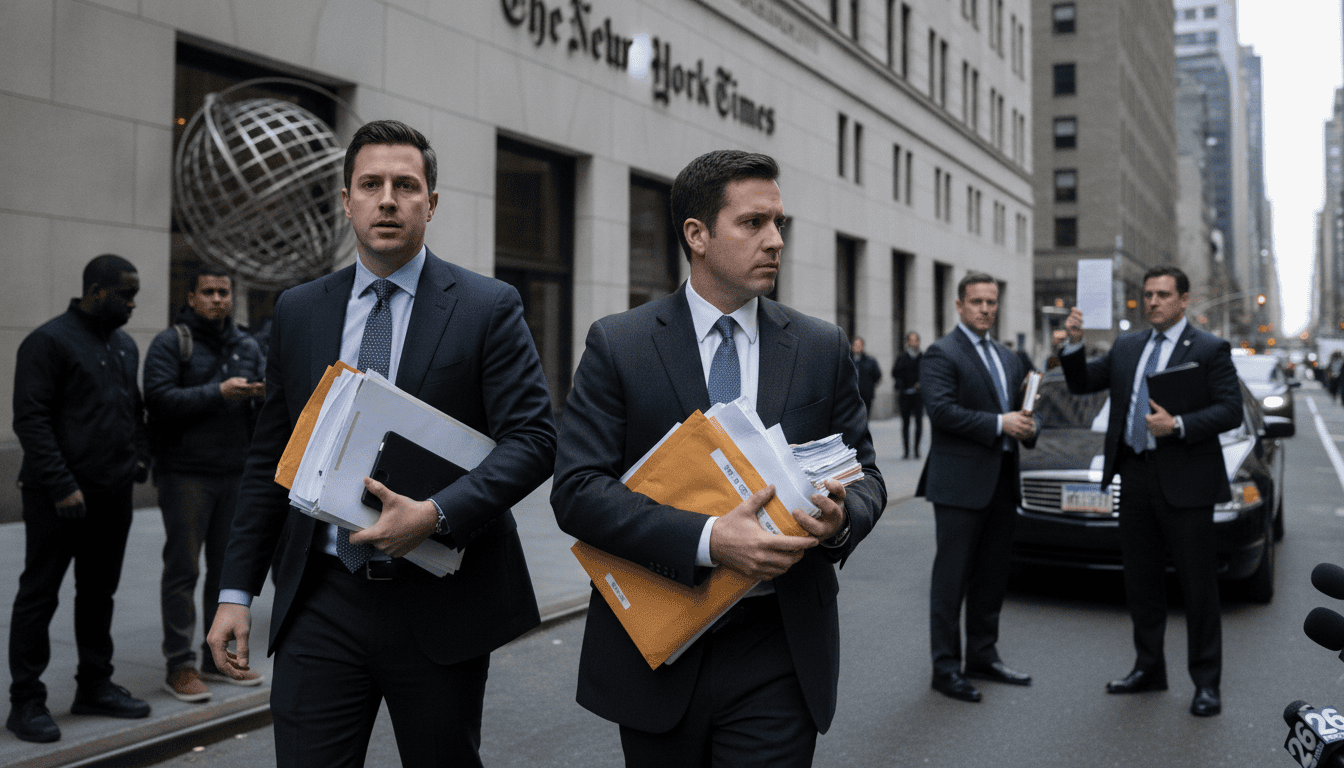
DOJ Subpoenas New York Times Reporters over Air Force One Security Leak
DOJ subpoenas New York Times reporters are at the center of a national debate after subpoenas were issued in a probe of leaked classified details about President Trump’s new Air Force One. The action has drawn vocal condemnation from press organizations and raised questions about the balance between national security and press freedom.
DOJ Subpoenas New York Times Reporters
The Justice Department issued subpoenas to several New York Times reporters in connection with an investigation into the unauthorized disclosure of classified information. Federal officials say the subpoenas seek to identify government sources who may have leaked sensitive material about the presidential aircraft.
Reporters summoned to testify are scheduled to appear before investigators next week, according to officials briefed on the matter. The department has stressed that its inquiry targets the leakers, not the journalists, but the move nonetheless triggered immediate concern across the news industry.
Allegations Linked to Air Force One Upgrades
The reporting at the heart of the investigation concerned the security and defensive capabilities of the newly procured presidential plane. Published accounts said the replacement Boeing did not include certain systems present on the previous Air Force One, including specific missile-defense features, after an expedited refurbishment process.
Those details reportedly influenced presidential travel decisions following an intelligence tip that raised concerns about a potential threat abroad. Officials have said the plane was modified to add modern communications and countermeasure systems, but questions remain about whether all legacy protections were restored.
Justice Department Frames Move as Leak Probe
A Justice Department spokesperson described the subpoenas as part of a broader effort to determine how classified information reached the press. The department emphasized its obligation to protect national-security secrets and to hold accountable anyone who knowingly divulges them in violation of the law.
At the same time, Justice officials acknowledged the important role of a free press in informing the public about government activity. The agency framed its actions as an attempt to reconcile those competing duties while adhering to legal constraints.
Press Groups Decry Subpoenas as Threat to Reporting
Leading press organizations condemned the subpoenas as an extraordinary encroachment on press freedom. The president of the White House Correspondents’ Association said her group stood with the affected journalists and denounced any effort to intimidate reporters or force them to reveal confidential sources.
The National Press Club characterized the subpoenas as a serious attack on journalism and voiced concern about the chilling effect such legal measures could have on investigative reporting. Editors and news executives urged the department to use less intrusive means before seeking testimony from journalists.
Trump Administration’s Aircraft Purchase and Modifications
The plane at issue was a donated Boeing that the president accepted as a faster route to a new Air Force One, according to aides and public statements. Acceptance of the gift accelerated plans that otherwise would have followed a standard procurement timeline, requiring extensive retrofitting to meet presidential security standards.
Those modifications included overhauls to communications and defensive suites and a thorough internal redesign. Critics argue the compressed schedule raised legitimate questions about whether the aircraft matched the full complement of systems on the prior presidential transport.
Historical Context and Rarity of Reporter Subpoenas
While federal investigations into leaks have been launched under multiple administrations, subpoenas directed at working reporters remain rare and controversial. Past probes by both Republican and Democratic administrations have led to legal clashes over the extent to which journalists can be compelled to reveal sources in national-security cases.
Legal experts say courts typically weigh the government’s need to protect classified information against the public interest in confidential sourcing. The current subpoenas follow an earlier, widely criticised search of a reporter’s home earlier this year, signaling an intensification of legal pressure on the media from the administration.
The subpoenas have underscored a fraught tension: national-security imperatives that can require confidentiality, and journalistic practices that depend on protecting sources to expose government wrongdoing. With reporters scheduled to appear before investigators and news organizations vowing to defend source protections, the dispute looks likely to move into the courts and public debate in the coming weeks.
