
Auschwitz documents pulled from auction as foundation and donors rush to preserve Holocaust records
Auschwitz documents rescued from auctions as the Auschwitz-Birkenau Foundation and donors buy artifacts while Germany moves to restrict commercial trade.
Auschwitz documents tied to individual prisoners were recently acquired by the Auschwitz-Birkenau Foundation after public pressure halted a controversial auction, sparking a wider campaign to retrieve and protect Holocaust-era papers and objects. The foundation’s purchases, donor drives and a proposed German law aim to remove sensitive personal records from commercial circulation and place them under institutional care. The effort reflects growing concern that private sales of letters, identity papers and camp relics fracture historical memory and complicate research into victims’ fates.
Rare Auschwitz postcard identified as item of primary research value
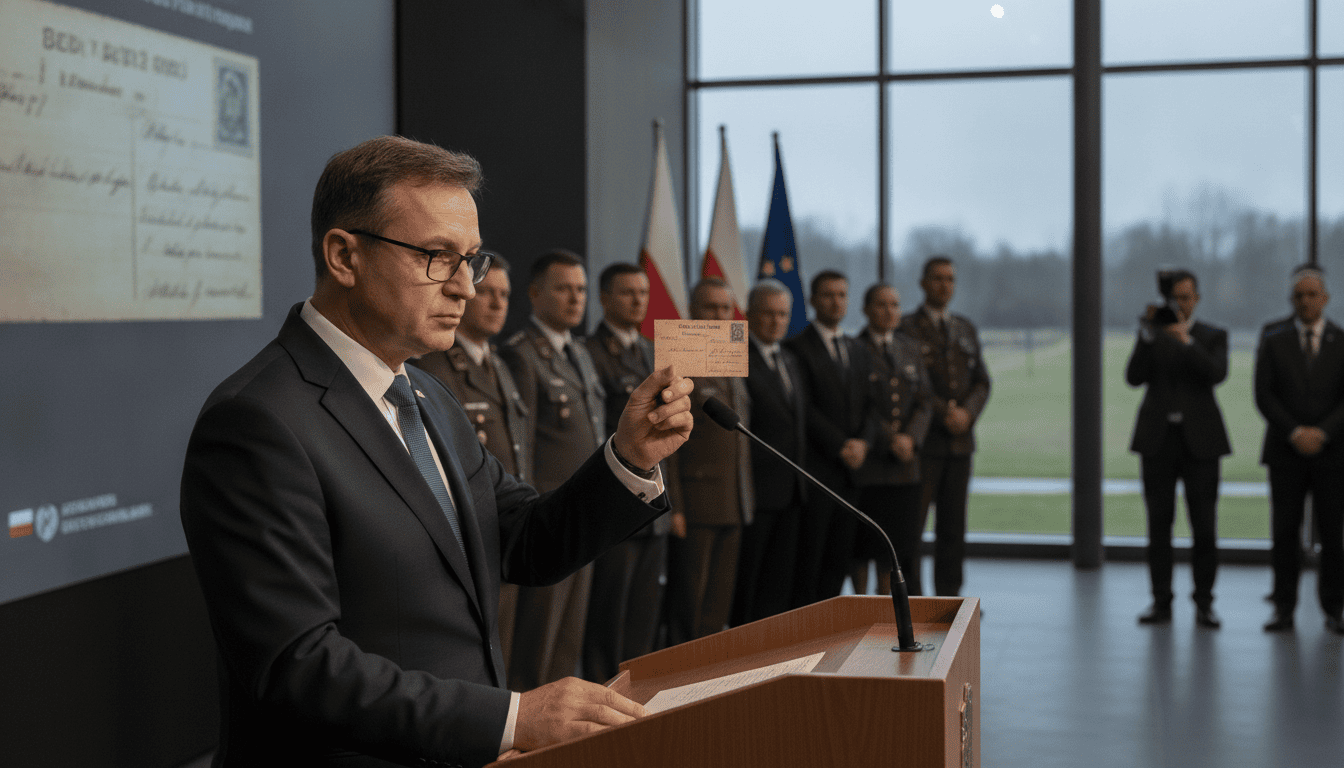
A grey envelope sent from Auschwitz to Nowy Sącz with a twelve-pfennig stamp and the image of Paul von Hindenburg has now entered the foundation’s archive. The card was mailed by a 21-year-old prisoner from Block 9, registered with inmate number 613, and is believed to originate from the first political transport from Tarnów on June 14, 1940.
The foundation’s director described the item as exceptionally rare, noting that correspondence from the camp’s earliest phase is scarce and invaluable to historians. Such documents can provide direct personal data that helps reconstruct deportation routes and individual biographies previously unknown to memorial staff.
Canceled Neuss auction triggered a fundraising and rescue response
An auction house in Neuss planned a large sale of more than 600 items linked to National Socialist persecution, including letters, Gestapo files and Jewish badges, before public outrage prompted its cancellation. The scheduled sale and its catalogue galvanized civil society, prompting rapid mobilisation to prevent further dispersal of evidence.
A private initiative led by an official from the North Rhine-Westphalia parliamentary administration helped steer donations toward the Auschwitz-Birkenau Foundation. That campaign enabled the targeted purchase of several items deemed critical for research and commemoration.
Lagerpost patronage and matching grants boost acquisitions
To institutionalize the rescue effort, supporters launched “Lagerpost – Ankauf von Dokumenten,” a global patronage programme that allows donors to underwrite purchases for the foundation. The initiative is designed to give the memorial quicker access to auction lots and private sales that would otherwise enter the market.
The Bethe Foundation pledged to double individual donations up to 3,000 euros through the end of July, accelerating acquisitions in the short term. Organizers say these funds have already helped retrieve multiple artifacts and facilitate their secure transfer to archival custody.
Bundesrat adopts move to limit trade in victim-related objects
In the wake of the auction controversy, the Bundesrat unanimously accepted a legislative proposal from North Rhine-Westphalia aimed at restricting commercial transactions in objects with a direct link to victims of Nazi persecution. The draft law models enforcement measures on existing statute sections that criminalize the dissemination of extremist propaganda and proposes penalties of up to three years in prison or fines for illicit sales.
The proposal carves out exemptions for museums, archives, libraries and authorized research or journalistic uses, while prohibiting trade in items such as victim clothing, identity documents and marked badges. Proponents argue the legal change is necessary to prevent the commodification of human suffering and to prioritize the dignity of victims.
Auctioneers warn of unintended consequences and market displacement
Auction houses and collectors have voiced concerns about the breadth of the proposed restrictions, warning they could sweep up legitimate historical materials and private holdings. One owner questioned whether correspondence by émigré intellectuals who suffered under Nazism might be affected and expressed worry that overly broad rules could amount to de facto expropriation.
Critics also predict that strict domestic rules could drive the trade to other markets abroad, including Poland, Israel and the United States, and push transactions into less transparent channels. Auctioneers emphasize the role of detailed catalogues in documenting provenance and argue for careful calibration between preservation goals and property rights.
Foundation stresses archival, research and family-tracing value of artifacts
The Auschwitz-Birkenau Foundation underlines that many items carry names, addresses or other identifiers that are crucial to reconstructing victims’ histories; only about one-third of Auschwitz detainees are currently known to the memorial by name. Between 1940 and 1945 roughly 1.3 million people were deported to the camp complex, of whom around 400,000 were recorded by name, making individual documents a powerful tool for returning identity to the unknown.
Several recovered pieces have already contributed to family tracing and scholarship, and the foundation reports frequent inquiries from relatives seeking information about ancestors. Some objects acquired through the rescue campaign include administrative booklets and technical pamphlets with provenance stamps that shed light on camp operations, complementing personal letters in revealing larger historical patterns.
The campaign to buy, preserve and legislate against the commercialisation of Holocaust artifacts reflects a broader effort to ensure that items carrying victims’ names do not become mere collectibles. By prioritizing archival custody and research access, the initiative aims to safeguard evidence and restore personal histories for families and scholars alike.
