
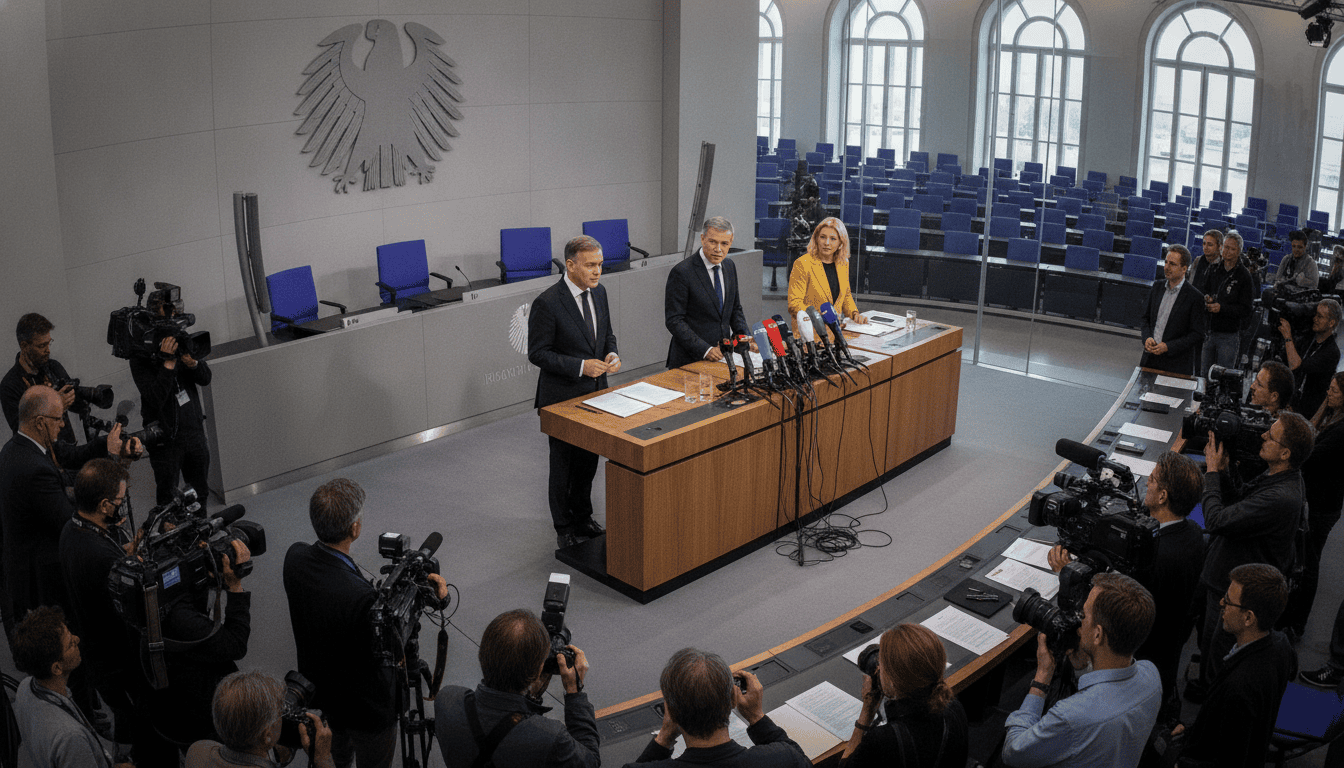
Bundestag summer recess begins as coalition urges MPs to pause and prepare for autumn reforms
Bundestag summer recess begins as coalition leaders call on MPs to avoid unnecessary debates, recharge and ready themselves to implement health, pension and budget reforms in Sept.
The Bundestag summer recess began this week with senior figures from the governing coalition urging lawmakers to refrain from headline-seeking debates and instead use the break to prepare for an intense autumn legislative agenda. Parliamentary managers from the CDU and SPD said the session-free period should serve to recover from a demanding first half of the year and to marshal political energy for bills coming back to the floor. Their appeal framed the recess not as a retreat from responsibility but as a tactical pause designed to accelerate reform work when parliament reconvenes.
Coalition managers urge restraint during the recess
Steffen Bilger, the CDU parliamentary manager, told the Rheinische Post that members should choose “breathing space” over confrontational politics during the sitzungsfreie Zeit. He noted the coalition has already completed a busy first half of the year and argued MPs would be better served by recharging before a packed autumn programme. Bilger said the pause should be used to clear heads and gather strength for forthcoming policy steps in areas including care, taxes and other social measures.
Dirk Wiese, the SPD’s parliamentary manager, echoed the call and told the same paper that “Sommerloch” style debates are better left to the opposition. Wiese framed the temporary halt in sittings as an opportunity to maintain momentum from recent coalition decisions and to prepare unified legislative proposals. Both managers emphasized discipline in messaging and preparation rather than public sparring during the recess.
Autumn priorities: budget, pensions and health reforms
Coalition officials have signalled that the immediate post-recess period will be dominated by the 2027 budget process, reform implementation and follow-up to recent coalition agreements. Parties expect to prioritise targeted savings and spending choices in September when the Bundestag returns to session. The government’s timetable includes putting fiscal proposals and welfare adjustments into parliamentary procedure as soon as the plenary reconvenes.
Pension reform recommendations from the commissions and measures to contain health-system costs are on the list of early items for parliamentary scrutiny. Lawmakers have been told to prepare technical work and constituency consultations during the break to speed up committee consideration. The coalition’s public position is that less parliamentary theatre during the break will yield faster, more coherent legislative outcomes in autumn.
Recent laws and coalition deliverables to be advanced
Coalition sources pointed to recent legislative wins as a foundation for the work ahead, including the statutory health insurance savings package and the building modernisation law. Those measures, together with outcomes from the coalition’s steering committee, are presented internally as proof the government can advance complex agendas. The managers argue that these achievements create momentum which should be carried through the recess into implementation stages.
Officials said the next focus will be on translating broad coalition agreements into concrete bill texts and parliamentary amendments. That technical work often requires sustained staff effort and inter-ministerial coordination that can be more effectively conducted during a quieter parliamentary phase. The aim is to return to the chamber with polished proposals ready for committee marking and accelerated debate.
Political messaging and the opposition’s role during the break
Coalition figures have been explicit that they expect the opposition to fill the role of critic during the summer, leaving governing parties to prepare rather than provoked into episodic rebuttals. The language used by Bilger and Wiese reflects a wider strategy to limit distraction and public grandstanding ahead of high-stakes votes. Observers say this approach helps protect fragile compromises and reduces the risk that headline controversies derail detailed policy work.
Nevertheless, the recess is not a blackout for political activity; parties will continue to engage in local campaigning, stakeholder consultations and media outreach. The opposition, in turn, may use the period to sharpen attack lines and prepare alternative proposals for the autumn. That dynamic sets the stage for a compressed and politically charged return to the floor in September.
Recess timeline and plenary closing remarks
The Bundestag entered the sitzungsfreie Zeit on Friday, with the plenary scheduled to meet again on 8 September. In his closing words before the break, Vice-President Omid Nouripour of the Greens reminded members of parliament of the institution’s need to remain capable of decision-making. Nouripour urged colleagues to remain vigilant and healthy and called on them to return ready to resume work, underscoring the expectation that parliamentary business will pick up immediately after the hiatus.
Officials say committees and ministerial teams will use the weeks ahead to finalise drafts and consultation documents so that the chamber can move quickly on core files. With budget negotiations, pension recommendations and health-sector measures set to dominate the agenda, coalition leaders have framed the summer pause as a preparatory interval rather than a withdrawal from responsibility.
Momentum from recent legislative wins and a deliberate strategy to limit public quarrels during the Bundestag summer recess aim to position the government to act swiftly when the chamber returns in September, with planners hoping calmer weeks now will translate into more effective lawmaking later.
