
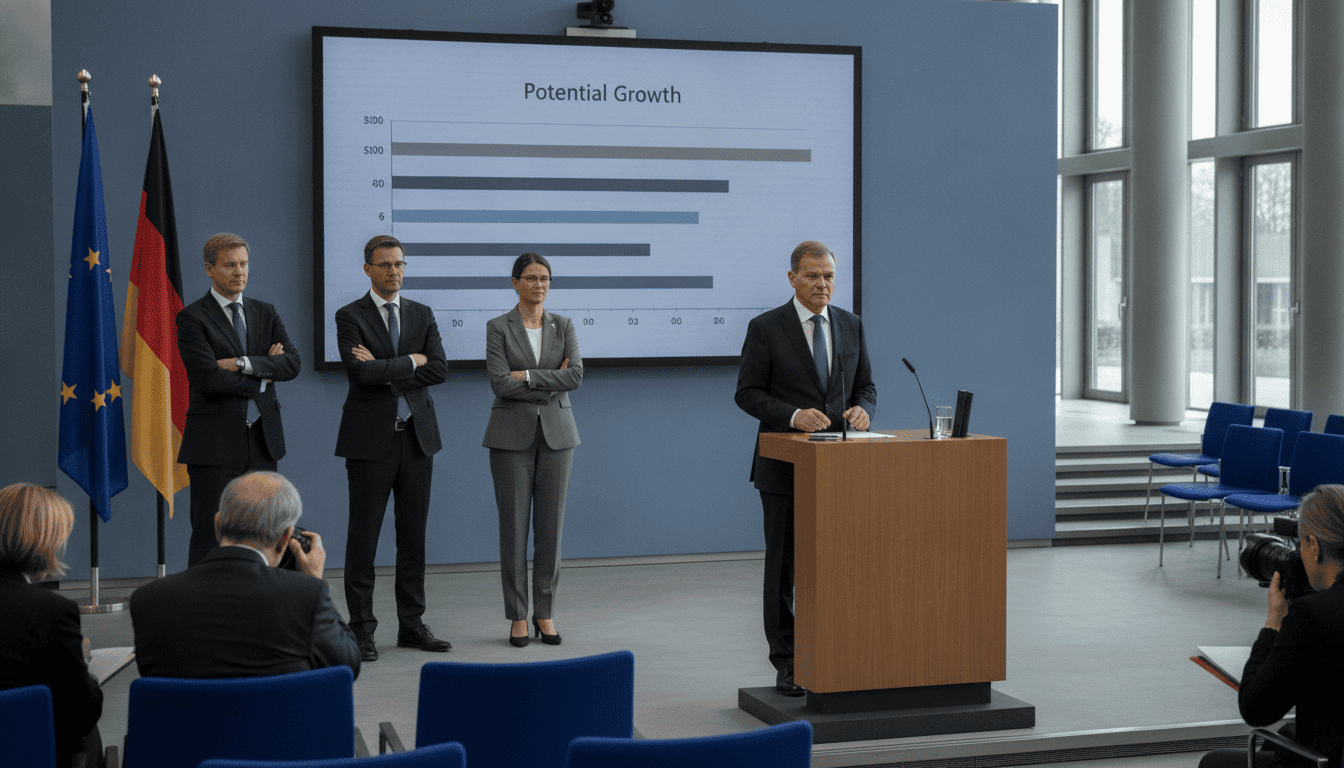
German reform program judged insufficient to revive long-term growth, institutes warn
Major economic institutes warn the German reform program will not lift long-term growth; tax shifts, bureaucracy and global risks cloud the recovery outlook.
The government’s recently unveiled German reform program has drawn cautious assessments from leading economic research institutes, which say it is unlikely to produce a decisive boost to growth. Analysts from RWI, the Kiel Institute and other bodies judge that the measures may prevent a further deterioration in competitive conditions but fall short of reversing structural decline. Short-term stimulus appears limited, and global uncertainties add new downside risks to the recovery outlook.
Research institutes find limited potential impact
Economic forecasters at major institutes have run preliminary simulations and reached similar conclusions: the package is not a “growth agenda” in the strict sense. Torsten Schmidt of RWI and Stefan Kooths of the Kiel Institute both note that most proposals offer only modest effects on potential growth, meaning the economy’s long-run productive capacity. The experts say that without stronger, targeted measures to raise productivity, demographic pressures will continue to weigh on trend growth.
Labor market measures offer the clearest gains
Among the program’s elements, analysts see the most measurable upside in labour-market reforms rather than tax cuts or deregulation. The planned end of the early retirement at 63 could raise output potential slightly by keeping more workers in employment, according to Kiel Institute estimates. Proposals to introduce more flexible dismissal rules are also viewed as having the potential to lift total factor productivity, though such gains are difficult to quantify precisely.
Tax reform raises concerns for Mittelstand
Tax proposals in the German reform program have provoked particular unease among tax advisers and business groups, especially concerning partnerships and midsize firms. The package allocates roughly €10 billion in relief but finances part of that by raising the top income tax rate from 45 to 47 percent, plus the solidarity surcharge, a move critics say will hit owner-managed companies. Observers warn that the measure risks dampening investment appetite in the Mittelstand, where many firms are structured as partnerships and feel the direct effects of personal taxation.
External shocks and oil price volatility complicate the outlook
Macroeconomic forecasters also point to renewed geopolitical tensions as a near-term threat that could undermine any positive effects of reforms. Disruptions in the Persian Gulf and heightened U.S.-Iran tensions have pushed Brent crude prices higher, adding to inflationary pressures and uncertainty for energy-importing economies like Germany. The International Monetary Fund has signalled that global inflation may firm this year, a development that could force central banks to remain cautious and limit domestic policy room for manoeuvre.
Mixed hard data and improving sentiment give cautious optimism
Despite the critiques, recent indicators show the German economy may be avoiding a sharper contraction, offering a modestly brighter backdrop for the reform debate. Production in the manufacturing sector rose on average in April and May compared with the first quarter, and order intake in May climbed by 1.9 percent month‑on‑month, lifted in part by large, sometimes volatile contracts. Business climate measures such as the Ifo index have ticked up, driven mainly by companies reporting an improved current situation, which suggests the shock from earlier supply and energy strains may be dissipating.
Implementation challenges and bureaucracy remain obstacles
Even measures designed to simplify rules face scepticism because of limited ambition and possible unintended consequences. Analysts note that curbing the rise in social-security contribution rates would only slow deterioration rather than reverse it, while plans for a federal housing company risk introducing new administrative layers. Observers say the political achievement of finding consensus across coalition partners should not be conflated with substantive reform impact; compromise often blunts the transformative potential of policy packages.
The net effect of the German reform program, according to the assessment of independent institutes and market commentators, is therefore a modest stabilisation of conditions rather than a powerful escalation of growth momentum. Policymakers face a narrow window to translate agreed measures into swift, credible action that can materially lift productivity and private investment, while also managing external risks that could quickly erode any nascent recovery.
