
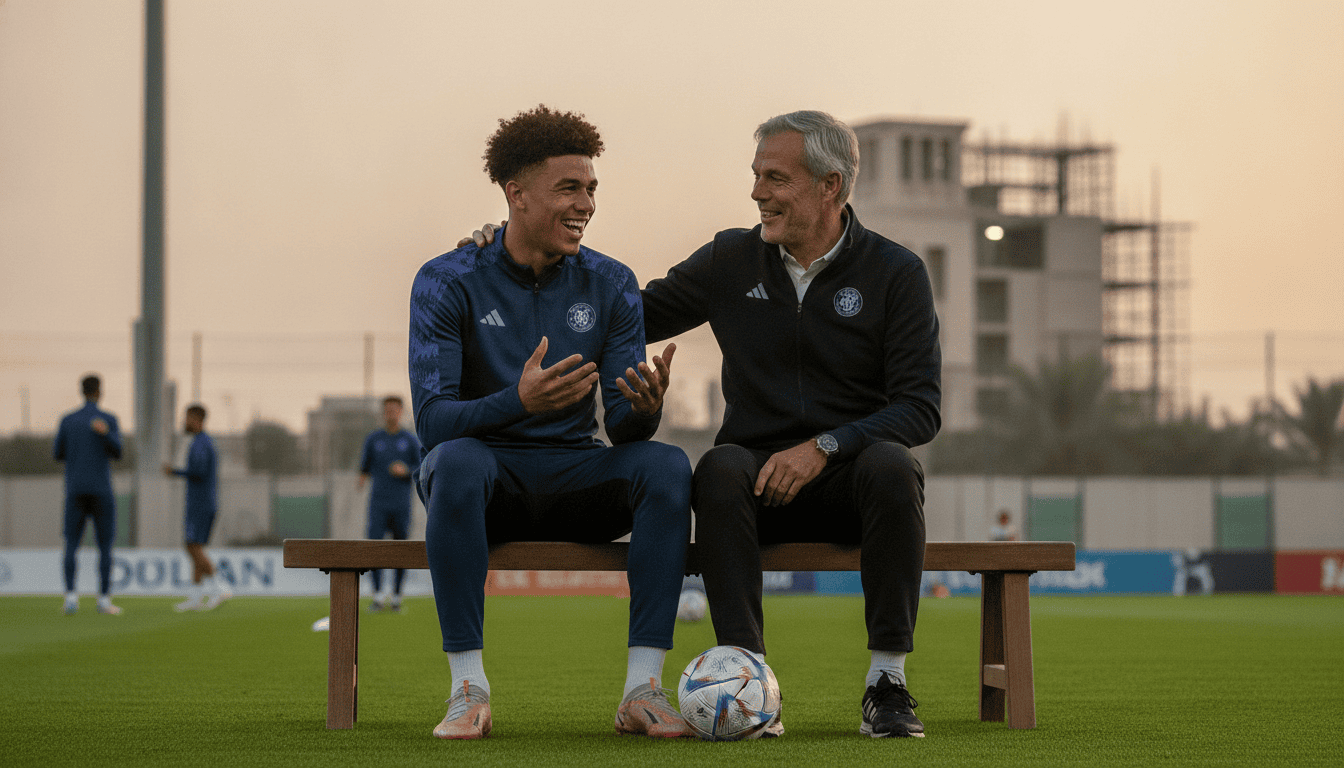
Jude Bellingham and Thomas Tuchel: From Transactional Partnership to Unexpected Friendship at the World Cup
Jude Bellingham and Thomas Tuchel’s World Cup partnership has quietly shifted into an unexpected friendship, navigating media spin and pressure from fans.
The working relationship between England midfielder Jude Bellingham and German coach Thomas Tuchel has surprised observers at the World Cup by evolving beyond its original, pragmatic purpose. What began as a professional alignment focused on performance and mutual benefit has shown signs of warmth and rapport, even as both men retain their famously strong personalities. The dynamic has attracted intense media attention, where small moments have been amplified and reframed across outlets.
Unexpected Chemistry on the World Cup Stage
A series of brief on-field interactions and sideline exchanges drew quick notice from broadcasters and social media during tournament matches. Those moments, often captured in a single camera cut or a post-match photograph, suggested a level of mutual respect and ease not obvious at the outset. Commentators and fans alike have interpreted those gestures as evidence of an emerging personal connection.
The visual record has been essential to the narrative, but it has also been selective. Media framing has shaped how the relationship is perceived, sometimes turning routine professional courtesies into headlines that imply more. This amplification has fed a debate about whether public closeness on a tournament stage necessarily reflects a deeper private friendship.
Origins of the Professional Bond
Their association began as a clearly transactional arrangement tied to World Cup objectives: tactical clarity, player well‑being, and short‑term performance gains. Bellingham, already a central figure in his national setup, sought stability and direction in a high-pressure tournament. Tuchel offered a blend of tactical acumen and reputation for demanding standards, creating a working relationship rooted in mutual needs.
Officials close to team planning describe the contact as pragmatic, focused on alignment rather than personal affinity. Training ground sessions and tactical briefings became the primary laboratory for their cooperation, where professional demands took precedence. Those sessions also created repeated interactions that can serve as the foundation for stronger interpersonal ties.
Public Moments and Media Spotlight
Small gestures—an exchange of words on the touchline, a brief embrace in the technical area, a pointed thumbs-up after a contested decision—became the focus of round-the-clock coverage. In the echo chamber of modern sports media, such instances are rapidly reframed into narratives about character, chemistry, or controversy. That cyclical attention has forced both men to navigate the optics as much as the tactical realities.
The tournament’s heightened scrutiny has a way of turning chance encounters into lasting impressions. Observers warn that a phenomenon similar to the childhood game of “telephone” is at work: details become distorted as they pass through layers of commentary. For the pair, managing perception has become an ancillary task alongside on-pitch responsibilities.
Personality Differences and Leadership Styles
Both figures are known for strong convictions and prideful temperaments, which can complicate any move from professional respect to personal friendship. Bellingham brings youthful intensity and directness, while Tuchel is widely regarded as a meticulous and sometimes exacting manager. Those contrasts have fueled speculation about how far a friendship could realistically develop.
Yet contrasting temperaments do not preclude rapport; in some cases they provide balance. Team insiders say that moments of honest, direct communication have helped establish trust quickly. The interplay of different leadership styles has, at times, produced complementary outcomes on match days.
Impact on Team Dynamics and Tactics
Analysts point to subtle on-field shifts that coincide with the pair’s coordinated approach during preparation and matches. Decisions about positioning, pressing triggers, and transitional roles appeared to be communicated with increasing clarity. That operational alignment has, according to several tactical reviews, benefited the wider squad by offering clearer expectations.
Coaching staff and teammates have noted that a stable relationship between a key midfielder and a senior coach can streamline execution under pressure. However, observers caution that the broader effect depends on consistent messaging across the entire coaching group. Isolated rapport, no matter how genuine, cannot substitute for unified leadership.
Fan Reaction and Analytical Perspectives
Reactions among supporters have ranged from encouragement to skepticism, with social platforms serving as the principal battleground for interpretation. Some fans celebrate the image of a mentor and a rising star finding common ground on the world stage. Others view the coverage as an overreach, arguing that tournament narratives frequently inflate routine interactions.
Pundits have offered mixed assessments, noting both the tactical benefits of the relationship and the hazards of overemphasizing interpersonal chemistry. Several analysts emphasize evidence-based evaluation: performance metrics and match outcomes should determine the partnership’s true impact. For many observers, the ultimate test will be consistency across the competition rather than a few headline-grabbing moments.
The evolving association between Jude Bellingham and Thomas Tuchel at the World Cup has provided a compelling subplot to the tournament, blending tactical collaboration with unexpected human warmth. Whether that warmth will mature into a lasting friendship or remain a productive professional rapport will be judged by results, consistency, and how both men manage the persistent glare of public attention.
