
World Cup 2026 schedule: full match dates, groups, Germany fixtures and broadcast details
A concise guide to the World Cup 2026 schedule, including group draws, Germany’s match dates, stadiums and TV coverage for fans across Europe and North America.
The FIFA World Cup 2026 begins on June 11 and runs through July 19, staged across the United States, Mexico and Canada with an expanded field of 48 teams. The World Cup 2026 schedule features 104 matches at 16 venues and introduces a new knockout round that expands opportunities for third-place finishers. Fans should note wide time-zone differences: kickoff times are presented in Central European Summer Time to help European viewers follow the action.
Hosts and tournament footprint
The tournament is the first World Cup to be hosted by three nations and is spread across 16 stadiums in 16 cities, increasing travel and logistics for squads and supporters. Eleven venues are in the United States, three in Mexico and two in Canada, with capacities ranging from mid-40,000s to more than 90,000. The compressed calendar and extended field create the busiest international summer in recent memory, with fixtures scheduled across multiple time zones that affect TV windows in Europe.
Organizers have scheduled 104 matches over 39 days, from the group stage through the final in New York on July 19. The larger format adds a new round — a 32-team “round of 32” — which pairs top two group finishers and the best eight third-placed teams into a knockout phase. This structure increases the number of decisive fixtures and lengthens the tournament’s elimination rounds.
Groups and notable draws
The group stage divides 48 teams into twelve groups of four, with the top two in each group advancing directly and the eight best third-placed teams entering the round of 32. Several groups feature a mix of established powers and surprise qualifiers, while a number of smaller nations appear for the first time on football’s biggest stage.
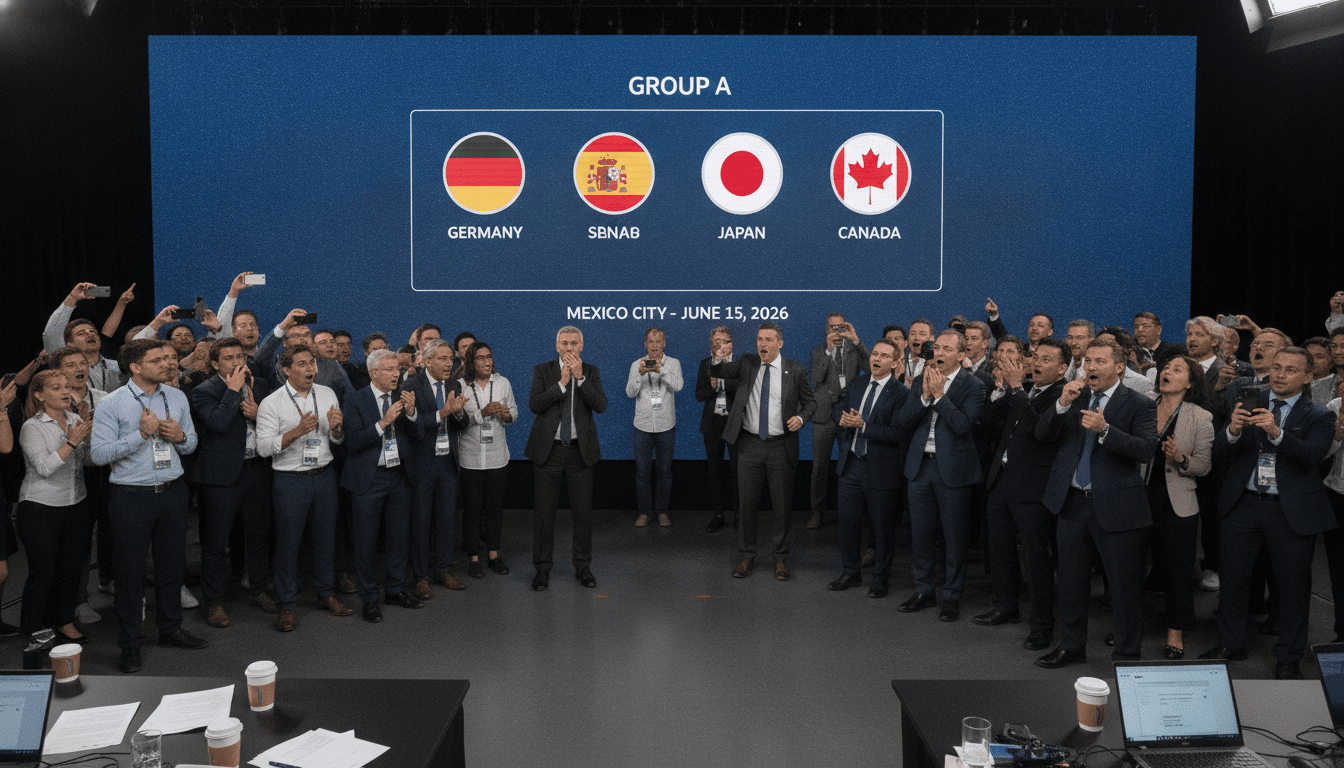
Notable group compositions include Group E, where Germany meets Curaçao, the Ivory Coast and Ecuador, and Group B, featuring host Canada alongside Bosnia-Herzegovina, Qatar and Switzerland. Other groups bring heavyweight matchups such as France’s placement with Norway, Senegal and Iraq in Group I, and Argentina paired with Algeria, Austria and Jordan in Group J.
Germany’s schedule and key fixtures
Germany opened its World Cup 2026 campaign in Group E and will play three group-stage matches across North American venues. The national team’s matches are set for June 14 in Houston against Curaçao at 19:00 CEST on public broadcaster ARD, June 20 in Toronto against the Ivory Coast at 22:00 CEST on ZDF, and June 25 in New York against Ecuador at 22:00 CEST on ARD. Those kickoff times are listed in Central European Summer Time to aid viewers in Germany and neighboring countries.
The path beyond the group depends on Germany’s final position: topping the group would set up a round-of-32 tie against one of the best third-placed teams, while a second-place finish leads to a scheduled pairing in the knockout bracket with a different set of opponents. Tournament projections suggest a potential round-of-16 opponent could come from Group I, a pool that may include France or Norway.
Opening matches and early results
The tournament opened on June 11 in Mexico City, where the host nation recorded a victory in the first game of the competition. Early matchdays feature a dense slate of fixtures designed to spread marquee games across host cities and global time slots. For example, Canada began its campaign in Toronto on June 12 with a high-profile match against Bosnia-Herzegovina, televised live in Germany.
Throughout the opening rounds, broadcasters have distributed matches between linear television windows and streaming platforms, ensuring fans can follow teams in different time zones. The schedule clusters several matches per day to maintain momentum across continents and create continuous viewing opportunities in Europe during the evening and late-night hours.
Knockout stage calendar and venues
The expanded knockout phase begins with the round of 32 from June 28 through early July, featuring matches hosted across Los Angeles, Houston, Boston, Dallas, Monterrey and other cities. The round of 16 follows immediately, with fixtures scheduled between July 4 and July 7, after which the competition moves into quarterfinals and semifinals. Quarterfinals are set for July 9–12, with semifinals played on July 14 in Dallas and July 15 in Atlanta.
A third-place match is scheduled for July 18 in Miami, and the final will take place in New York on July 19 at 21:00 CEST. The staging of knockout ties across multiple North American cities aims to balance travel demands with stadium capacities and broadcast markets, while providing several high-capacity venues for later-stage games.
Stadiums, capacities and time-zone impact
Sixteen stadiums will host matches, including marquee venues such as the Azteca in Mexico City (approximately 83,000 seats), the New York–New Jersey stadium in East Rutherford (about 82,500 seats) and the largest listed venue in Arlington/Dallas with a capacity near 94,000. Canadian hosts include the Toronto stadium and BC Place in Vancouver, while major U.S. sites range from Los Angeles and Houston to Miami and Seattle.
Kickoff times are presented with Central European Summer Time in mind, reflecting time differences of roughly six to nine hours between Central Europe and North American host cities. That means many group-stage games will air in late evening or overnight in Europe, and broadcasters have adjusted coverage windows accordingly to accommodate viewers across the continent.
Broadcasting arrangements and streaming options
Public-service broadcasters ARD and ZDF will carry a significant portion of the tournament, together televising around 60 of the 104 matches, while a subscription platform holds rights to the entire slate. All games will be available via the pay provider’s MagentaTV service, while ARD and ZDF stream selected matches live in their media libraries and mobile apps. Viewers in Germany should consult local listings for channel assignments and exact kickoff times presented in Central European Summer Time.
Complementary digital offerings include live tickers, tables and statistics services from multiple outlets, enabling fans to follow scores and standings in real time. These resources are particularly useful during overlapping fixtures and overnight match windows when linear broadcasts may focus on select games.
As the World Cup 2026 schedule unfolds, the tournament’s expanded format and transcontinental staging will test squad depth and logistics while offering fans a record number of matches across a variety of host cities.
