
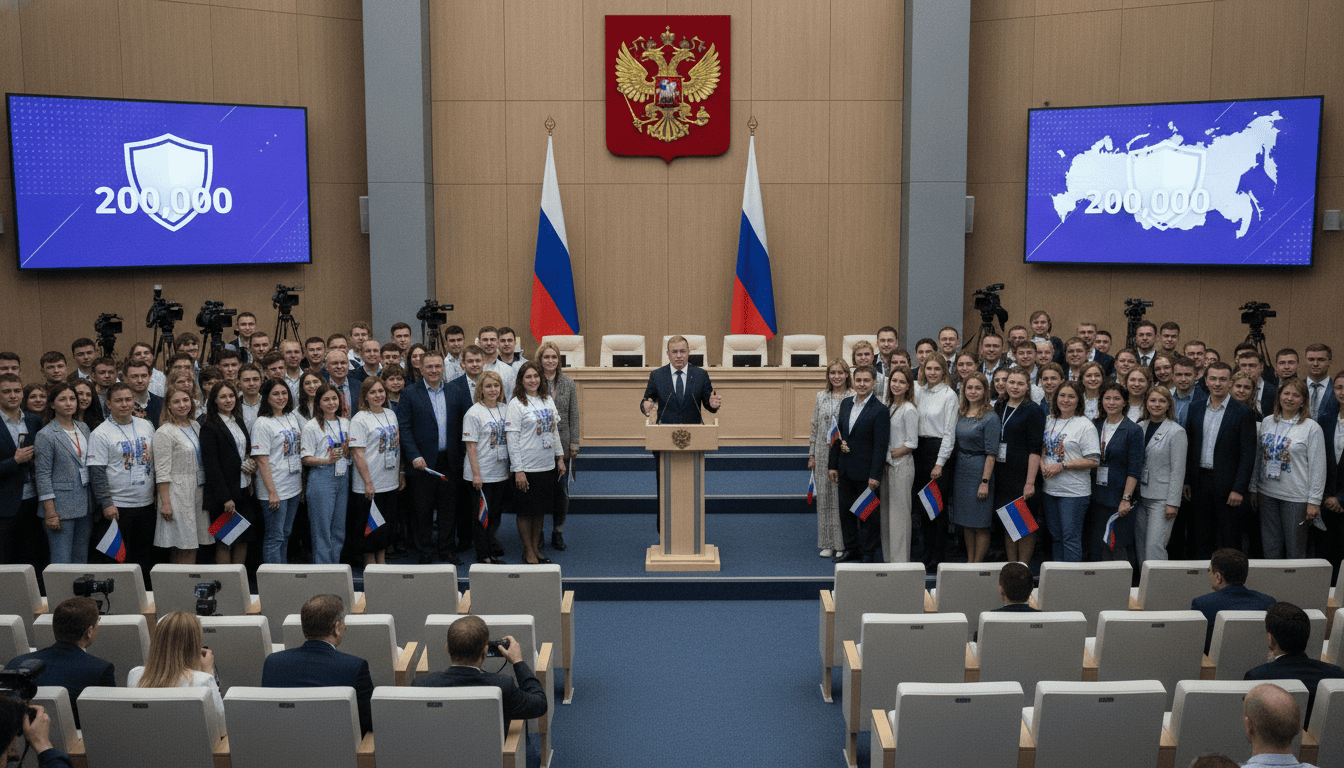
Russia Says 200,000 Volunteers Have Joined War as Officials Deny New Mobilization
Moscow says 200,000 volunteers signed up for the war in the first half of 2026; Dmitry Medvedev denied plans for a new mobilization and called claims of forced drafts enemy disinformation.
Russia’s deputy head of the national security council, Dmitry Medvedev, told a meeting that roughly 200,000 volunteers had registered to serve in the conflict during the first six months of the year, and he rejected reports that the Kremlin plans another mobilization. Medvedev said in a video posted on Telegram that suggestions of new compulsory recruitment were “lies, provocations and rumours” spread by adversaries to destabilize Russia ahead of parliamentary elections in September. The figure cited by Medvedev is not independently verifiable and comes amid persistent public anxiety about reinstated drafts after the partial mobilization in 2022, which prompted large numbers to flee the country.
Medvedev’s Statement and the Official Line
Medvedev framed the surge in volunteers as voluntary and sufficient to meet the armed forces’ personnel needs for the first half of 2026. He accused Ukrainian officials and other opponents of deliberately circulating misinformation designed to spark panic before the Duma vote in September. Kremlin-aligned channels have emphasized the voluntary nature of recruitment while insisting there is no requirement for compulsory service.
Despite the official line, Medvedev’s remarks appeared aimed at tamping down public fear and signalling confidence that the military’s manpower shortfall has been addressed without conscription. His claim that the personnel situation is “completely” satisfied contrasts with repeated external assessments and reporting that suggest Russian forces have struggled with personnel gaps during the conflict.
Recruitment Offerings and Reports of Pressure
Russian authorities and private contractors have publicly advertised large financial incentives to attract recruits, offering bonuses, higher wages and contracts with signing payments. State and regional outreach campaigns, together with recruitment drives at military enlistment offices, have pointed to a coordinated push to bolster ranks through paid enlistment.
Journalists and human-rights groups have continued to document cases where men with previous military service say they faced informal pressure or coercion to sign contracts, though such claims are harder to verify than the advertised incentives. Analysts note that pay raises and bonuses can boost enlistment quickly but may not resolve longer-term retention or training shortfalls.
Public Memory of 2022 and Widespread Anxiety
The fear of renewed mobilization remains palpable across Russian cities and smaller towns; memories of the 2022 partial mobilization and its chaotic rollout linger. When Moscow announced compulsory drafts in 2022, hundreds of thousands sought to avoid service, and many left the country, a pattern that left deep social and economic scars.
That history has made public assurances about the absence of a mobilization less convincing to many families and communities, and social media continues to carry both official statements and circulating rumours about potential drafts. The mixture of official denials and widely shared anecdotes creates a tense atmosphere ahead of the parliamentary vote, analysts say.
Verification Challenges and Independent Data
The 200,000 figure cited by Medvedev is difficult to confirm independently because recruitment records and contract details are not routinely published in full and access to reliable data is limited. International observers and open-source investigators have flagged discrepancies between official tallies and local reports in the past.
Independent verification is further complicated by restrictions on press freedom and the limited ability of foreign monitors to operate inside Russia’s recruitment and military systems. Consequently, outside analysts treat government-released personnel numbers with caution and look for corroborating evidence such as payroll changes, contract registers and regional enlistment activity.
Political Timing Ahead of September Elections
Observers say the timing of Medvedev’s message is closely tied to the political calendar, with a Duma election scheduled for September that the Kremlin will seek to manage without major domestic disruptions. Framing the personnel situation as resolved and dismissing mobilization rumours may be an effort to keep public attention off potential crisis points.
Campaign seasons typically heighten sensitivity to domestic stability, and officials have an incentive to counter narratives that could fuel protests or increased departures from the country. Opposition figures and independent commentators argue that claims of stability should be subjected to scrutiny, given the stakes involved in national security and electoral turnout.
Responses from Kyiv and International Observers
Ukrainian officials had warned in recent days that Moscow might be preparing a new mobilization to offset battlefield losses, a claim Medvedev explicitly rejected. Kyiv’s assertions reflect its own intelligence assessments and strategic narrative aimed at highlighting Russian vulnerabilities.
Western diplomats and analysts have urged caution in taking any single official figure at face value and continue to monitor recruitment flows, equipment availability and battlefield indicators for a fuller picture. International commentators note that incentives-driven recruitment can offer short-term personnel boosts but does not necessarily equate to sustainable military capacity.
The competing claims over manpower and mobilization underscore the information war that has accompanied the fighting, with Moscow presenting a narrative of voluntary enlistment and sufficiency while opponents point to signs of strain and pressure. As September’s parliamentary vote approaches, both the domestic political environment and external scrutiny are likely to shape how recruitment figures and mobilization rumours are reported and interpreted.
