
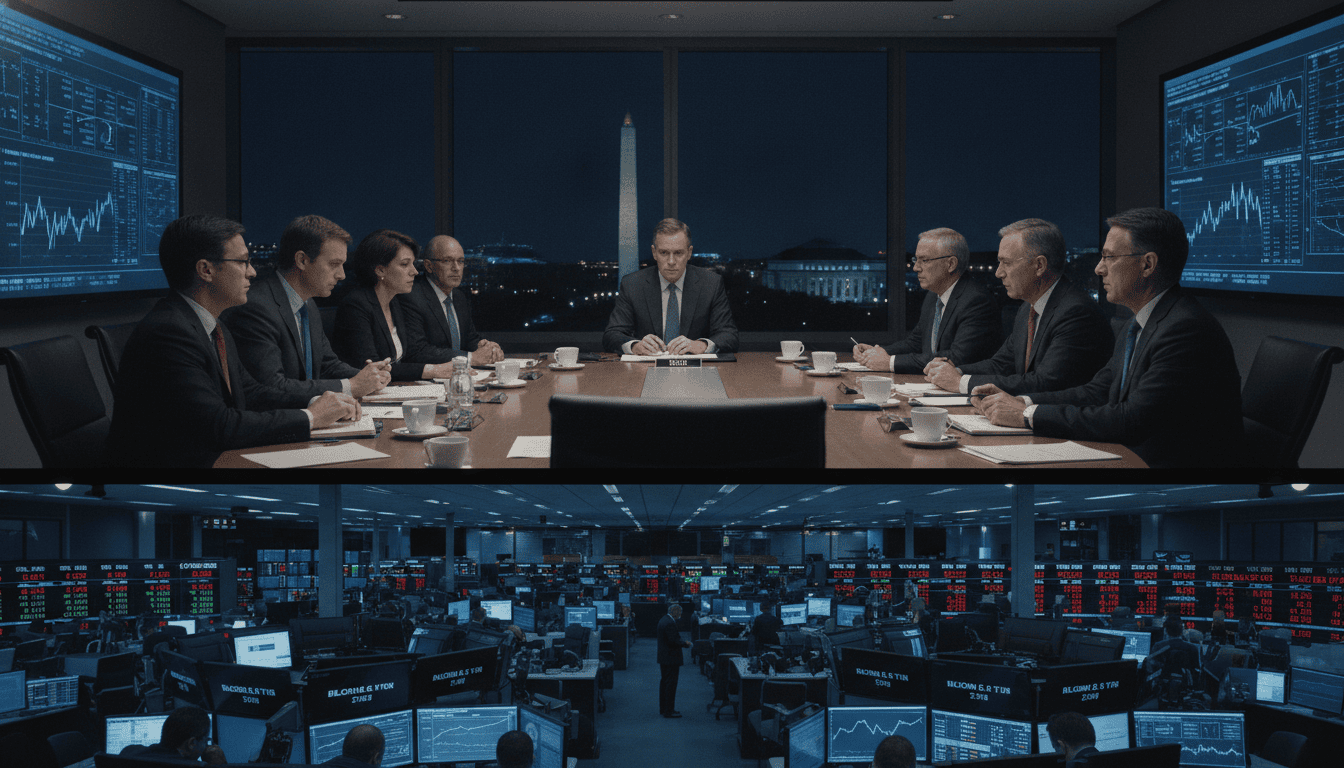
Citadel warning increases chance of a Fed rate hike at today’s meeting under Kevin Warsh
Citadel warns markets a surprise Fed rate hike could come under chair Kevin Warsh, fueling volatility as inflation and geopolitical tensions push up prices.
In a shift that has rattled investors, a Citadel Securities analysis has increased expectations that the Federal Reserve could deliver a surprise Fed rate hike at its meeting today under new chair Kevin Warsh. Markets had been positioned for a steady decision, but the firm’s call introduced fresh uncertainty that traders say could trigger sharp moves in equities and bonds. The possibility of an early increase highlights tensions between data, geopolitics and political pressure on the central bank.
Citadel report changes market calculus
Citadel Securities released a research note ahead of the meeting that argued conditions now favor an earlier rate increase than most investors expect. The analysis cited stronger-than-anticipated resilience in parts of the economy and recent price pressures, prompting traders to reassess probabilities for a Fed action. Market participants reacted swiftly; trading desks reported widened price swings and reduced risk appetite as models were updated overnight.
Bloomberg and other financial services flagged the note as a catalyst for renewed anxiety in markets already sensitive to policy shifts. Analysts at Citadel argued that an unexpected move could force markets to price in fundamentals rather than rely solely on Fed communication patterns. For investors, the report underscored how a single influential forecast can amplify uncertainty in an environment where timing matters as much as direction.
Warsh faces competing pressures in Washington and markets
Kevin Warsh’s appointment as Fed chair came amid intense public pressure from President Donald Trump to ease monetary policy ahead of congressional elections. Trump’s repeated criticisms of his predecessor, coupled with public appeals for lower interest rates, have placed the Fed’s independence in the spotlight. Still, the central bank’s mandate to control inflation and maintain employment constrains its options, and officials must weigh political calls against economic signals.
A decision to raise rates would signal Warsh’s willingness to assert policy autonomy and prioritize price stability over political convenience. Conversely, delaying action risks further inflationary momentum if fuel and commodity costs continue to climb. Warsh’s team must balance credibility with caution, a tightrope that becomes more precarious when markets expect clarity and predictability.
Oil prices and the Iran conflict complicate the inflation outlook
Recent geopolitical developments, particularly tensions involving Iran, have pushed energy costs higher and complicated the inflation picture. Higher gasoline and diesel prices can feed directly into headline inflation and ripple through transportation and goods costs. In that context, a looser policy stance would risk amplifying price pressures at a delicate moment for household budgets and corporate input costs.
Fed officials have repeatedly signaled concern over second-round inflation effects and wage growth that could entrench higher consumer prices. With energy-driven inflation already affecting real incomes, the central bank faces a narrower window to act without damaging economic momentum. The volatility in commodity markets thus strengthens the case for at least considering a preemptive policy response.
Surprise move would break recent central bank norms
A sudden Fed rate hike would depart from recent practice of telegraphing policy shifts well in advance to avoid market disruption. Citadel’s analysts argued that an unanticipated adjustment could serve as a corrective shock, forcing market participants to price policy based on economic fundamentals rather than Fed cadence and commentary. That approach, however, carries risks of triggering outsized selling and dislocation across asset classes.
Historical episodes show markets dislike uncertainty, and abrupt changes in monetary policy can amplify volatility in short order. Global investors pay close attention to Fed signals; a surprise increase could prompt rapid repositioning in currency and bond markets, with spillovers to emerging economies and international funding conditions. For the Fed, the trade-off is between reinforcing monetary credibility and avoiding destabilizing market reactions.
What investors and firms are doing in response
Trading desks and asset managers have reported precautionary moves since the Citadel note circulated, including reducing directional exposure and increasing liquidity buffers. Some institutional players shifted to shorter-duration bonds and hedged equity positions to insulate portfolios from sudden rate-driven repricing. Corporate treasurers are also watching closely; a sharper-than-expected rate move could raise borrowing costs and affect planned financing activity.
Risk strategists say contingency planning matters: firms that can pause aggressive deployments and maintain cash flexibility are better positioned if volatility spikes. Market structure also matters—the speed and scale of rebalancing in today’s electronic markets can magnify moves that originate from a single influential forecast or a central-bank surprise.
Despite the heightened noise, many economists caution that a one-off Fed rate hike would not by itself determine the medium-term policy path. Subsequent decisions will depend on incoming data and the Fed’s read of inflation and labor-market dynamics. Still, the immediate impact of a surprise would be felt across markets and political discourse, underscoring how sensitive the financial system has become to shifts in central-bank signaling.
The outcome of today’s meeting will determine whether Warsh establishes a new approach to surprise and market discipline or opts to preserve the recent practice of patient communication. Either result will shape investor expectations heading into the autumn congressional elections and inform how global markets assess U.S. monetary policy risks.
