
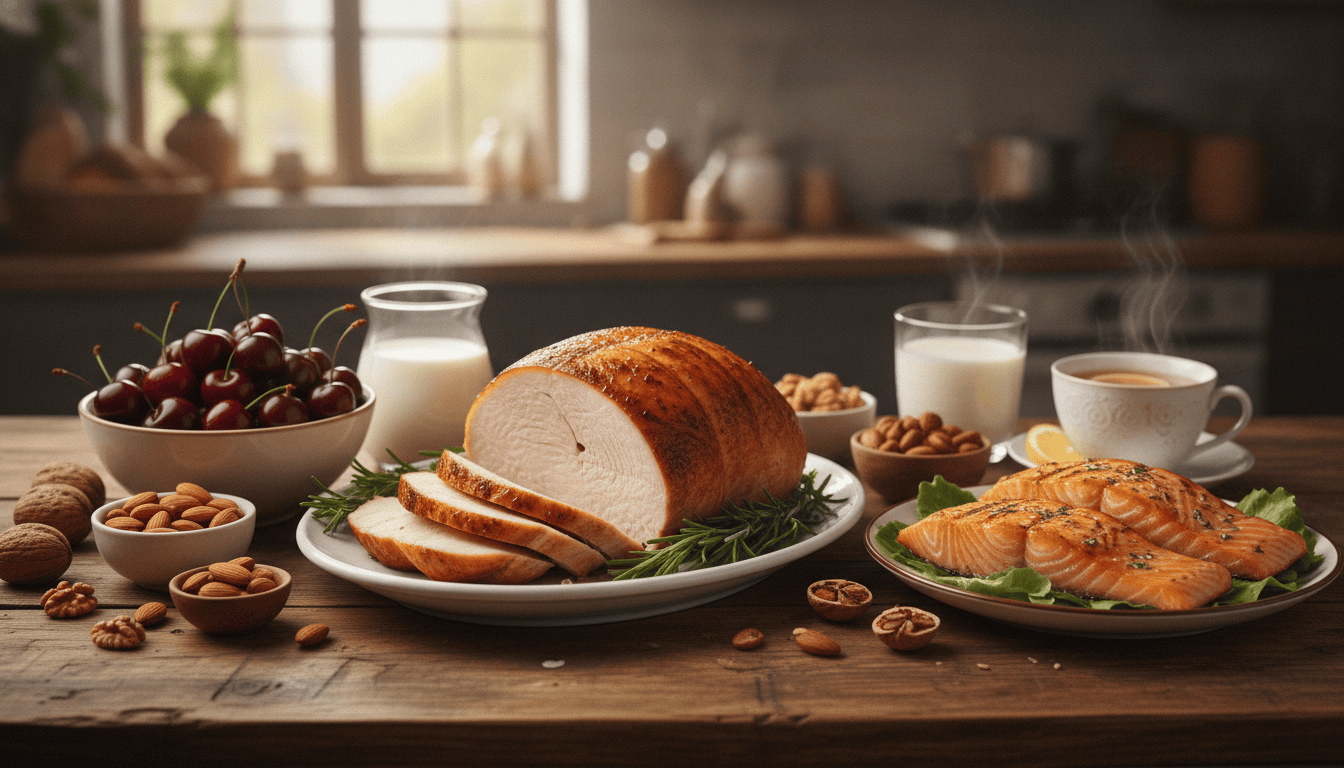
Foods for Better Sleep: What to Eat Tonight to Improve Rest
Evidence shows certain foods for better sleep — tart cherry juice, turkey, fatty fish, kiwi and fiber — plus evening eating tips to improve rest tonight.
Many people struggle to fall or stay asleep, and emerging nutrition research suggests diet can be one contributing factor. Foods for better sleep contain nutrients such as melatonin, serotonin precursors and omega-3s that may influence sleep timing and quality. Nutrition experts recommend combining specific foods and evening habits rather than relying on single ingredients or supplements.
Tryptophan-rich proteins and turkey
Tryptophan is an essential amino acid found in protein-rich foods that helps the body produce serotonin and melatonin, hormones linked to mood and sleep regulation. While the myth of post-feast drowsiness from turkey alone is overstated, including turkey, chicken, eggs, milk and cheese as part of an evening meal can increase tryptophan intake. For absorption, pair these proteins with a modest portion of whole-grain carbohydrates, which support the amino acid’s access to the brain and may aid sleep onset.
Tart cherry juice and natural melatonin
Tart, or Montmorency, cherries are a natural source of melatonin and have been investigated for sleep benefits in small clinical studies. Drinking unsweetened tart cherry juice twice daily was associated with modest improvements in sleep duration and sleep quality for adults with insomnia in trial settings. Because the juice contains a biologically active compound, people should consult a health provider about potential interactions with medications before adding it to a nightly routine.
Fatty fish, omega-3s and vitamin D
Regular consumption of fatty fish such as salmon, sardines and mackerel supplies unsaturated fats and vitamin D, both of which have been linked to healthier sleep patterns in observational research. Diets higher in omega-3 fatty acids have correlated with better sleep quality compared with diets high in saturated fats. Nutritionists commonly recommend eating fatty fish two to three times per week as part of a balanced diet that supports overall health and may indirectly improve sleep.
Kiwi, serotonin and pre-bed fruit choices
Kiwi fruit contains nutrients that support serotonin production and has been examined in small studies for its potential to improve sleep when eaten before bedtime. Some trial participants reported better sleep quality after consuming two kiwis about an hour before sleep, though those studies were limited in size and duration. Kiwis also provide fiber and vitamin C, making them a low-calorie, nutrient-dense choice for an evening snack when a light, sleep-friendly option is needed.
Dietary fiber, the gut microbiome and sleep regulation
A diverse, fiber-rich diet promotes a healthy gut microbiome, and emerging evidence links gut bacteria composition with sleep regulation. Increasing intake of fruits, vegetables, legumes, nuts, seeds and whole grains supports beneficial microbes that produce metabolites influencing brain and sleep function. Including a variety of plant-based fiber sources across meals can be a practical strategy for long-term improvements in sleep quality rather than a short-term fix.
Evening eating habits to avoid sleep disruption
Beyond specific foods, timing and composition of evening meals matter for sleep quality. Set a personal caffeine curfew well before bedtime—individual sensitivity varies, and some people require many hours to clear caffeine from their system. Limit alcohol close to sleep time because it can fragment sleep despite making it easier to fall asleep initially, and avoid high-sugar foods and drinks late at night to reduce blood sugar spikes and night-time alertness.
Lean toward balanced evening meals that combine moderate protein, whole grains and vegetables for sustained fullness without heaviness. Examples include a thin-sliced turkey roll with hummus and whole-grain crackers, a salmon fillet with roasted vegetables and quinoa, or a turkey chili paired with a baked sweet potato. When choosing snacks, opt for unsweetened tart cherry juice or a small serving of kiwi rather than candy or sugary beverages.
Small dietary changes can be part of a broader sleep-improvement plan that also addresses consistent bedtimes, light exposure and stress management. Consult a healthcare professional before starting supplements or making major diet shifts, particularly if you take medication or have chronic health conditions.
