
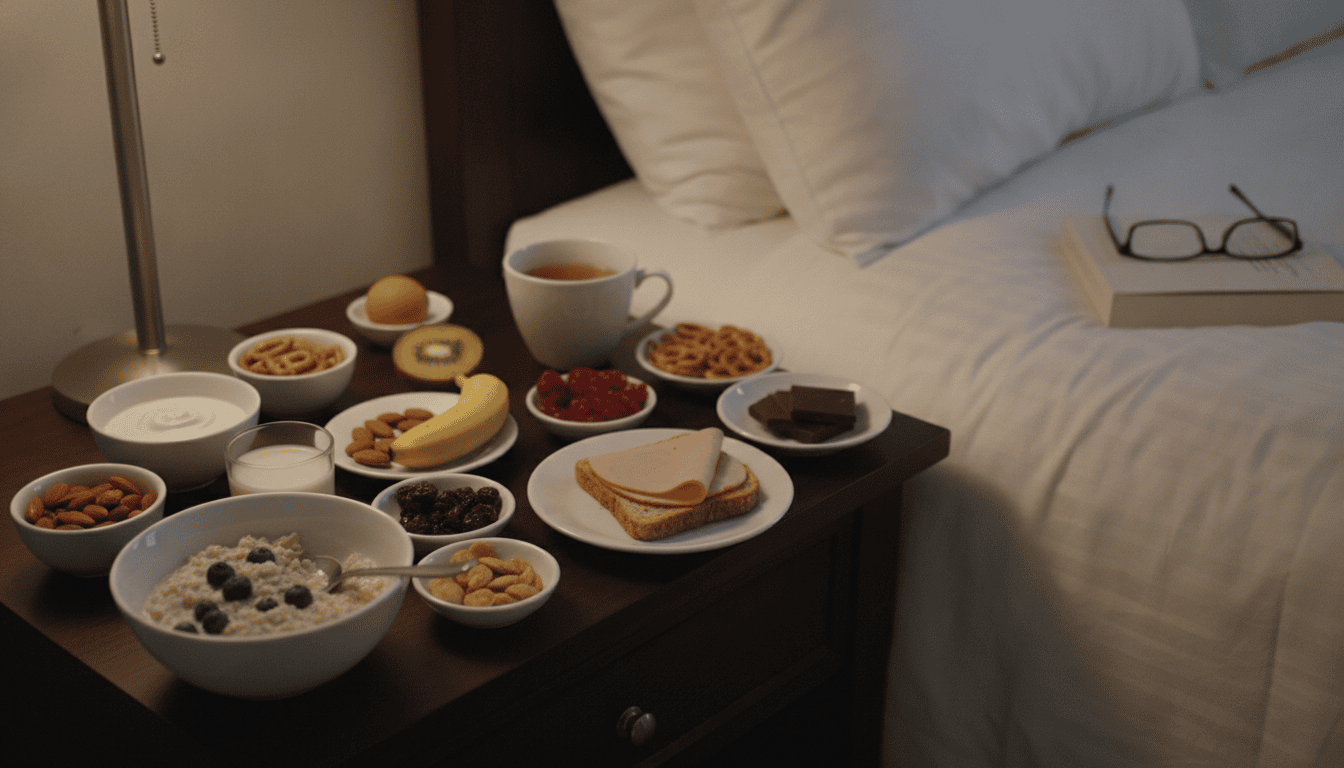
12 Bedtime Snacks Nutritionists Highlight to Ease Stress and Improve Sleep
Twelve nutrient-rich bedtime snacks that may ease stress and improve sleep quality. Tips for choosing satisfying late-night bites that won’t disrupt rest.
Stress often follows people to the bedside, and small dietary choices before sleep can influence both mood and the quality of rest. Nutritionists and sleep researchers point to specific bedtime snacks that provide melatonin, tryptophan, magnesium, omega-3s, or fibre—nutrients linked to relaxation and more stable sleep. This article summarizes 12 practical options and offers guidance on portioning and timing to help people use bedtime snacks strategically.
Tart cherries and kiwi: natural sleep-supporting compounds
Tart cherries are notable because they naturally contain melatonin, the hormone that helps regulate the sleep-wake cycle. Consuming a small glass of unsweetened tart cherry juice or a handful of cherries in the evening can modestly raise melatonin levels and has been associated with improved sleep duration in some trials. Kiwi also contains small amounts of melatonin plus serotonin and vitamin C, and limited research has suggested regular pre-sleep consumption may increase total sleep time and reduce nighttime awakenings.
Yogurt, cottage cheese and turkey: protein and tryptophan for calm
High-quality protein sources like Greek yogurt, cottage cheese, and lean turkey are convenient bedtime snacks that supply tryptophan, an amino acid the body uses to produce serotonin and melatonin. Protein before bed can also blunt hunger and prevent disruptive awakenings while supporting overnight muscle repair. Choosing plain or low-sugar dairy and lean turkey slices keeps the snack light and minimizes potential blood sugar spikes that can interfere with sleep.
Seeds and nuts: magnesium, melatonin precursors and healthy fats
Pumpkin seeds, walnuts and other nuts are rich in magnesium, zinc, healthy fats and small amounts of melatonin or melatonin precursors such as tryptophan. Magnesium in particular plays a role in nerve and muscle relaxation and has been linked to reduced stress and better sleep in some studies. A small handful of mixed nuts or a sprinkle of seeds on yogurt provides a concentrated source of these minerals without a heavy caloric load.
Whole grains, oats and bananas: steadying carbohydrates
Complex carbohydrates from whole-grain toast, oatmeal or a small serving of whole-grain crackers can help steady blood sugar overnight and support the transport of sleep-promoting amino acids to the brain. Oats also contain trace amounts of melatonin and warm oatmeal can be a comforting, low-volume option before bed. Bananas pair well with whole grains and nut butter, providing magnesium and potassium that may aid muscle relaxation while keeping portions modest.
Edamame and salmon: plant and animal options for omega-3s and protein
Edamame and fatty fish such as salmon supply protein along with nutrients linked to mood regulation, including omega-3 fatty acids and folate. Omega-3s have been associated in some research with improved mood and reduced symptoms of anxiety, which can indirectly support better sleep. A small plate of shelled edamame or leftover salmon on whole-grain crackers offers a savory alternative to sweeter bedtime snacks and helps maintain evening satiety.
Practical portioning and timing advice for late-night eating
Eating a light snack about 30 to 60 minutes before bed is generally more helpful than consuming a large meal close to lights-out, which can impair digestion and disturb sleep. Aim for snacks that combine a carbohydrate with a small amount of protein or healthy fat to promote satiety without overload. Keep added sugars low and avoid high-fat, spicy or heavily processed options that are more likely to provoke reflux or restless sleep.
Common foods to avoid within a few hours of bedtime
Certain items reliably interfere with the transition to restful sleep and should be minimized in late-evening routines. Caffeine from coffee, energy drinks and some teas can persist in the bloodstream for hours and delay sleep onset. Alcohol may induce drowsiness initially but tends to fragment sleep later in the night, and large or spicy meals can trigger heartburn or indigestion. Sugary desserts and greasy fried foods may cause blood sugar volatility and physical discomfort that undermines restorative sleep.
Sleep-friendly snacking is not a cure for chronic stress or insomnia, but selecting nutrient-dense, modest portions can support a calmer evening and more stable rest. Individuals with persistent sleep problems, significant anxiety, or dietary restrictions should consult a healthcare professional for tailored advice. Making small, consistent adjustments to bedtime snack choices—favoring cherries, kiwi, dairy or lean protein, seeds, whole grains and omega-3 sources—can be a practical step toward better sleep and improved stress resilience.
