
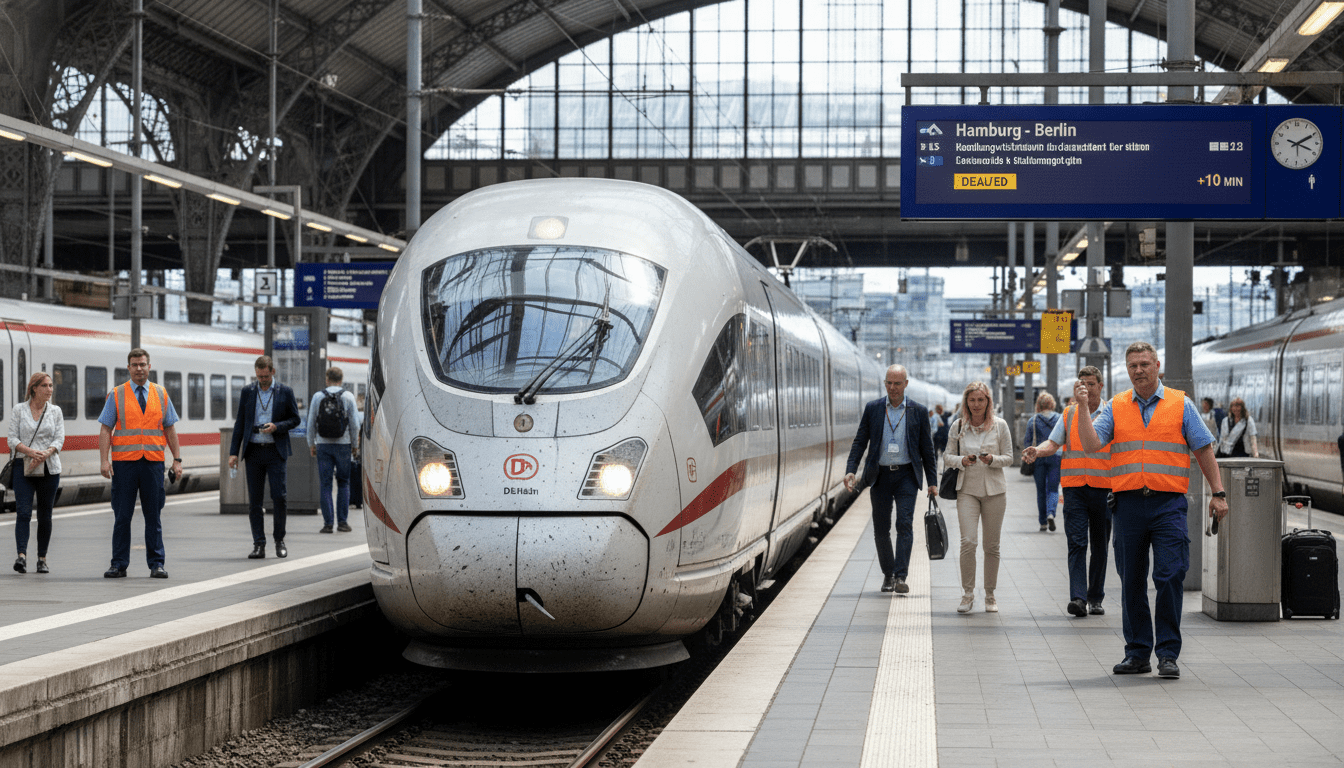
Hamburg–Berlin rail line to reopen June 14 as Deutsche Bahn restores services
Hamburg–Berlin rail line reopens June 14 as Deutsche Bahn restores timetables; ICE and long‑distance trains will run 5–10 minutes slower during tests.
The Hamburg–Berlin rail line will reopen for regular service on June 14, with Deutsche Bahn confirming that regional and local services will resume their normal timetables. Long‑distance ICE and other fast services will operate in full capacity but are expected to take five to ten minutes longer on journeys for roughly the first two weeks. The company cited final acceptance work on new signalling and interlocking systems between Hagenow Land and Berlin‑Spandau, plus load and test runs, as the reason for temporary speed restrictions.
Reopening date and immediate service plan
Deutsche Bahn announced a firm restart date of June 14, following an extended renovation period that closed the corridor in August 2025. Regional and local trains will run to timetable schedules from that date, restoring frequent commuter connections across the corridor. Long‑distance services will remain scheduled but will include small, temporary time buffers to accommodate ongoing technical checks.
Passengers are being advised that while trains will run at full seat and carriage capacity, journey times for the ICE and other express trains may be marginally longer during the initial fortnight. Deutsche Bahn has framed the measure as a safety and verification step rather than a capacity or infrastructure limitation.
Technical work behind the temporary speed limits
The speed restrictions stem from final acceptance and commissioning of new signal and interlocking technology installed along the route. Engineers are conducting a series of load and acceptance runs to verify systems under operational conditions, which requires certain sections of track to be traversed at reduced speed. These procedures are standard in major infrastructure renewals and ensure signalling, track circuits and remote interlockings operate reliably before unrestricted speeds are permitted.
Rail operators stress that the checks are precautionary and time‑limited; they are intended to identify and correct any issues under real traffic loads rather than in isolated test environments. Officials said the work affects the section between Hagenow Land and Berlin‑Spandau most directly, where upgrades to control systems are concentrated.
Passenger impact and timetable consequences
The 280‑kilometre corridor between Germany’s largest city and its capital is a major passenger artery, used by commuters and long‑distance travelers alike. Before the renovation, the route handled around 30,000 long‑distance passengers daily and accommodated roughly 470 trains per day, figures that underline the economic and social importance of the link. Even small timetable changes on this corridor can ripple through national schedules, affecting connections and regional services.
Rail users should expect ICE and other fast services to show an additional five to ten minutes travel time for journeys that cross the upgraded segment, particularly in the first two weeks after reopening. Deutsche Bahn has indicated that all trains planned for the corridor will run as scheduled, but travelers are advised to check departure boards and digital timetables for any platform changes or minute‑by‑minute updates.
Why the reopening was delayed
The general renovation of the Hamburg–Berlin corridor began in August 2025 with the aim of modernising track, signalling and station infrastructure along the route. Deutsche Bahn originally targeted a May 1 reopening, but prolonged cold and frosty weather during the winter months delayed critical work and testing. Those conditions affected both ground works and the installation and calibration of electronic systems, pushing back final commissioning steps.
A partial reopening took place on May 15 for the segment between Hamburg and Hagenow Land/Schwerin, restoring regional services on that stretch ahead of the full corridor restart. The staged approach allowed some passenger flows to resume while crews completed the remaining technical work further east.
Operational outlook and what travelers should do
Deutsche Bahn says it will monitor operations closely during the two‑week period of restricted speeds and adjust timetables if acceptance tests identify any need for further interventions. Staff at major stations along the line will be available to assist passengers with connections and to provide last‑minute updates. The operator emphasises that safety verification will remain the priority even as services return to normal.
Travelers should allow a small buffer when planning connections that rely on the Hamburg–Berlin corridor for onward travel, especially in the first days after reopening. Checking the DB timetable app or station displays before departure will help avoid missed connections and provide the latest information on platform assignments and minute‑level adjustments.
The reopening of the Hamburg–Berlin rail line represents a significant step in restoring one of Germany’s busiest passenger corridors, with comprehensive upgrades intended to improve reliability and capacity over the coming years.
