
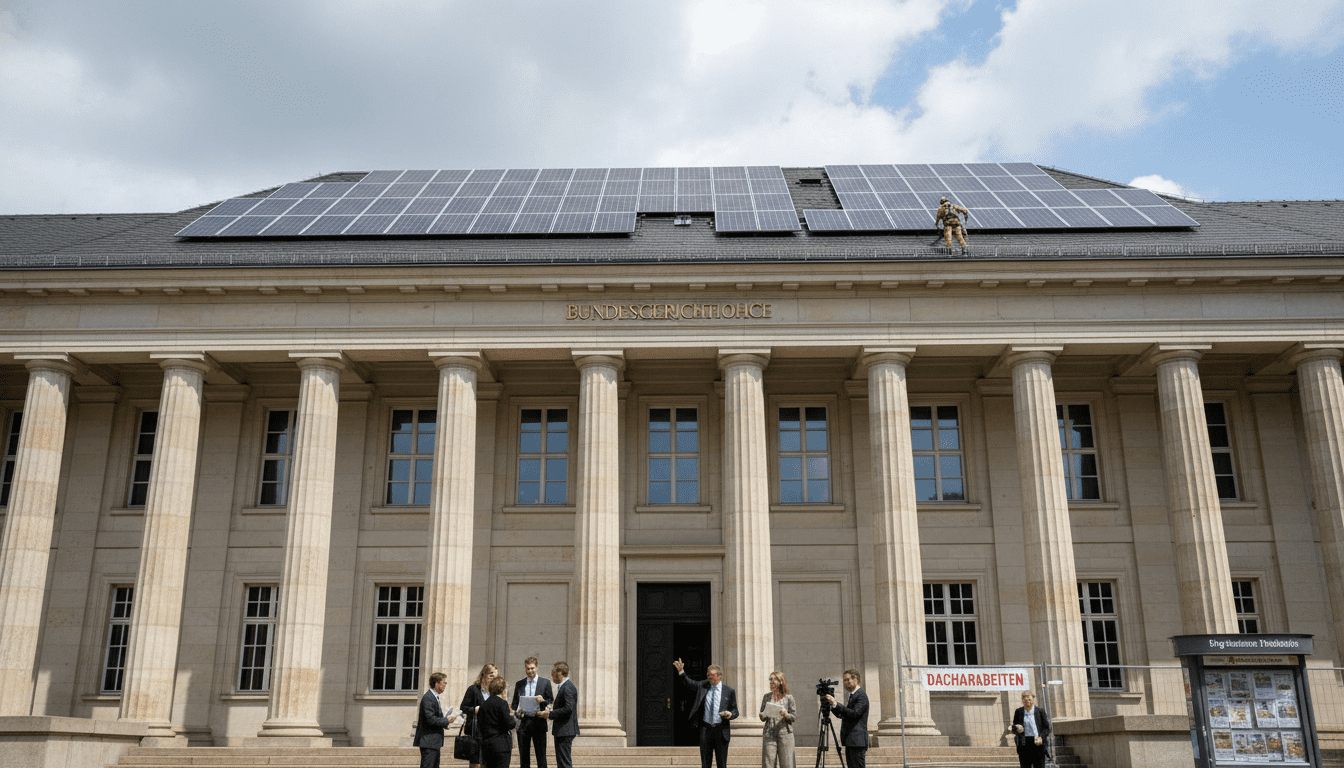
Solar roof rental ruled a tenancy, not a lease, by Brandenburg appeals court
Brandenburg appeals court rules rooftop solar arrangements are rentals, not leases; owners bear roof-aging risk. Guidance for solar roof rental contracts.
Court finds rooftop solar use is a rental, not a lease
The Oberlandesgericht Brandenburg on March 10, 2026, ruled that allowing a third party to mount photovoltaic panels on a building’s roof creates a rental-like relationship rather than a traditional lease. The decision, in case 3 U 136/23, arose from a dispute over damage and accelerated wear to a hall roof after long-term use by a solar operator. The ruling directly addresses how courts should classify agreements that grant access to a roof for electricity generation.
The court’s wording makes the distinction based on the nature of the economic gain: the court found that electricity generated by panels is produced by the operator’s equipment, not a natural “fruit” of the roof itself. That legal characterization changes which rules and precedents apply to maintenance, liability and the allocation of deterioration risks. As a result, many arrangements commonly described as “pacht” in German law will instead be treated as a contractual use of space akin to a Mietvertrag.
Facts of the dispute over a hall roof
The case involved property owners and a photovoltaic operator who had installed modules on a municipal hall roof and used the surface for many years. After the panels had been in place for an extended period, the owners sought compensation and claimed the installation had increased wear and required earlier renovation. Central questions were which party must cover renovation costs and how to apportion ordinary aging against use-related damage.
Evidence presented showed long-term access, additional fastenings and maintenance traffic related to the system’s operation. The owners argued the cumulative impact shortened the roof’s lifespan; the operator argued that ordinary wear and tear and the passage of time explained the need for repairs. The appeals court weighed those factual claims against statutory principles about property risk and contractual allocation.
Legal distinction: why electricity is not a “fruit” of the roof
The court emphasized that a defining feature of a lease of “fruits” (Pacht) is the right to harvest natural yields from a property, such as crops from farmland. In contrast, the production of power from solar panels depends on technical equipment the operator installs and operates. The electricity is thus the output of movable assets and technical processes, not an inherent yield of the roof itself.
That reasoning leads to a classification of the arrangement as a use agreement or rental of roof space, with different obligations and expectations for the parties. The decision clarifies that labels used in contracts are subordinate to the legal substance of the arrangement. Judges will look to who supplies the means of production and who profits from them when deciding whether a contract is a lease in the Pacht sense.
Court assigns increased wear risk to property owners
Importantly, the court held that risks of accelerated aging from additional installations and maintenance primarily fall within the property owner’s sphere. The ruling states that an owner who allows use of a roof must regularly expect higher levels of stress than would occur in the absence of an installation. Consequently, general deterioration linked to such permitted use is part of the owner’s risk to bear unless contractually shifted.
The court did not rule that operators can never be liable for damage caused by negligent installation or maintenance. Instead, it drew a distinction between ordinary accelerated wear, which the owner should anticipate, and extraordinary or improperly caused damage, which can remain the operator’s responsibility. This delineation affects how parties should draft indemnities, insurance clauses and cost-sharing arrangements.
Practical implications for owners and solar operators
For property owners, the decision underscores the need for precise contractual terms that specify who pays for upkeep, repairs and eventual roof replacement. Owners should consider insurance for accelerated wear and negotiate explicit provisions requiring operators to contribute to or finance specific renovation work. Clear schedules for inspection, documented handover conditions and defined restoration obligations at contract end will reduce later disputes.
Operators should ensure written agreements limit obligations for normal roof aging while accepting responsibility for harm caused by their equipment or actions. They should also document installation methods and maintenance activities to show compliance with industry standards. Both sides will benefit from clauses addressing duration, termination, removal of equipment and allocation of costs for upgrades or statutory changes.
Guidance from legal practitioners and next steps
Legal experts say the ruling will prompt a review of existing rooftop agreements and renew negotiations on future contracts. Nils Flaßhoff, a partner at the Bethge law firm in Hannover, notes that this judgment makes it clear who usually bears the inherent risk of earlier roof replacement and underlines the importance of drafting. Parties will need tailored clauses to distribute risk in a way that reflects commercial expectations and the technical realities of photovoltaic systems.
Counsel and property managers should audit portfolios for legacy arrangements that use imprecise language and update those contracts where the balance of cost and liability is unclear. Municipalities, landlords and commercial tenants that host solar projects may seek to renegotiate terms or require enhanced insurance and bonding to protect against unforeseen repair bills.
The appellate decision sets a precedent that will shape rooftop solar deals going forward, and it highlights the need for careful contractual allocation of maintenance, renovation and liability risks in solar roof rental arrangements.
