
Germany Faces Tight Race in UN Security Council Election for 2027–28 Non‑Permanent Seat
Germany’s bid for a non‑permanent UN Security Council seat faces a three‑way contest with Portugal and Austria as the UN General Assembly votes for 2027–28.
Germany’s bid on the UN Security Council ballot
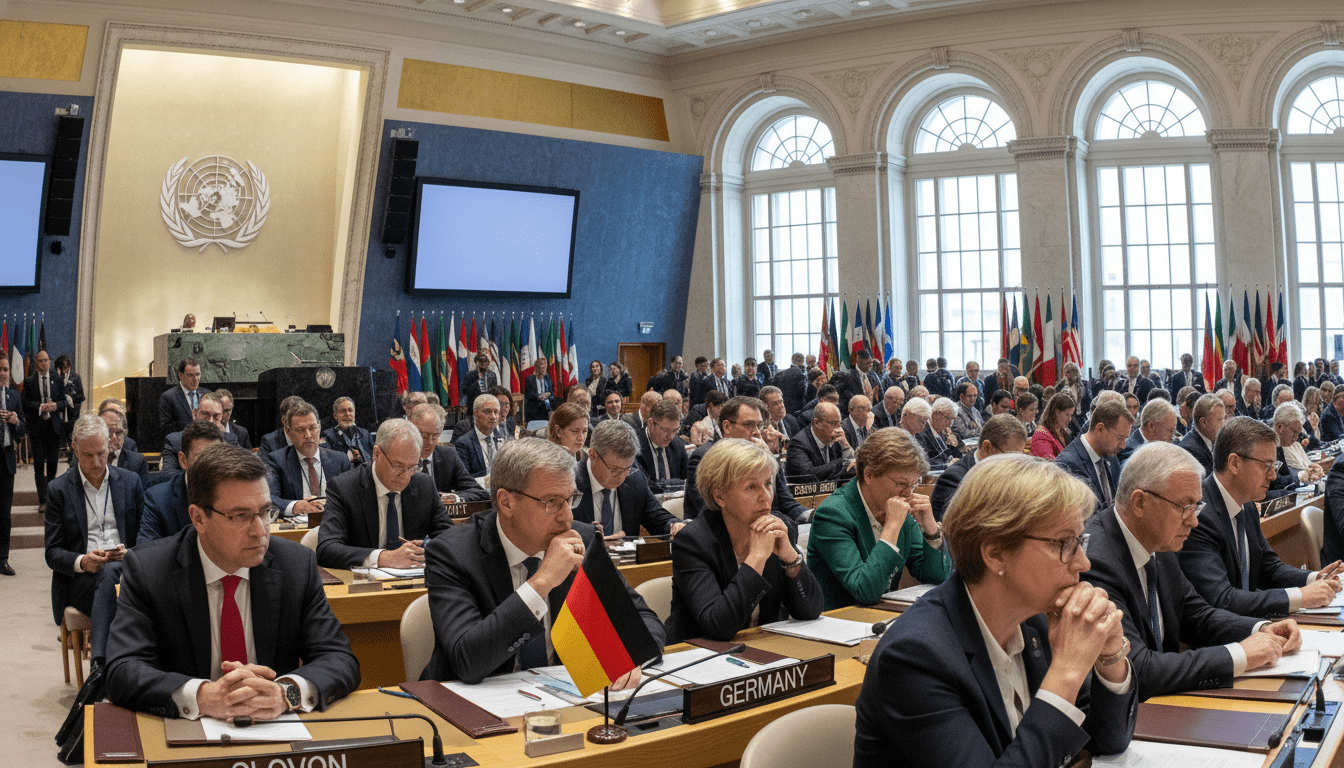
Germany is campaigning for one of the two Western European and Others Group non‑permanent seats on the UN Security Council that will be filled for 2027–28. The General Assembly vote, scheduled for Wednesday in New York, will determine whether Berlin secures a seat alongside or instead of Portugal and Austria. Außenminister Johann Wadephul is in New York actively pressing Germany’s case, reflecting the high diplomatic priority Berlin places on membership of the UN Security Council.
Germany has framed the campaign as a chance to shape international responses to security crises and multilateral challenges over the next two years. Securing a non‑permanent seat is widely regarded in capitals as both a symbolic prize and a practical platform for influence on sanctions, peacekeeping and conflict de‑escalation. German officials argue their experience in development, diplomacy and NATO partnerships strengthens their candidacy.
Regional math tightens the contest
The UN Security Council’s composition combines five permanent members with ten elected non‑permanent members serving staggered two‑year terms. For the Western Europe and Others Group there are only two non‑permanent slots available in this round, while three committed candidates are competing. That arithmetic guarantees at least one disappointment and forces member states to make strategic choices between longstanding partners and newer claimants.
Political observers say the limited number of seats for the region magnifies campaign intensity and behind‑the‑scenes bargaining, as countries canvass for support across Africa, Asia and Latin America in addition to within Europe. For Germany, the potential loss would be politically painful given Berlin’s sustained diplomatic outreach and investment in multilateral institutions.
Diplomacy in New York: campaigning and alliances
German diplomats have mounted a visible canvassing effort, combining bilateral meetings, public diplomacy and appeals to UN members about continuity and competence. Wadephul’s mission in New York includes intensive shuttle diplomacy with delegations across regional groups, aiming to build the two‑thirds majority required in the General Assembly. Officials involved in campaign planning emphasize Germany’s contributions to UN operations and its role in humanitarian funding as selling points.
Campaigning at the UN frequently hinges on personal relationships, timing and reciprocal support for other votes, not solely on formal statements of policy. Delegations say that side agreements, pledges of technical assistance and development cooperation often tip the balance when choices between candidates are close.
Geopolitical context: fractures at the Security Council
The vote takes place against a backdrop of pronounced international tension that underscores why seats on the Security Council matter. Recent exchanges in the Gulf between the United States and Iran — including reported defensive actions against missiles and drones and retaliatory strikes — have highlighted the Council’s central role in crises where its permanent members are often divided. Those divisions make additional non‑permanent voices potentially influential in shaping debate and agenda items.
Germany’s campaign messaging points to an intent to use a Council seat to promote dialogue, support conflict prevention and advance humanitarian relief, while critics note that the Council’s permanent membership and veto powers place hard limits on what elected members can achieve alone.
Domestic and European angles on the campaign
The Security Council bid is unfolding alongside domestic and EU political developments that could affect perceptions in capitals deciding how to vote. Brussels has recently challenged the German government’s justification for reintroducing border controls in autumn 2024, proposing alternative measures such as targeted police checks and biometric tools. Such disputes within the EU add a layer of politics to Germany’s appeal as a consensus builder.
Domestically, political actors and commentators are watching the campaign for signs of how Berlin will prioritize foreign policy and resource commitments if elected. A successful bid would require commitments to staff UN missions, fund peacekeeping and sustain active participation in Security Council debates.
Other headlines shaping the international mood
Beyond the Security Council contest, a cluster of consequential stories is coloring diplomatic conversations at the UN this week. Washington’s selection of a new national intelligence coordinator has drawn attention in capitals concerned about US intelligence oversight and policy direction. Security incidents in European cities and the intensifying geopolitical competition over global events have also fed into discussions about governance, security and international cooperation.
Meanwhile, the upcoming FIFA World Cup, jointly hosted by Canada, Mexico and the United States, is a recurring reference point in conversations about global leadership and soft power, underscoring how diplomacy, sport and politics intersect on the world stage.
Germany will learn the outcome later on Wednesday when the General Assembly tallies votes, with results likely to reverberate through Berlin and across the diplomatic community in New York. The election will determine which two Western European countries will sit alongside the Security Council’s permanent members for 2027–28, and whether Germany secures the coveted platform it has sought.
