
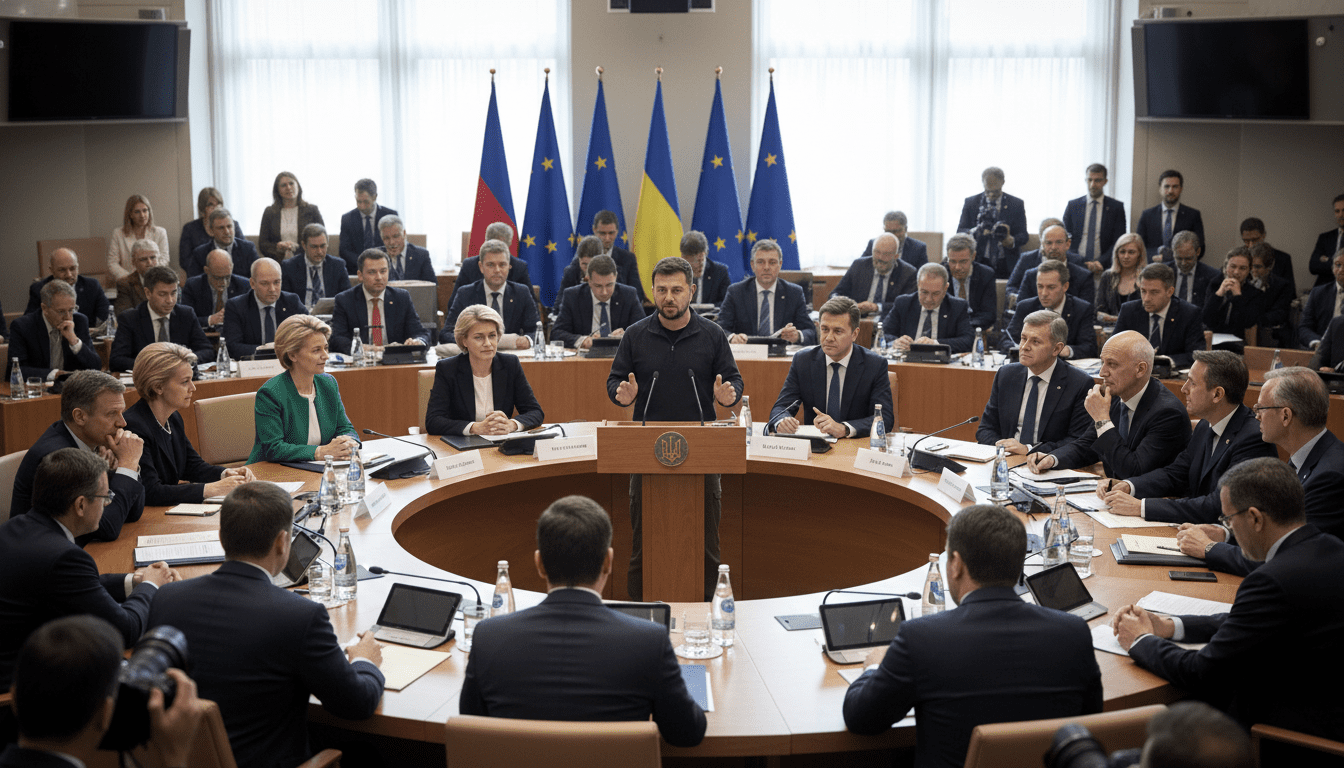
European support for Ukraine strengthened after Starmer-hosted summit call with Zelensky
European leaders pledge to bolster aid and coordination for Ukraine after a high-level virtual meeting hosted by UK Prime Minister Keir Starmer, focusing on battlefield gains, long-range strikes, and intelligence sharing.
Summit call convened by Prime Minister Starmer ushers renewed commitment
A virtual summit hosted by UK Prime Minister Keir Starmer brought European leaders together with Ukrainian President Volodymyr Zelensky to reaffirm European support for Ukraine. The meeting, the first of its kind in months, produced a joint pledge that support “will be strengthened in the coming months,” according to a Downing Street spokesperson.
Participants described the session as an urgent response to the continued Russian aggression and a signal that European capitals intend to coordinate more closely on military, diplomatic and intelligence matters. The conversation marked a resumption of high-level engagement after weeks of relative diplomatic pause.
E3 countries to pursue a clearer negotiating role with Ukraine and Russia
Germany, France and the United Kingdom — the so-called E3 — emerged from the call with an agreement to intensify consultations with Kyiv and press for a defined European role in any future talks. Leaders tasked their security advisers to meet soon to map out practical steps for involvement in negotiations.
European officials said the E3 will press for clarity on who will represent the continent should mediated talks resume, underlining that more formal European participation is a priority. Efforts to join ongoing US-mediated discussions have so far been unsuccessful, and the E3 intends to pursue a sustained diplomatic track with Ukraine.
US focus on the Middle East has limited its recent mediation efforts
Several participants noted that Washington’s bandwidth for mediation has been constrained by the Iran conflict since late February, reducing its capacity to drive parallel European engagement. European leaders signaled they would not cede the field entirely and sought to ensure their perspectives are included in any renewed peace architecture.
Russia’s recent proposal to involve former German Chancellor Gerhard Schröder as a mediator was widely rejected by European capitals, which described the offer as politically toxic because of Schröder’s longstanding ties with Moscow. That reaction has bolstered the E3’s push for a trusted European interlocutor.
Discussion addressed battlefield developments and long-range Ukrainian operations
The leaders reviewed military developments on the ground, with Zelensky briefing them on what he described as a strengthened Ukrainian position across several fronts. He highlighted Kyiv’s enhanced strike capabilities, including long-range drone operations that have targeted infrastructure deep inside Russia, notably facilities tied to the oil sector.
Western officials on the call acknowledged those operations and discussed their strategic implications, including the need to calibrate continued support while minimizing escalation risks. The summit underscored the link leaders are drawing between battlefield success and the diplomatic leverage necessary for any future negotiations.
Intelligence cooperation and next steps for security dialogues agreed
Zelensky told leaders he had apprised them of Russian plans affecting Ukraine, Belarus and other parts of Europe and said intelligence sharing would expand as a result of the call. He said teams will exchange more detailed information at the intelligence level, a move leaders framed as essential for preparing responses and strengthening deterrence.
Participants agreed to convene additional summit-level and expert-level meetings. The British government spokesman indicated that the leaders “have agreed to speak again soon,” and security advisers from the four key countries will meet to translate the summit’s commitments into operational steps.
European unity framed as central to wider regional security
Throughout the call, leaders emphasized that backing Ukraine remains crucial not only for Kyiv but for the broader security of Europe and the international order. The summit framed European support as a matter of collective defense and economic resilience tied to disrupting revenue streams that sustain Moscow’s military campaign.
Officials committed to aligning diplomatic, military and economic measures to maintain pressure on Russia while supporting Ukraine’s capacity to defend its territory and pursue a durable outcome. The renewed emphasis on coordination aims to present a united European front in the months ahead.
The Starmer-hosted session therefore served both as a political signal and a planning meeting: leaders pledged increased material and strategic support, agreed on enhanced intelligence exchanges, and set a path for the E3 to assert a clearer role in any resumed negotiations involving Ukraine and Russia.
