
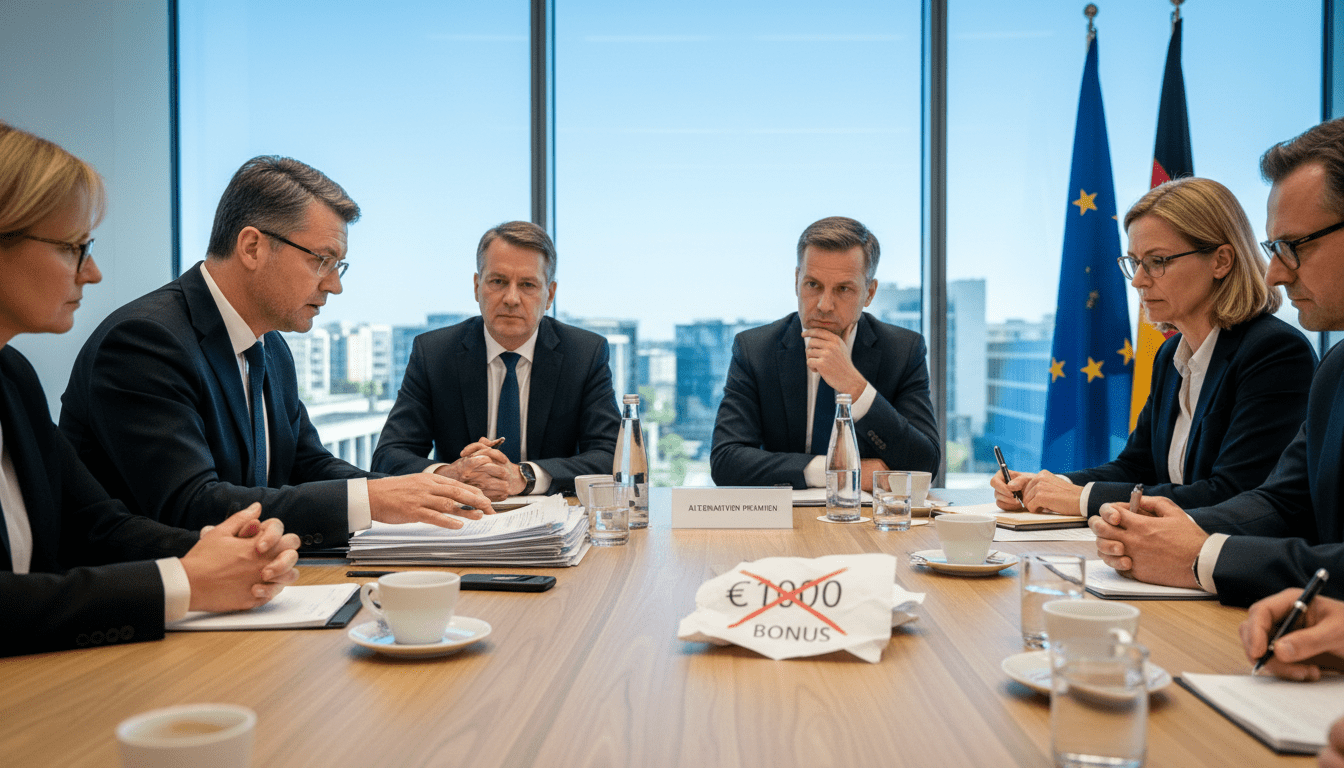
Union and SPD Hunt for Alternatives After Collapse of €1000 Bonus Plan
After the collapse of the proposed €1000 bonus, Union and SPD are searching for alternatives as debate shifts to orientation, making immediate relief unlikely for households.
The proposal for a one-off €1000 bonus has collapsed, prompting the Union and the SPD to seek other measures to address public demands for financial relief. Parties describe the current discussion as an “orientation debate,” signaling a shift away from quick, concrete measures. Political leaders will meet to explore alternatives, but insiders say immediate action is unlikely and expectations among voters remain strained.
Parties Pivot Away from the One-Off Payment
The former consensus around a €1000 bonus unraveled under political pressure and logistical objections, forcing both the Union and SPD to reassess their strategies. The abrupt end to the proposal has left party officials scrambling to find credible, implementable options that can win majority support. This pivot highlights the difficulty of designing relief packages that balance political feasibility with the urgent needs of households.
Both camps now emphasize the need for measures that can be implemented with legal clarity and fiscal responsibility. Lawmakers have raised concerns about administrative complexity and potential unintended effects on inflation and benefit systems. As a result, the search for alternatives has broadened to include targeted support, tax adjustments, and sector-specific aid.
Internal Divisions and Tactical Calculations
The fallout from the proposal exposed divisions within party ranks, with some members warning that hasty concessions could backfire politically. Union and SPD negotiators are reported to be weighing the risks of appearing indecisive versus the dangers of pushing a half-baked measure. These internal debates shape the tone of the current orientation discussion and slow progress toward a unified plan.
Negotiators face the challenge of reconciling competing priorities: immediate relief for voters, fiscal prudence, and coalition cohesion. Party strategists are also considering how any new proposal will be received by the public and media, mindful that political capital is already limited. The outcome of these tactical calculations will determine whether a viable replacement policy emerges before key parliamentary deadlines.
Public Expectations and Political Stakes
The public reaction to the €1000 bonus proposal and its collapse has underscored heightened expectations for government action on household finances. Many voters had interpreted the original promise as a sign of imminent relief, and its withdrawal risks eroding trust in political actors. Both Union and SPD now face the task of managing expectations while presenting credible alternatives.
For opposition parties and critics, the episode provides ammunition to question the government’s competence on economic policy. Supporters of the bonus argue it would have provided tangible aid to struggling households, while opponents point to better-targeted long-term measures. How parties frame the alternative proposals will be crucial for rebuilding public confidence.
Economic Constraints Shaping Policy Options
Economic considerations have played a central role in sidelining the one-off €1000 payment and shaping the search for substitutes. Policymakers cite concerns about fiscal sustainability, inflationary pressures, and the administrative burden of a rapid nationwide payout. These constraints narrow the set of politically and economically viable measures.
Experts increasingly point to targeted interventions—such as means-tested allowances, energy bill subsidies, or temporary tax credits—as more efficient than a universal one-off payment. Such options can be calibrated to reach the most vulnerable households while minimizing fiscal strain. However, targeted schemes require time to design and implement, limiting their immediate impact.
Meeting Atmosphere and the Low Bar for Success
As Union and SPD representatives prepare to meet, officials concede that a peaceful, productive exchange would itself count as a modest success given recent tensions. Political observers note that avoiding public acrimony and returning to a disciplined negotiation process may be the first necessary step before concrete policy work can resume. For many within the parties, preserving unity and keeping channels open are immediate priorities.
The meeting’s agenda is expected to focus on pragmatic options and next steps rather than firm commitments. That approach risks disappointment among citizens who sought quick relief, but party leaders argue that measured deliberation is preferable to rushed promises that cannot be delivered. The tone of the talks will likely signal whether more substantial compromises are attainable.
The coming days will test whether Union and SPD can translate an orientation debate into a clear plan that balances urgency with feasibility. Policymakers must navigate internal party dynamics, public frustration, and economic constraints while crafting alternatives that offer meaningful support. If they succeed, the result will be a pragmatic package that responds to households’ needs without repeating the missteps that led to the collapse of the €1000 bonus.
