
Laura Siegemund Confronts Persistent Spectator After Doubles Win at Rome Masters
Laura Siegemund confronted a disruptive spectator after her doubles victory at the Rome Masters, highlighting growing concerns about betting-related interference at tennis events.
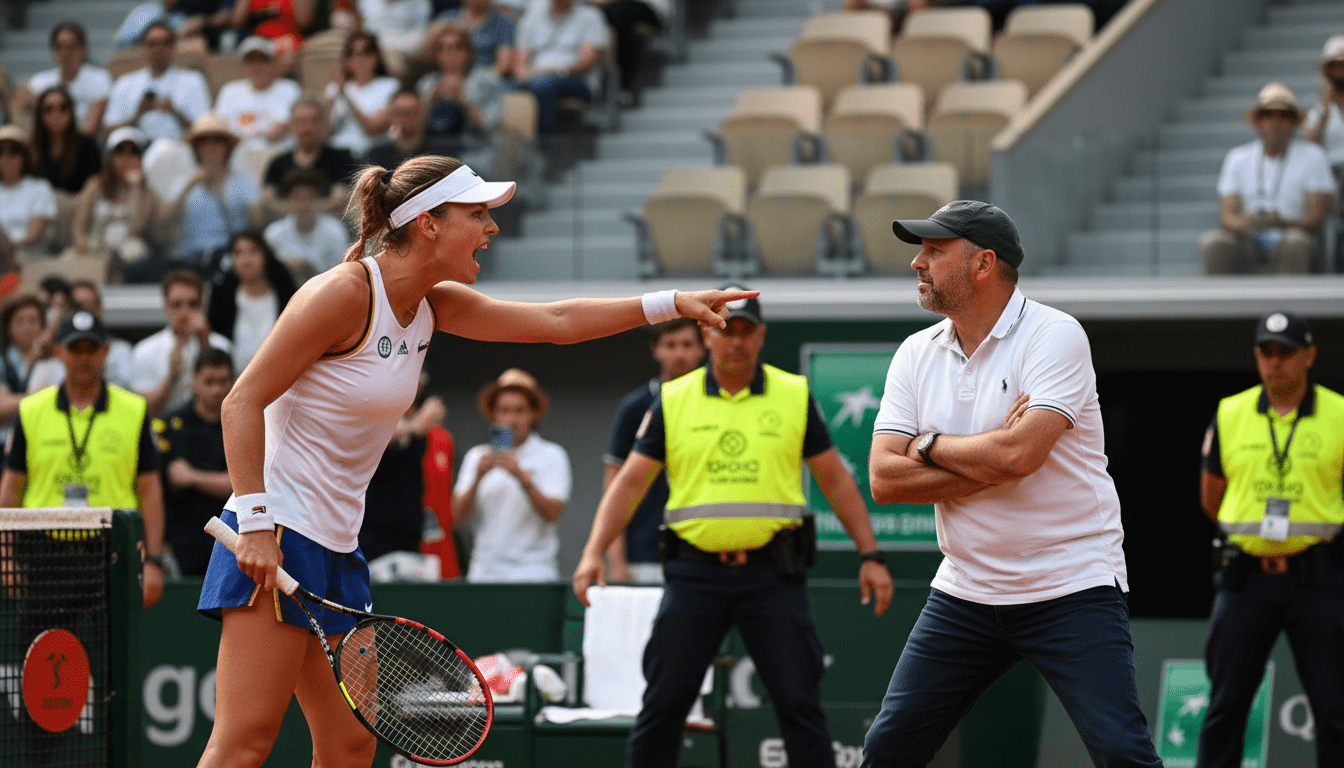
Laura Siegemund approached a spectator directly after completing a straight-sets doubles win on a tucked-away Court 1 at the Internazionali d’Italia in Rome.
The German player accused the man of repeatedly disturbing the match and questioned whether he had placed bets on the low-profile contest.
The incident, which unfolded immediately after the players’ handshake, drew attention to how easily a single heckler can affect play in tennis.
Confrontation on Court 1 in Rome
Siegemund’s exchange with the spectator took place behind the players’ bench, near where children waited for autographs.
She challenged the man about his behaviour and asked how much money he had wagered on the match, reflecting rising suspicion about betting-driven interference.
The interaction followed a match in which Siegemund and partner Vera Zvonareva had secured victory but were repeatedly distracted by vocal interruptions.
Repeated interruptions and immediate reactions
During the contest the man continued to shout at intervals, prompting Siegemund and her coach and partner to request quiet from the chair umpire.
The umpire asked for silence but the disturbances persisted, and Siegemund later described the conduct as crossing a line of respect toward players.
After the match a tournament supervisor arrived to speak with Siegemund and her coach, but the worst of the disruptions had already occurred.
Betting pressure and the vulnerability of tennis
Tennis remains one of the world’s most heavily bet sports, and its near-silent match environment makes outcomes particularly sensitive to sudden crowd noise or distractions.
A single well-timed shout during an opponent’s serve can induce an error that affects not only a point but potentially the outcome of a wager.
Players and officials are increasingly aware that opportunistic spectators can exploit this dynamic, raising questions about integrity and the need for stronger safeguards.
Calls for stronger security and oversight
Players have publicly urged tournament organizers and governing bodies to tighten monitoring of stands and to empower security to remove persistent offenders.
At Rome, fellow players noted that spectator behaviour has grown louder and bolder compared with previous years and urged the ATP to step up measures.
Tournament staff say they will review the incident, but athletes argue that mere requests for quiet are insufficient when deliberate disruption is suspected.
Players’ safety and the spillover from online abuse
The episode in Rome echoes wider patterns in which hateful or threatening messages from social media appear to manifest in real-world hostility.
Siegemund and other players have described both online threats and in-person antagonism that undermine their focus and sense of security.
Athletes now say protection policies must address the full spectrum of abuse, from digital harassment to in-arena conduct that may be linked to betting or targeted intimidation.
Governing bodies face a complex challenge: protecting match integrity while preserving the welcoming atmosphere that many tournaments cultivate.
Tournament directors can increase stewarding, deploy better surveillance and enforce stricter ejection policies, but implementation varies across venues and events.
Players, meanwhile, seek clearer communication about how incidents will be handled and stronger, faster intervention when a spectator appears intent on influencing play.
The Rome incident underscores an emerging fault line in professional tennis where betting markets, social-media vitriol and physical crowd behaviour intersect.
Laura Siegemund’s decision to confront the spectator brought attention to the problem in real time and has intensified calls for coordinated action from tournaments, the ATP and other stakeholders.
As organizers assess what measures to adopt, players are pressing for policies that protect both the fairness of competition and the personal safety of those who compete.
