
Sudan humanitarian crisis: Khartoum in ruins as famine, disease and displacement escalate
Khartoum lies in ruins as the Sudan humanitarian crisis deepens: tens of thousands killed, millions displaced, and 29 million facing acute food shortages.
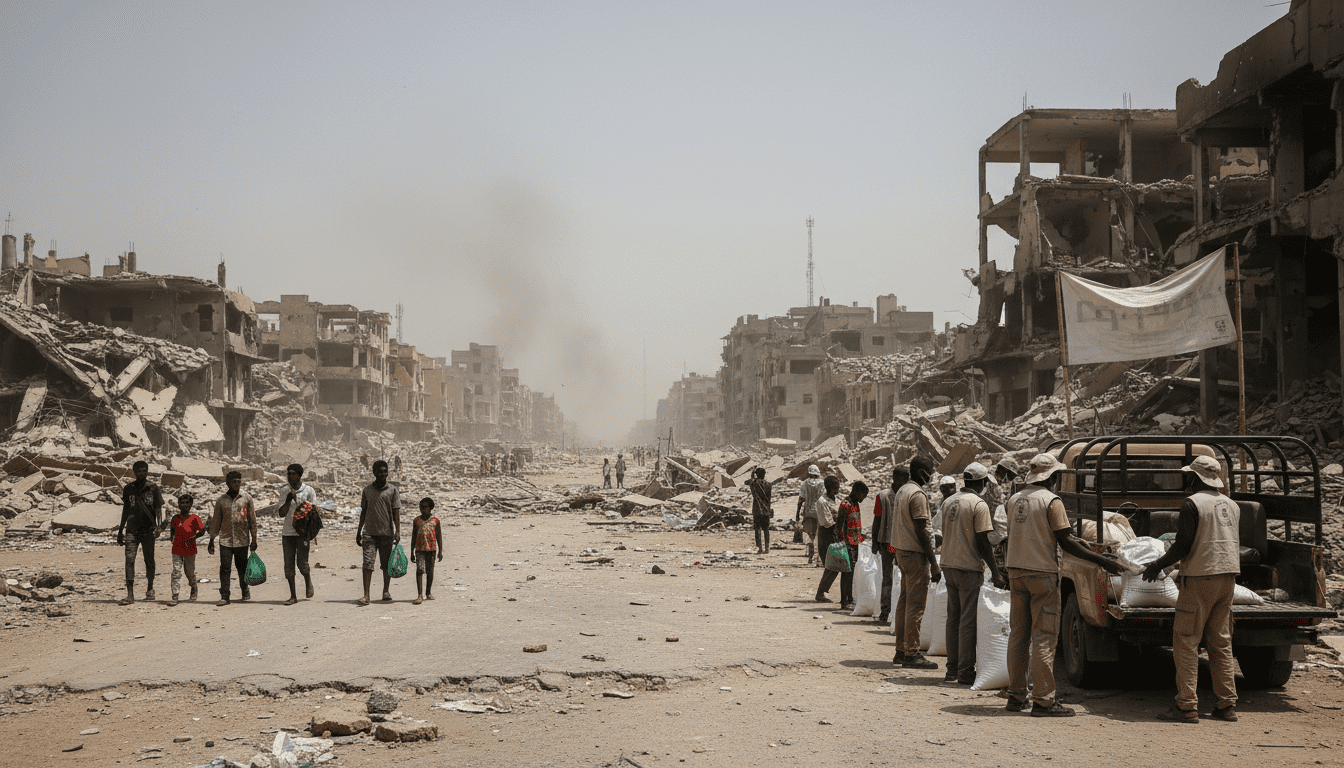
The destruction across Khartoum’s neighborhoods is extensive and unmistakable, with whole blocks flattened and surviving buildings pocked by gunfire and shrapnel. Residents and aid workers describe streets emptied of their former populations as families flee violence and seek refuge elsewhere in Sudan or beyond.
Khartoum destruction visible across districts
The capital, once home to millions, appears largely abandoned in many districts, with rubble-strewn thoroughfares and damaged infrastructure impeding movement. Humanitarian teams report difficulty reaching neighborhoods because of ongoing insecurity and the physical obstruction of roads and bridges.
Buildings that remain standing often show clear signs of heavy combat, and local staff say the scale of urban destruction is unprecedented in their experience. This level of damage is complicating both immediate relief work and any early recovery efforts.
Rising death toll and outbreaks of disease
Official counts record more than 58,000 deaths, while some estimates place the toll as high as 150,000, reflecting challenges in documentation amid collapsed systems. The breakdown of health and civil infrastructure has made accurate casualty tracking exceptionally difficult.
At the same time, repeated outbreaks of cholera, hepatitis, meningitis and yellow fever are compounding the humanitarian emergency. Aid organizations warn that lack of clean water, overcrowded displacement sites and limited medical supplies are accelerating mortality from preventable causes.
Food crisis deepens as community kitchens collapse
Sudan now faces one of the world’s most acute hunger crises, with roughly 29 million people—about 62 percent of the population—without sufficient food. Market disruptions and rising prices have pushed millions closer to starvation, according to assessments by relief agencies.
Community kitchens run by volunteers have been central to local coping strategies, but limited funding and supply disruptions have forced many to close. Research by one NGO found 42 percent of 844 surveyed community kitchens shut in the previous six months, eroding a vital frontline response to hunger.
Violence intensifies in Darfur and Kordofan
In western Sudan, particularly Darfur and Kordofan, reports describe sustained assaults on civilians and civilian infrastructure, including schools, hospitals and entire villages. Witnesses and aid workers report towns besieged, mass displacement and attacks on convoys delivering humanitarian assistance.
The continuing violence has generated new waves of displacement and fears that atrocities will further fragment communities across the west. Humanitarian teams operating in these areas say they face extreme security risks while trying to reach isolated populations.
Returnees confront shattered services in the capital
At least 1.3 million people have returned to Khartoum in recent months only to find a city struggling to function. Returning families face severe food shortages, rampant unemployment and the near-absence of public services that would support recovery.
Around 200 schools in Khartoum are reported closed or repurposed as shelters for displaced families, disrupting education for thousands of children. Hospitals that remain standing have been looted and are operating at a fraction of their capacity, and electricity is available for only a few hours each day in many neighborhoods.
International response and stalled diplomacy
A conference held in Berlin last month to mark the third anniversary of the conflict brought world leaders together but produced limited concrete progress toward a sustained ceasefire. Diplomats and aid officials say political momentum is insufficient to secure durable access for humanitarian operations.
Compounding the crisis, supply chains have been further stressed by instability in the wider region, driving up food and fuel prices and making relief logistics more expensive and less reliable. Aid groups are calling on governments to prioritize ceasefire negotiations, stabilize supply routes and fund locally led response efforts.
Humanitarian workers on the ground describe extraordinary resilience among staff and communities, but also warn that resources are not keeping pace with need. Survivors recount harrowing journeys and losses: one woman described carrying her grandchildren for five days after the killing of family members, a testimony echoed by many displaced people.
The Sudanese people repeatedly say their immediate priority is an end to the fighting so they can return home and rebuild safely. For now, however, Khartoum and vast swathes of the country remain in crisis, with humanitarian needs growing even as international attention wanes.
