
German tax forecast revised down as Iran war and energy shock squeeze revenues
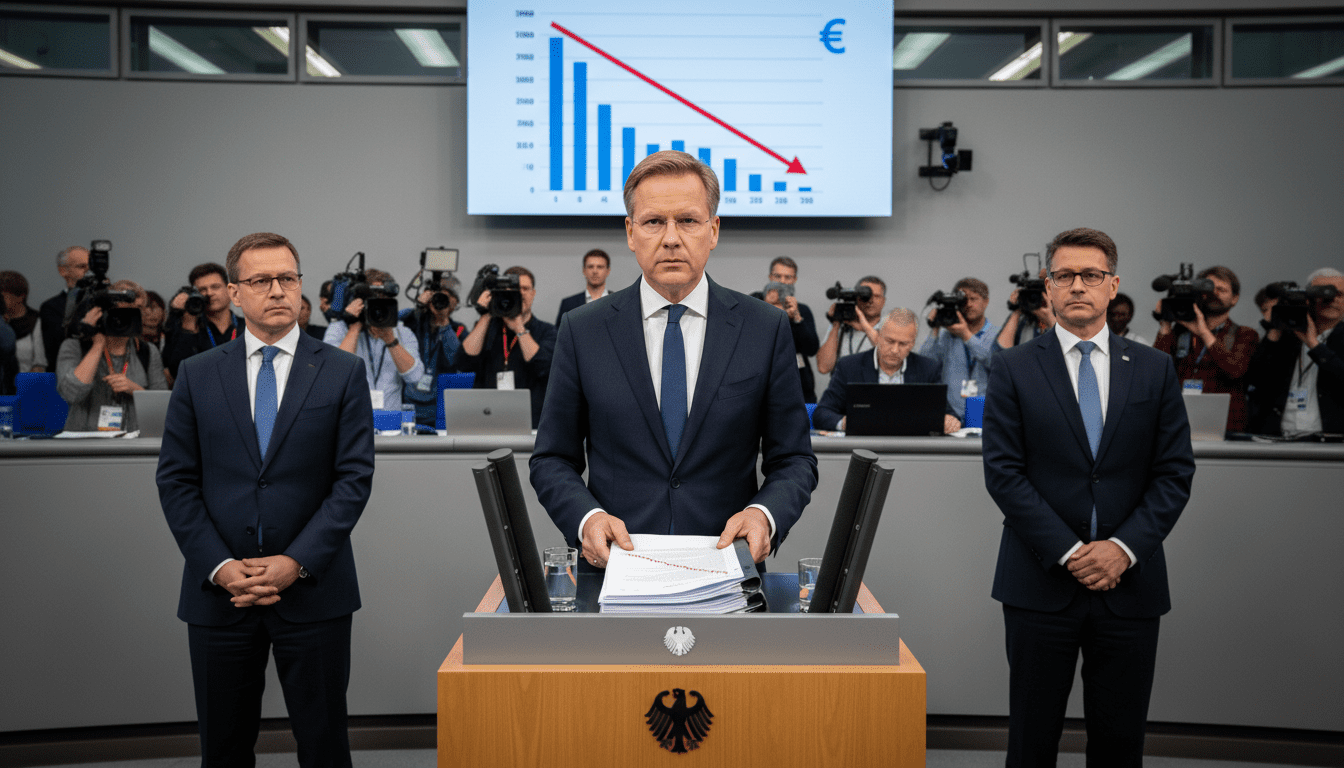
German tax forecast revised: Berlin now expects lower receipts through 2030, with 2026 revenue dipping below €1 trillion and a €10.1bn federal shortfall for 2027.
The latest German tax forecast shows a marked deterioration in public revenues, with the federal government facing a €10.1 billion shortfall for 2027 compared with earlier estimates. The revision, driven by weaker growth expectations amid the war in Iran and higher global energy prices, reduces projected tax receipts across federal, state and municipal levels. Policymakers are now preparing to adjust the 2027 budget as the revised figures complicate plans set to be finalised in the coming weeks.
Federal budget faces immediate gap for 2027
The independent working group issuing the forecast projects the federal government alone will collect €10.1 billion less in 2027 than previously anticipated. That gap comes at a sensitive moment as Finance Minister Lars Klingbeil and officials prepare the annual budget, which the coalition had aimed to finalise shortly. Officials warned that the fiscal shortfall will force ministers to reconsider spending commitments or to identify offsetting measures in the near term.
The forecast places additional pressure on a government already balancing investment ambitions with fiscal discipline. Klingbeil has said the administration will stand ready to act if the situation deteriorates further, highlighting a mix of targeted measures and contingency plans rather than immediate, across-the-board cuts. Ministries are now re-evaluating priorities to ensure key investments and job-protection programs remain supported.
Five-year outlook shows substantial revenue reduction
Across 2026 to 2030 the working group expects total tax receipts for the federation, states and municipalities to fall short by €87.5 billion compared with the previous projection. For 2026 alone, the sum of tax receipts now sits below the symbolic €1 trillion threshold at €998.7 billion, reversing earlier expectations of continued growth. The report breaks down 2026 shortfalls as approximately €9.9 billion less for the federal government, €3.0 billion less for the Länder, and €4.3 billion less for municipalities, with the remainder affecting EU transfers.
Economists say the reduction reflects both weaker domestic demand and external shocks that have trimmed corporate profits and household consumption. Lower-than-expected wage growth and rising energy costs are weighing on taxable incomes and business turnover, which in turn reduces receipts from income and value-added taxation. The medium-term outlook assumes persistent headwinds unless geopolitical tensions ease and energy markets stabilise.
Finance minister attributes fall to Iran war and energy shock
Finance Minister Lars Klingbeil (SPD) pointed to the war in Iran and the ensuing global energy price shock as central drivers of the downgrade in the tax forecast. He said the conflict had interrupted the positive economic momentum seen earlier in the year and that higher fuel and energy costs were damping consumer spending and business investment. Klingbeil noted already enacted measures such as the temporary fuel rebate and reiterated that the government stands prepared to act if the crisis deepens.
Klingbeil framed the fiscal challenge as a test of resilience, arguing that investments and structural reforms remain the best path to strengthened independence and growth. He emphasized protecting employment and creating new jobs as top priorities, asserting that a focus on long-term competitiveness should guide any fiscal adjustments. The minister’s remarks suggest a preference for preserving targeted spending rather than resorting to immediate austerity.
Opposition and Greens demand different fiscal choices
The Greens criticised the government’s recent fiscal choices, saying the revised tax forecast exposes financial strain “at all levels” of government and underscoring disagreement over the coalition’s prior tax cuts. The parliamentary budget spokesperson for the Greens, Sebastian Schäfer, argued that recent tax reductions, including measures perceived as politically motivated, have not delivered the growth promised and have left less room for public investment. He and other critics advocated a comprehensive tax reform with a fairer distribution of burdens and suggested emergency levies on extraordinary energy sector profits.
Conservative voices such as CSU leader Markus Söder, who supported targeted VAT relief for the hospitality sector, say different measures are needed to stimulate demand and ease cost-of-living pressures. Debate is emerging over whether to prioritise new revenue measures, temporary surcharges or to reallocate existing budget lines to address the shortfall. The political discussion is likely to intensify as ministries prepare concrete proposals ahead of the budget vote.
Policy options and risks ahead of budget adoption
With the 2027 budget decision approaching, officials face a constrained set of choices: increase borrowing, cut spending, introduce temporary levies or accelerate structural reforms to widen the tax base. Each option carries trade-offs for economic growth, investor confidence and social equity, making consensus within the coalition essential. Analysts warn that delaying adjustments could force more abrupt measures later if revenues continue to underperform.
Markets and rating agencies will watch policy responses closely, particularly any shift toward higher deficits or debt-financed spending. A calibrated combination of targeted revenue measures, temporary support for vulnerable households and maintained investment in productive capacity would be viewed as a balanced path. Yet the political cost of unpopular tax increases or cuts to visible programs may complicate swift agreement.
The government’s tax forecast revision underscores how geopolitical shocks can reverberate through public finances and domestic policy, forcing leaders to weigh short-term relief against long-term fiscal sustainability.
