
AIDA Cruises Sees Booking Surge into 2028 as Capacity and Fuel Challenges Loom
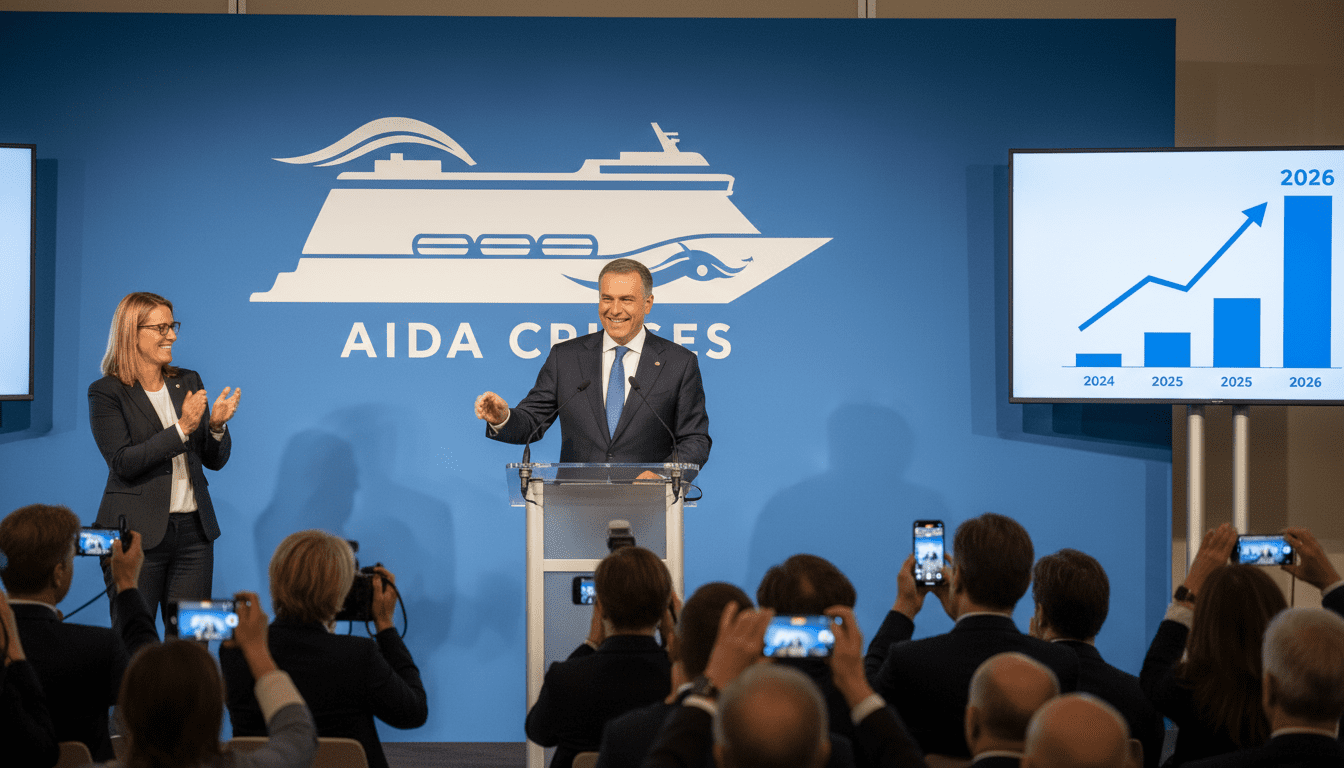
AIDA Cruises reports surging bookings that extend into 2028, with cabins filling quickly amid constrained fleet capacity and rising operational costs. CEO Felix Eichhorn says strong early-year demand contrasts with pricing pressure elsewhere in travel. The company faces growth limits from the number of ships and long lead times for newbuilds.
Bookings are filling cabins well in advance
AIDA says booking patterns now reach years ahead, with customers reserving cruises for 2028 and beyond. The carrier experienced particularly strong demand in January and February, leaving limited last‑minute availability on many itineraries. Eichhorn framed this as evidence that German travelers continue to favor cruises despite wider economic caution.
Fleet growth not immediate: two new ships arrive at decade’s end
The operator has ordered two new vessels that will increase capacity by roughly 25 percent at the start of the next decade. Those ships are scheduled for delivery in 2030 and 2031, meaning near‑term growth must come from revenue uplift rather than additional berths. With AIDA operating eleven ships today, Eichhorn emphasized that fleet size — not demand — is the chief constraint on passenger expansion.
Pricing, fuel policy and hedging choices
AIDA executives say ticket prices have risen less steeply than some land‑based holidays, and the company will not add retrospective fuel surcharges to booked cruises. The company also confirmed it does not use fuel hedging to lock in prices, arguing that hedges can be disadvantageous if markets move downward. Operational flexibility is supported by ships capable of running on LNG or diesel, which helps manage fuel sourcing and port options.
Itinerary changes after Middle East escalation
In response to regional instability, AIDA chose not to deploy ships to the Persian Gulf for the most recent winter season, a routing decision taken as early as July 2025. The company has canceled planned sailings to the Emirates for the near future and redeployed vessels elsewhere, underscoring the fleet’s flexibility. Eichhorn said the decision reflected safety and operational assessments rather than a cruise‑specific problem.
German market dynamics and first‑time cruisers
Domestically, Germany records tens of millions of holiday bookings annually, with cruises making up a growing slice of the market. Eichhorn noted roughly three million cruise bookings originate from Germany and that about 40 percent of AIDA’s guests are first‑time cruisers. That mix — repeat and new passengers — supports the view that the sector will surpass four million annual cruise guests in the country once fleet capacity allows.
Ports, visitor flows and local pressures
AIDA operates predominantly in Northern Europe during summer, with eight ships in the region and three in the Mediterranean, many departing from German ports. The company stresses that cruise calls typically represent a small share of overall visitors to major destinations and that port authorities can coordinate arrivals to prevent concentration. Eichhorn argued that planned itineraries allow better management of guest flows compared with unpredictable day‑visitor traffic.
Sustainability and fuel supply remain strategic hurdles for the maritime sector, according to AIDA leadership. The company currently meets blending obligations mainly with biogas but warns that biogenic feedstocks cannot scale to meet long‑term demand from shipping and aviation. Synthetic e‑fuels, which could unlock deeper emissions reductions, are scarce and costly, and Eichhorn called for policy and investment to channel funds toward fuel production rather than only collecting revenues through emissions trading.
AIDA also highlighted its track record on alternative propulsion, noting that AIDA Nova was the first cruise ship designed to operate on low‑emission liquefied gas, a decision that preceded some regulatory and infrastructure readiness. Going forward, the company plans to deploy ships capable of using various fuel types while urging industry‑wide efforts to increase synthetic fuel availability and port refuelling options.
The coming years for AIDA are therefore shaped by robust consumer appetite, limited short‑term capacity and a strategic priority on fuels and routes. With two newbuilds on order and a fleet that remains nearly fully booked through peak seasons, the company anticipates stronger financial performance in 2026 than in 2025. Yet executives caution that realizing broader growth and decarbonization goals will depend on timely investments in alternative fuel production and port infrastructure.
