
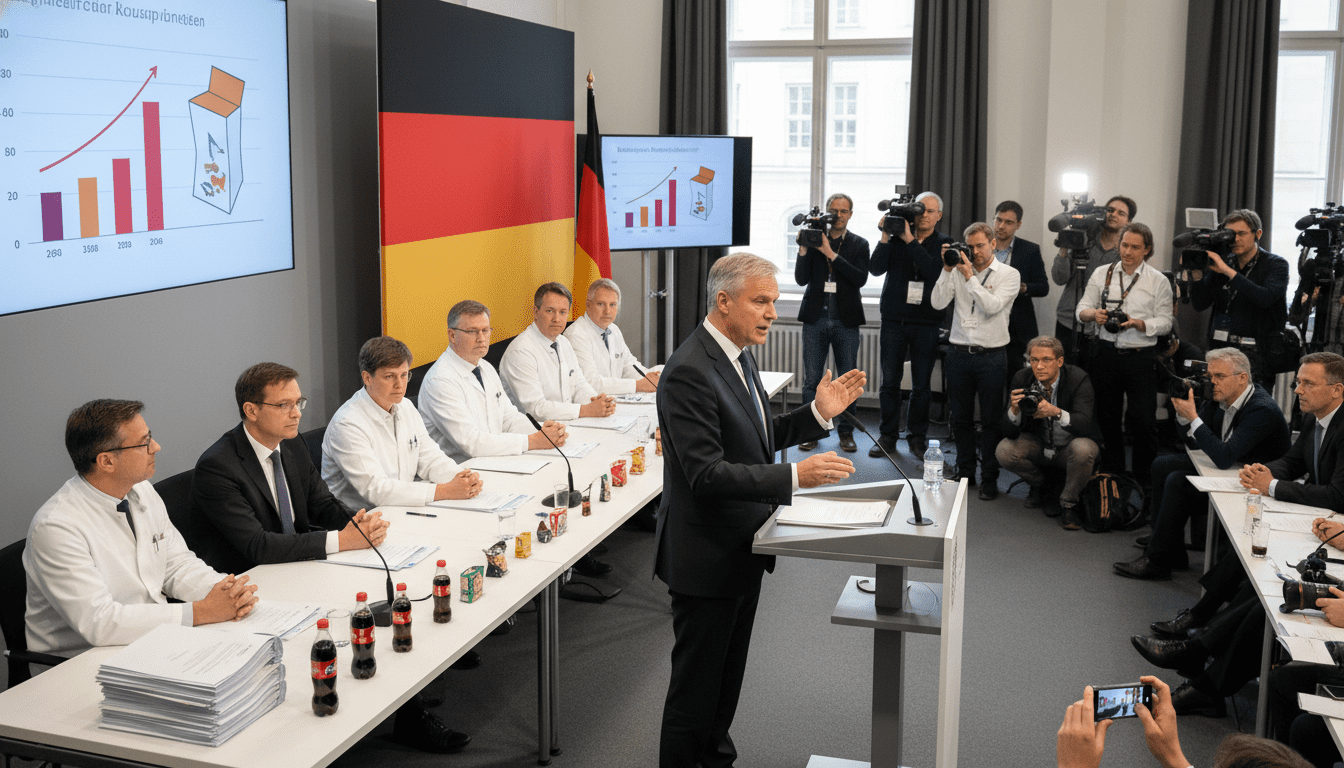
Shrinkflation in Germany: Court Case and Doctors’ Call for a Sugar Tax Rekindle Debate
Germany’s rising use of shrinkflation is at the center of a court case and a renewed public-health push for a sugar tax, as doctors warn consumers are eating too much sugar, fat and salt. Shrinkflation — reducing product size while keeping the price — is now being discussed as both a consumer-protection issue and a possible side-effect that could curb unhealthy consumption.
Court dispute over Milka pack size
A legal case at the Bremen regional court focuses on whether a change from 100 grams to 90 grams in a Milka chocolate bar constitutes consumer deception. Plaintiffs argue the smaller quantity was not clearly disclosed and amounts to an unfair practice that misleads buyers about value for money. The outcome could set a precedent for how product weight changes must be presented on packaging.
Retailers and manufacturers are watching closely because a ruling that tightens disclosure requirements would force clearer labeling and could prompt corrective measures across the confectionery sector. The case has heightened public attention on shrinkflation and raised questions about enforcement of existing consumer-protection laws.
Doctors urge a sugar tax to curb consumption
A group of some 5,000 physicians, including the head of the German Medical Association, has publicly advocated for the introduction of a sugar tax to reduce intake of sugary products. Their appeal frames the tax as an evidence-based instrument to shift consumption patterns, reduce obesity and lower diet-related illness rates. The medical coalition says fiscal measures have worked elsewhere to decrease sugar purchases and should be part of a broader prevention strategy.
The proposal has drawn tentative political support from Health Minister Nina Warken (CDU) and cautious interest from Finance Minister Lars Klingbeil (SPD), while regional leaders such as Markus Söder have described the idea as not wholly implausible. If advanced, the measure would join other regulatory tools under consideration to tackle poor dietary habits across Germany.
Shrinkflation as an unintended public-health lever
Proponents of a sugar tax and some public-health experts note an uncomfortable irony: shrinkflation can reduce the absolute amount of calories or sugar a consumer buys when package sizes fall. In that sense, the practice may act as an inadvertent consumption limiter. However, shrinking packs do not change the nutritional profile per serving and can raise the price per gram, so the public-health impact is ambiguous.
Critics counter that shrinkflation is primarily a pricing strategy that shifts cost to consumers without improving transparency or nutrition. They warn that relying on product downsizing as a health intervention would be haphazard and that deliberate policy tools such as taxation or portion-size regulations would be more effective and equitable.
Industry pressures and consumer response
Manufacturers say shrinkflation has been one of several responses to sustained cost pressures, including higher raw-material and energy costs. For packaged foods, companies contend that reducing net weight rather than raising the sticker price preserves shelf competitiveness and consumer choice. This economic rationale, however, has done little to assuage consumer frustration.
Shoppers increasingly scrutinize unit prices and voice displeasure on social media and in complaints to consumer-protection agencies, prompting calls for stricter rules on how weight and content changes are communicated. Consumer advocates argue that mandatory, prominent notices on packaging and standardized unit-price displays would reduce confusion and unfair surprises at checkout.
Market patterns: fresh goods versus processed products
Analysts point to a divergence in price behavior across the food sector: fresh produce and basic staples have shown relative price stability, while many processed goods have experienced both shrinkflation and nominal price rises. This pattern steers households toward different baskets of goods, with potential implications for nutrition and inequality. Lower-income households are particularly sensitive to unit-price changes and may switch to cheaper, calorie-dense options when processed foods become effectively more expensive.
Policymakers considering a sugar tax will weigh these distributional effects against health gains, looking to design measures that discourage unhealthy choices without unduly burdening vulnerable consumers. Complementary interventions, such as subsidies for healthy foods or clearer portion guidance, are likely to be part of any comprehensive plan.
Public debate now hinges on whether shrinkflation should be treated strictly as a consumer-rights issue, or whether its side effects on consumption can be harnessed alongside deliberate fiscal policies. The Bremen court case and the physicians’ petition have turned a commercial tactic into a topic of national policy discussion, forcing industry, regulators and health advocates to sharpen their positions.
If regulators move to require clearer labeling or if lawmakers adopt a sugar tax, manufacturers will have to choose between transparent pricing, product reformulation, or continued reliance on downsizing as a margin-preserving tactic. Consumers, meanwhile, will continue to weigh cost, quantity and nutrition in purchasing decisions.
The outcome of the Milka case and any political decisions on a sugar tax will provide clearer signals about how Germany intends to balance consumer protection, industry pressures and public health objectives in the food market.
