
Pentagon Releases Video of US Boarding Iranian Oil Ship in Indian Ocean
Pentagon releases video of US boarding Iranian oil ship on April 23, 2026; officials invoked a ‘right-of-visit’ and said the vessel carried Iranian oil.
Pentagon Releases Footage of the Boarding
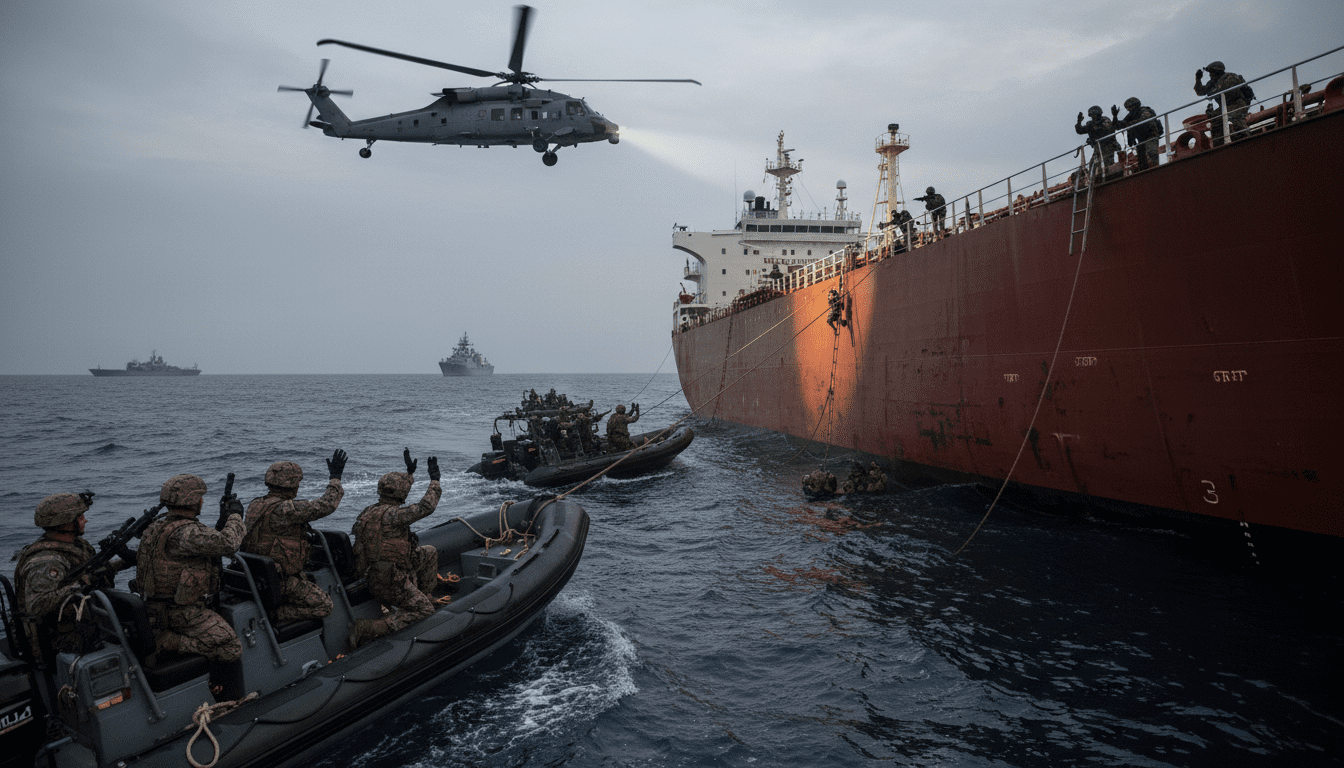
The Pentagon released video on April 23, 2026, showing U.S. soldiers descending from helicopters to board and seize a commercial vessel in the Indian Ocean. The footage, provided by U.S. Department of Defense officials, depicts a rapid airborne insertion followed by personnel moving onto the ship and securing the deck. U.S. officials described the action as a law-enforcement boarding intended to address the alleged shipment of Iranian oil.
Officials Cite a “Right-of-Visit” Justification
U.S. officials said the operation was conducted under a “right-of-visit” authority and framed it as consistent with maritime enforcement practices. The term was used to explain why forces boarded a vessel operating in international waters rather than within a territorial sea. Pentagon spokespeople did not release detailed legal memoranda in the initial statement but asserted that the boarding complied with applicable international and U.S. rules.
Description of the Video and the Interdiction
The released video shows multiple personnel fast-roping from helicopters onto the target vessel, then sweeping the forward and aft decks as they secured the ship and its bridge area. Onboard crew were escorted to secure locations while U.S. sailors and marines inspected compartments and cargo areas, according to the accompanying Pentagon account. Officials said the U.S. team subsequently took control of the vessel and its crew pending further inspection and processing.
Location, Date and U.S. Account
The Pentagon placed the action in the Indian Ocean and dated the release to April 23, 2026, stating the vessel was intercepted while underway in international waters. U.S. authorities contend the ship was transporting Iranian oil, an assertion included in the official description accompanying the footage. The Pentagon said the interdiction was intended to prevent illicit shipments and enforce applicable sanctions and maritime controls, but it provided limited operational detail in its initial public remarks.
Legal and Diplomatic Questions Raised
Maritime lawyers and diplomats are likely to scrutinize the invocation of a “right-of-visit” and how it was applied in this case, since such boardings touch on complex principles of the law of the sea and state sovereignty. International law allows boarding in specific scenarios, including suspicions of statelessness, piracy, or violations of certain international measures, but the scope and justification vary by treaty and customary practice. The operation will probably prompt inquiries from affected states and calls for documentation explaining the legal basis, evidence of origin or destination of the cargo, and the treatment of the vessel’s crew.
Potential Regional and Political Repercussions
The Pentagon’s characterization that the ship carried Iranian oil could escalate tensions in an already sensitive maritime environment, especially if Tehran disputes the claim or if third-party states assert jurisdictional concerns. Regional partners and maritime insurers will watch for clarifying statements, cargo manifests, and the outcome of any legal or administrative proceedings that follow. Diplomats and shipping-industry representatives may seek rapid briefings to assess whether the interdiction signals a broader enforcement posture in key sea lanes.
Next Steps Announced by U.S. Officials
Pentagon briefers said the vessel and its crew would be processed according to established procedures, with follow-on investigations to determine the cargo’s provenance and any applicable law-enforcement actions. The U.S. military indicated it would coordinate with other agencies as necessary to document and, where appropriate, prosecute violations or refer matters for sanctions enforcement. Officials did not specify the immediate disposition of the seized vessel or whether it would be transferred to a civilian authority for custody and adjudication.
The video release and public statements mark the latest publicly disclosed U.S. maritime interdiction in the region, and they will likely prompt incoming diplomatic exchanges and legal scrutiny as governments and international bodies evaluate the facts and the asserted legal grounds.
