
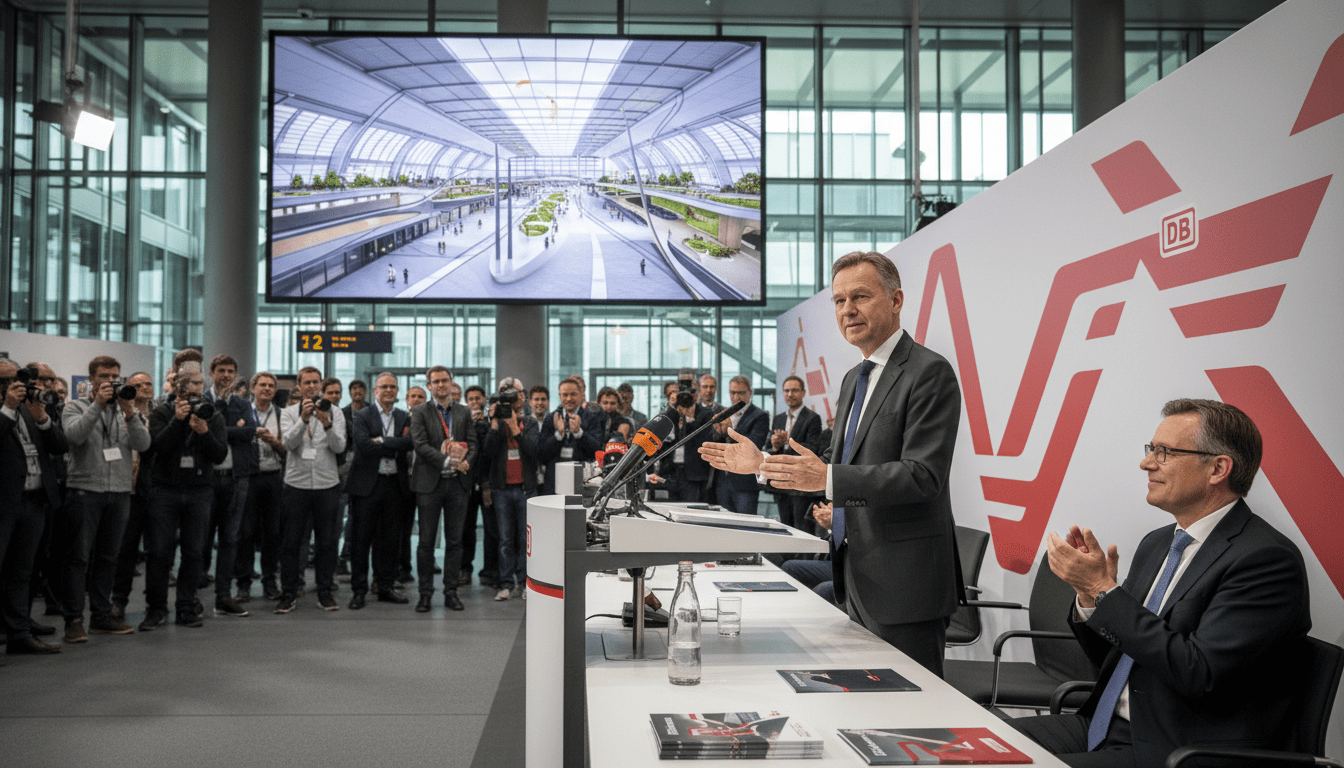
Deutsche Bahn announces €20 billion plan to renovate 710 stations by 2030
Deutsche Bahn will invest €20 billion to renovate hundreds of stations, with 710 slated for fundamental upgrades by 2030 and early efforts concentrated on accessibility and major hubs.
Deutsche Bahn said it will commit more than €20 billion over the coming years to a broad station renovation programme, aiming to modernize 710 stations across Germany by 2030 and accelerate work on around 130 locations in 2026. The company presented the initiative as part of a wider infrastructure recovery plan intended to improve passenger experience and reliability at regional and long-distance nodes. (ad-hoc-news.de)
Scope and timeline of the renovation programme
The renovation drive is framed as a concentrated push through the end of the decade, with investments averaging several billion euros per year and front-loaded activity in the near term. Deutsche Bahn executives told media that the next five years will see the bulk of the spending and that selected stations will receive complete overhauls rather than piecemeal repairs. The plan is timed to align with parallel upgrades to tracks and signalling intended to reduce infrastructure-related delays. (ad-hoc-news.de)
Priority on barrier-free access
A stated priority for the station programme is improving accessibility for passengers with reduced mobility, with many projects focusing on lifts, ramps, tactile guidance, and platform heights. Federal and regional initiatives already channel funds into such upgrades, and DB’s programme is intended to accelerate conversions so more stations meet legal and practical accessibility requirements by 2030. Local projects announced in recent months — including specific investments in cities such as Offenbach and multiple Bavarian stations — illustrate the focus on barrier-free access. (bundestag.de)
Funding sources and strategic context
The investment commitment builds on years of stepped-up spending by DB and additional public support packages for rail infrastructure, including measures agreed at the federal level to strengthen the rail network. Deutsche Bahn’s infra unit, DB InfraGO, has reported near-record annual outlays in recent years and the company says the station programme will be integrated into broader efforts to modernize the network and improve operational performance. The funding mix will combine Deutsche Bahn’s own capital, earmarked infrastructure budgets, and targeted federal contributions for major modernization projects. (ir.deutschebahn.com)
Staging works to limit disruption
DB has signalled that where possible stations will be renewed “from the inside out” so that trains and passengers can continue to use facilities during construction, with full closures reserved for extensive structural work. Early phases will prioritise high-traffic hubs and stations with acute accessibility shortfalls, while smaller stations will be modernized in coordinated regional clusters to optimize contractors and schedules. Project managers expect phasing and sequencing to adapt to local constraints and planning approvals, but aim to complete many of the most pressing upgrades within the 2026–2030 window. (deutschebahn.com)
Stakeholder response and political scrutiny
Passenger groups and disability advocates have welcomed the scale of the pledge but warned that delivery and steady funding will be decisive for results on the ground. Parliamentary responses and civil-society briefings underline that tens of thousands of platform-metre improvements and technical adaptations remain necessary across the network, and lawmakers will monitor whether planned budgets translate into measurable accessibility and service gains. Officials have also stressed the need for tight project management to avoid cost overruns and prolonged disruptions during construction. (allianz-pro-schiene.de)
Public expectations for cleaner, safer and more accessible stations are high, and Deutsche Bahn’s €20 billion commitment sets a clear benchmark for the next five years. The programme’s success will be judged by how many of the 710 stations are comprehensively modernized by 2030, whether the promised accessibility improvements are delivered on schedule, and how effectively the works are coordinated with other network upgrades. Recent DB reports indicate broad progress in infrastructure spending, but sustained oversight and transparent reporting will be key to turning the investment pledge into tangible benefits for passengers. (deutschebahn.com)
