
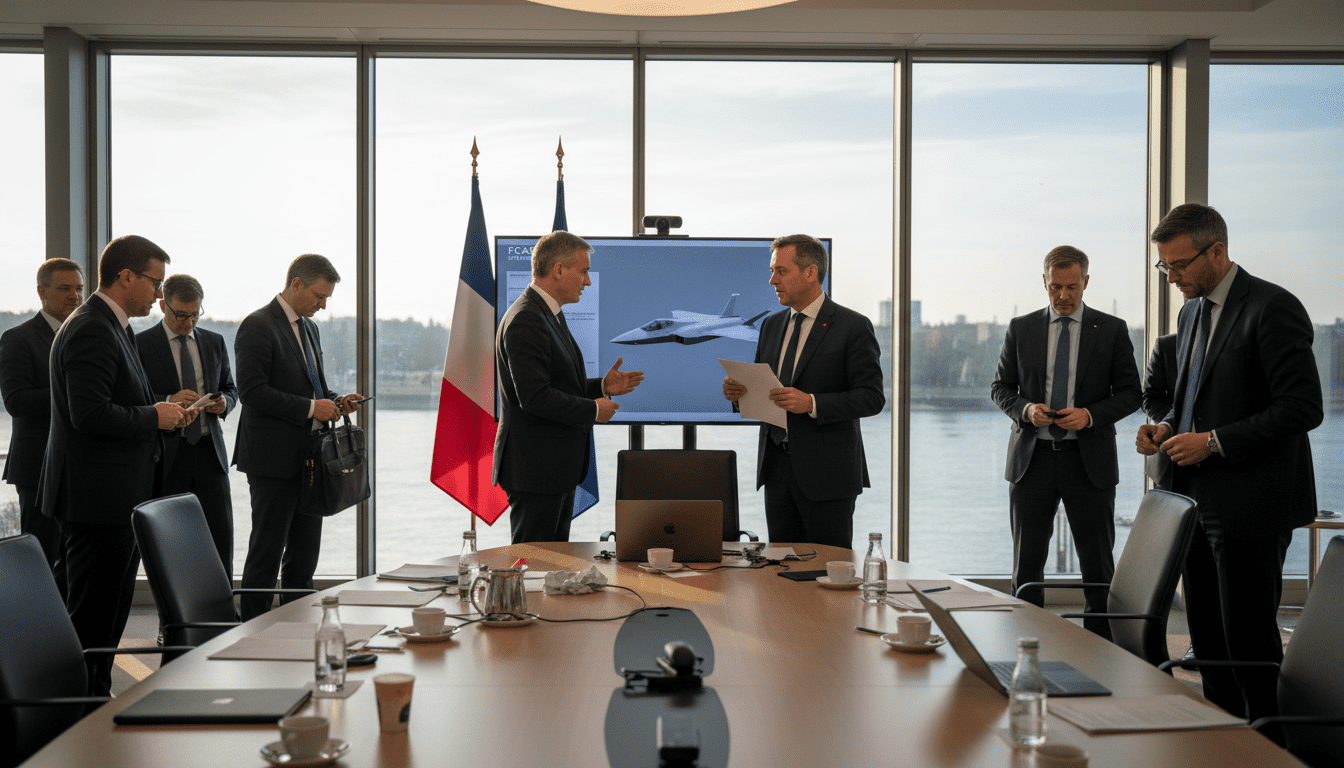
Mediation Fails: FCAS Leadership Dispute Threatens German–French Combat Jet Program
Mediation fails in the FCAS program, putting the €100bn German‑French Future Combat Air System at risk and forcing last‑ditch talks between leaders in Cyprus.
The last‑ditch mediation effort to salvage the FCAS collaboration between Germany and France has reportedly collapsed, leaving the Future Combat Air System project in jeopardy and reopening the prospect of separate national fighter programs. Mediators appointed by both sides, including former KMW chief Frank Haun and ex‑French defence executive Laurent Collet‑Billon, concluded their work without agreement and are said to have produced conflicting outcome reports. The impasse centers on a prolonged leadership dispute between aircraft manufacturers and divergent technical requirements that have stalled progress for months.
Mediation Effort Collapses
Officials familiar with the talks told media outlets that the mediation failed to bridge differences over who would lead the joint programme and how responsibilities would be divided. The negotiators delivered recommendations but could not secure a unified conclusion, producing what sources described as two different reports reflecting opposing positions. Airbus declined to comment on the reports, and neither Dassault nor the Élysée provided immediate responses when the matter was reported.
Dispute Between Dassault and Airbus
At the core of the breakdown is a fight for the programme’s industrial lead between Dassault Aviation and Airbus, complicating decisions on the proposed next‑generation fighter’s design and systems integration. The FCAS concept encompasses a crewed combat aircraft alongside unmanned drones, sensors and new communications networks intended to operate from the 2040s onward, but competing visions for the platform have hardened. Industry experts say unresolved governance, IP and workshare issues are undermining technical teams and delaying key development milestones.
Germany’s Reassessment and the Two‑Fighter Option
Chancellor Friedrich Merz publicly questioned the £—sorry—€100bn plan earlier this year, citing incompatible requirements and rising doubts about a single fighter meeting both nations’ needs, a stance that has amplified calls for alternative approaches. German politicians including Volker Mayer‑Lay have urged an expedited shift to a “two‑fighter solution,” under which Germany and France would each develop separate combat aircraft while cooperating on drones and shared systems. Berlin’s reassessment, combined with Spain’s role as a partner, has added political complexity and increased pressure for a clear decision from national leaders.
French Political Pressure and Threats to Other Projects
French officials warned mediators that a collapse of FCAS could have broader consequences for European defence cooperation, with Paris reportedly citing the risk of domestic political shifts such as a potential victory by the Rassemblement National in next year’s presidential vote. French sources told mediators that nationalist parties have pledged to end cooperative defence programmes if they take power, a prospect that Paris used to press for continued commitment to FCAS. Paris also reportedly hinted it might withdraw support for the joint Main Ground Combat System (MGCS) tank project if FCAS were abandoned, raising alarm in partner countries.
Cyprus Summit and an Imminent Decision
Chancellor Merz is due to be briefed on the mediation outcome and is expected to make a decision by Tuesday, April 21, 2026, according to reports citing government circles, a timetable that increases the urgency of the matter. He is scheduled to meet French President Emmanuel Macron at the informal summit of EU leaders in Cyprus on April 23–24, 2026, where defence cooperation and the future of FCAS are likely to feature on the agenda. Diplomatic sources say both capitals will use the summit to seek a political solution, but with industrial tensions unresolved the room for compromise appears narrow.
The project’s future now hinges on whether political leaders will endorse a deal that resolves leadership and technical disagreements or formally accept a bifurcated approach that splits fighter development while preserving some joint work on drones, sensors and communications. Defence analysts note that abandoning a single‑fighter plan would reshape procurement, budgets and industrial partnerships across Europe, and could delay capability delivery beyond current schedules.
The stakes for FCAS are significant: supporters argue a unified programme would secure economies of scale, interoperability and European strategic autonomy, while critics warn that continuing without clear governance risks escalating costs and technical failure. With mediators reporting no consensus and national leaders facing a tight timetable, the coming days will determine whether FCAS can be salvaged as a shared Future Combat Air System or becomes the catalyst for separate national programmes.
