
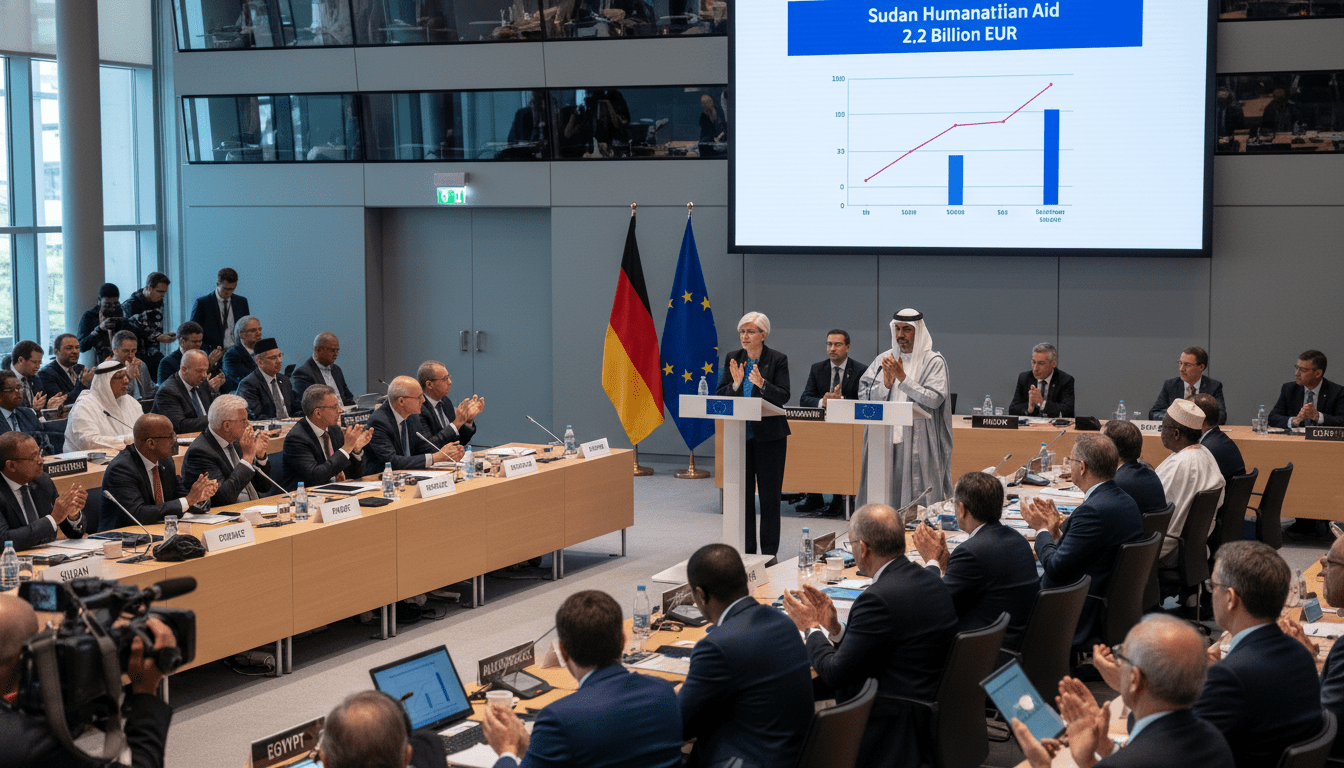
Berlin hosts third international Sudan conference as donors meet to address humanitarian collapse
International meeting in Berlin brings governments, aid agencies and civil society together to coordinate relief, aid access and civilian protection in Sudan.
Conference opens in Berlin amid third-year anniversary
The third international Sudan conference opened in Berlin on April 15, 2026, convening governments, the African Union, the European Union, the United States, France, the United Kingdom and a wide range of aid organisations and Sudanese civil society actors. The Sudan conference is framed as an emergency diplomatic effort to put the country’s collapsing humanitarian response back at the top of the international agenda. (unric.org)
The meeting takes place on the third anniversary of the conflict that began in April 2023, and donors have gathered to discuss urgent relief, access corridors and steps to protect civilians even as formal peace negotiations remain stalled. Several delegates and observers said the conference will focus on practical measures rather than an immediate ceasefire or a negotiated settlement. (bssnews.net)
Humanitarian scale and immediate needs
Humanitarian agencies say Sudan is now one of the world’s largest crises, with millions exposed to food insecurity and mass displacement. EU documents and humanitarian assessments put the number of internally displaced people in the double digits and report that more than half the population is experiencing acute food insecurity in many areas. (eur-lex.europa.eu)
Aid groups warn that last year’s appeal for Sudan was vastly underfunded and that gaps remain wide, leaving large populations without life‑saving assistance. German and international actors arriving in Berlin have been pressed to close financing shortfalls and to coordinate logistics to reach cut‑off populations. (welthungerhilfe.org)
Al‑Fashir’s fall and allegations of mass atrocities
The fall of the Darfur regional capital Al‑Fashir in late October 2025 crystallised international alarm about the conduct of the Rapid Support Forces (RSF). Independent reporting, satellite analysis and witness testimony documented killings, attacks on hospitals and other violations that humanitarian monitors and researchers say may amount to war crimes and crimes against humanity. (news.sky.com)
Human rights organisations and prosecutors have urged rapid investigation and preservation of evidence amid fears that mass graves and targeted violence could deepen cycles of impunity. That context has heightened calls at the Berlin meeting for better protection of civilians and for mechanisms to document abuses for future accountability. (hrw.org)
Conference composition and what is excluded
Organisers deliberately structured the gathering to include donor states, UN agencies, regional bodies and representatives of Sudanese civil society while excluding the two principal fighting forces from formal participation. The Sudanese Armed Forces (SAF) and the RSF were not direct parties to the donor‑oriented sessions, a choice intended to keep the focus on humanitarian relief and civilian perspectives. (bssnews.net)
Civil society networks and Sudanese professional groups are holding parallel sessions aimed at ensuring that the voices of women, youth and local organisations shape both the aid response and the political messaging coming out of Berlin. Conference planners say that lifting the profile of civilian priorities may strengthen leverage for sustained access on the ground. (dabangasudan.org)
What delegates hope to achieve in practical terms
Delegates in Berlin are expected to prioritise three operational goals: scaled funding for relief operations, safe and sustained humanitarian access across front lines, and strengthened protection for civilians and essential services. Officials and aid coordinators emphasise that measurable, time‑bound commitments on those fronts are the most realistic outcomes of the meeting. (unric.org)
Speakers in preparatory briefings stressed the need for logistical hubs, increased support for neighbouring host countries, and diplomatic pressure on external backers whose assistance can prolong the conflict. Donors also discussed contingency funds to secure corridors and supplies where commercial routes have collapsed. (eur-lex.europa.eu)
Limits of diplomacy and the arguments for convening now
German hosts and other organisers have cautioned that Berlin is unlikely to produce an immediate ceasefire or a comprehensive peace agreement, given the fragmentation of combatant networks and the entrenched military positions on the ground. The conference’s purpose, officials say, is to prevent further erosion of humanitarian space and to coordinate international tools for protection and accountability. (unric.org)
Despite those limits, organisers and many aid agencies argue that the timing is critical: concentrating international attention and pledges can close funding gaps, shore up supply chains and create conditions for later political engagement. Delegates repeatedly described Berlin as a mechanism to translate global concern into concrete, short‑term relief and monitoring measures. (welthungerhilfe.org)
Final paragraph: As the third international Sudan conference proceeds in Berlin, participants confront the stark choice between realistic, incremental measures to save lives now and the longer, uncertain path toward accountability and political resolution.
