
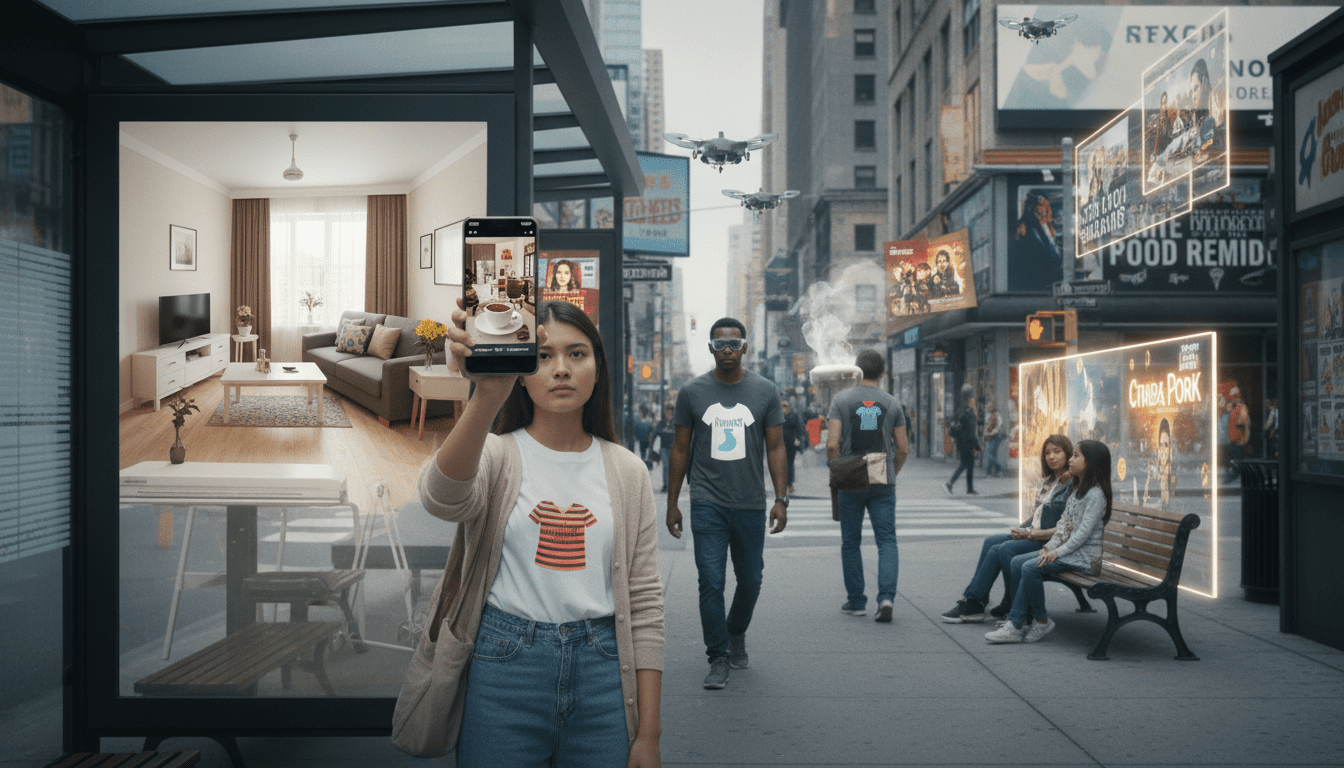
Advertising Invades Private Life as Devices, Cars and AI Turn Attention into a Commodity
Advertising invades private life as smart devices, cars and AI push personalized promotions into previously private spaces, challenging norms around personal attention and choice.
Early-morning exposure shows scale of the shift
Many people now encounter their first advertisement before they are fully awake, whether on a phone left on a nightstand or during a morning run with a podcast playing. Smart TVs, tablets and streaming services routinely place ads where analog life once offered respite, eroding the distinction between public marketing and private routines. The ubiquity of screens means commercial messages can reach users at nearly every hour and in almost every room of the house.
Researchers and commentators point to three main changes: near-constant availability of screens, granular personalization of messages, and the consolidated platforms that deliver them. These forces combine to make advertising not merely more common, but more invasive, following users across contexts instead of appearing only in mass broadcast moments.
Home devices become persistent advertising channels
Manufacturers and platform operators have increasingly treated living rooms, kitchen counters and bedside tables as valuable ad inventory. Smart TVs now host persistent promotional real estate on home screens, and some vendors have introduced secondary displays that continue to show ads while users watch other programming. Connected photo frames and voice assistants have also begun to surface commercial content alongside utility features such as weather or family photos.
This trend reflects a strategic expansion: companies that control both hardware and software can blend content, interfaces and ads into a single, always-on environment. For consumers, the result is fewer ad-free domestic moments and more commercial interruptions woven into daily habits.
Automakers and navigation systems enter the advertising market
Vehicles are the next frontier for targeted marketing, with in-car displays and navigation systems primed to carry branded content. Partnerships between automakers and marketing firms promise contextual offers such as promoted points of interest or sponsored map pins, bringing commercial prompts into the private space of the cabin. The possibility of ads appearing on an infotainment screen during a commute—or as route suggestions influenced by paid placements—has provoked debate over whether cars should remain ad-free.
Some manufacturers have publicly resisted the shift, framing the automobile as a last sanctuary from commercial intrusion. Others are experimenting with integrated services that make monetization through advertising a clear business option, reflecting divergent industry strategies and consumer expectations.
AI, personalization and the erosion of intimate boundaries
Advances in artificial intelligence and data-driven targeting have made advertising more efficient and more intimate. Platforms use behavioral signals to craft messages that are tailored not just to demographic segments but to individual preferences and habits, blurring the line between content and commercial persuasion. Streaming services, for example, have integrated ads into pause screens and are exploring AI-generated spots designed to feel organic within programming.
Examples of ad delivery extend into personal consulting tools as well. As generative models become a resource for guidance on relationships, parenting and health, the prospect of ads appearing within conversational AI raises questions about commercial influence in spaces traditionally reserved for friends, family or professionals. For younger users especially, reliance on AI for private advice increases the likelihood that marketing will reach them where they once sought confidential support.
Economic incentives and the proliferation of advertising
The spread of advertising into new environments is driven by clear economic pressures. Attention is a scarce commodity, and platforms that can capture user focus attract lucrative ad budgets. Competition among many providers creates a collective incentive to expand ad placement rather than to limit it, producing a dynamic akin to overfishing: each actor keeps increasing output even as overall effectiveness declines.
Lower costs and more precise targeting have also broadened who can afford to advertise, turning small firms into ad buyers and multiplying the number of messages directed at any single consumer. The net effect is a higher volume of ads and a dilution of their impact, which paradoxically encourages still more ad inventory to be created in pursuit of reach and revenue.
Ad-free experiences increasingly tied to ability to pay
The growth of ad-supported business models has made ad-free environments an option for those willing and able to pay a premium. Subscription tiers that remove commercials are now common across streaming, reading and productivity platforms, creating a divide between users who buy quiet and those who tolerate interruptions to save money. In this way, control over one’s attention is becoming stratified by income and willingness to subscribe.
That economic separation raises equity concerns: people with fewer resources face a disproportionate burden of exposure to marketing, while wealthier users can buy back the privacy of uninterrupted content. The commodification of attention thus introduces a new dimension to digital inequality, with real implications for mental space, concentration and cultural cohesion.
As advertising continues to migrate into bedrooms, kitchens, cars and AI chat windows, the balance between commercial innovation and personal autonomy will remain contested. Policymakers, platforms and consumers will need to weigh the benefits of lower-cost, ad-supported services against the social and psychological costs of living in an increasingly monetized attention economy.
