
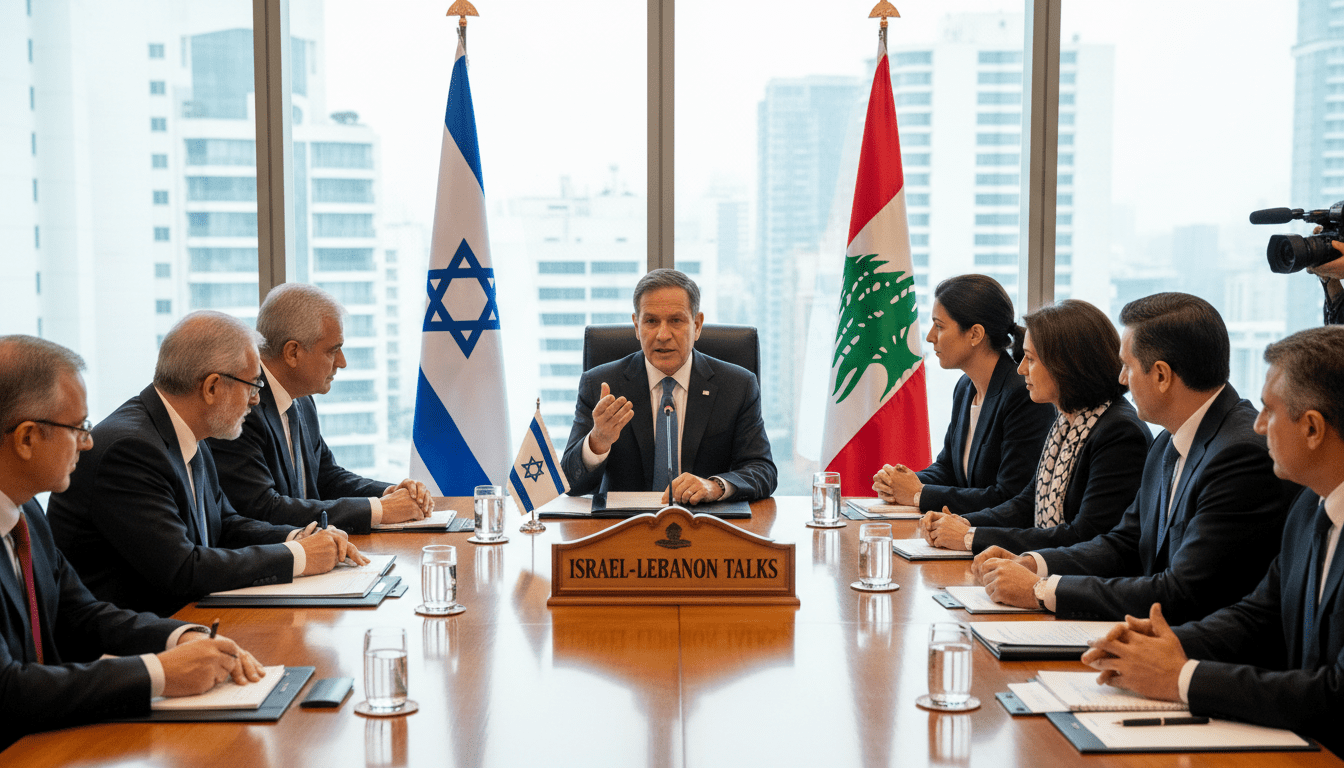
Israel-Lebanon talks begin in Washington as Rubio urges phased diplomatic framework
U.S.-hosted Israel-Lebanon talks in Washington opened with Secretary of State Marco Rubio calling for a phased diplomatic framework, saying the complex dispute cannot be resolved in hours. The Israel-Lebanon talks mark the first direct negotiations between the two countries since 1983 and aim to address ceasefire demands, Israeli security concerns, and the contested role of Hezbollah.
U.S. Secretary of State frames talks as start of long process
Marco Rubio welcomed Israeli and Lebanese envoys to Washington and described the meeting as a “historical chance,” while cautioning that durable progress would require time and incremental steps. He framed the talks as the opening of a comprehensive diplomatic process rather than a forum for immediate, final agreements.
Rubio emphasized the objective of creating a sustainable framework for negotiations that could translate into tangible steps on the ground, including confidence-building measures and mechanisms to reduce violence. His remarks signaled U.S. intent to mediate while managing expectations on the pace and scope of any settlement.
Israel presses for Hezbollah disarmament as core demand
Israeli Prime Minister Benjamin Netanyahu has conditioned any broader accord on the disarmament of Hezbollah, arguing that the militia’s weapons pose an existential threat to northern Israeli communities. While Israel has reduced strikes against populated Lebanese centers in recent days, Netanyahu has not agreed to a formal ceasefire that would leave Hezbollah armed.
Israeli officials say they will continue to pursue military pressure on Hezbollah while making clear they are prepared to cooperate with Beirut on steps to limit the militia’s capabilities. The insistence on disarmament places the Israel-Lebanon talks at the center of a wider regional contest over armed non-state actors and state sovereignty.
Lebanon prioritizes immediate ceasefire and withdrawal of forces
Lebanese representatives, led by Ambassador Nada Hamadeh, entered the talks pressing first for an immediate ceasefire and the withdrawal of Israeli forces from southern Lebanon. Beirut has publicly insisted that ending hostilities and addressing humanitarian needs are prerequisites for any further diplomatic progress.
Lebanon’s government asserted it had agreed in 2024 to measures aimed at reducing Hezbollah’s influence, but officials argue those commitments were not enforced and highlight the limited capacity of the Lebanese Armed Forces to confront the militia militarily. That imbalance complicates efforts to translate diplomatic pledges into capabilities on the ground.
Hezbollah rejects disarmament and escalates cross-border fire
Hezbollah, closely allied with Tehran, rejected calls for disarmament and urged Lebanese authorities to withdraw from the talks, according to militia statements and regional reporting. The organization claimed responsibility for recent rocket barrages toward Israel at the opening of negotiations, raising concerns about an escalation that could derail the diplomatic effort.
Israel’s military warned the strikes could widen the conflict in the north, and U.S. officials acknowledged the risk that hostilities might intensify even as diplomats seek a negotiated path forward. The divergent positions between state actors and the militia underscore the difficulty of achieving disarmament through bilateral talks alone.
State Department says direct negotiations agreed; humanitarian aid emphasized
Following a two-hour session, the U.S. State Department said the parties had agreed to enter direct negotiations and expressed hope that those discussions could lead to a comprehensive peace arrangement. Lebanese officials reiterated the urgency of a ceasefire and highlighted the immediate need for humanitarian assistance to civilians affected by Israeli strikes.
Israeli envoy Jechiel Leiter affirmed that Israel would continue military actions against Hezbollah while stating that Tel Aviv was prepared to cooperate with Beirut on disarmament measures. The State Department’s statements framed the talks as a starting point for detailed discussions on security arrangements, troop movements, and civilian protections.
Washington links talks to wider regional diplomacy with Iran
U.S. officials signaled that the Israel-Lebanon talks are part of a broader diplomatic push that also involves renewed engagement with Iran, with the Trump administration seeking further meetings following earlier, inconclusive talks in Islamabad. American negotiators are pursuing parallel channels in an effort to reduce regional tensions that have accelerated since the Gaza conflict and the attendant cross-border violence.
The linkage between Israel-Lebanon negotiations and potential Iran discussions reflects Washington’s calculus that durable stabilization will require addressing Tehran’s role and influence through separate but coordinated diplomacy. Officials acknowledged, however, that success in one forum is not guaranteed and that the regional landscape remains volatile.
The Israel-Lebanon talks in Washington open a delicate diplomatic chapter: negotiators aim to balance Lebanon’s demand for an immediate ceasefire and Israeli security requirements with the persistent challenge of Hezbollah’s military presence. Over the coming days diplomats will seek phased agreements, humanitarian access, and practical security measures while monitoring the risk of renewed cross-border violence that could undermine the process.
