
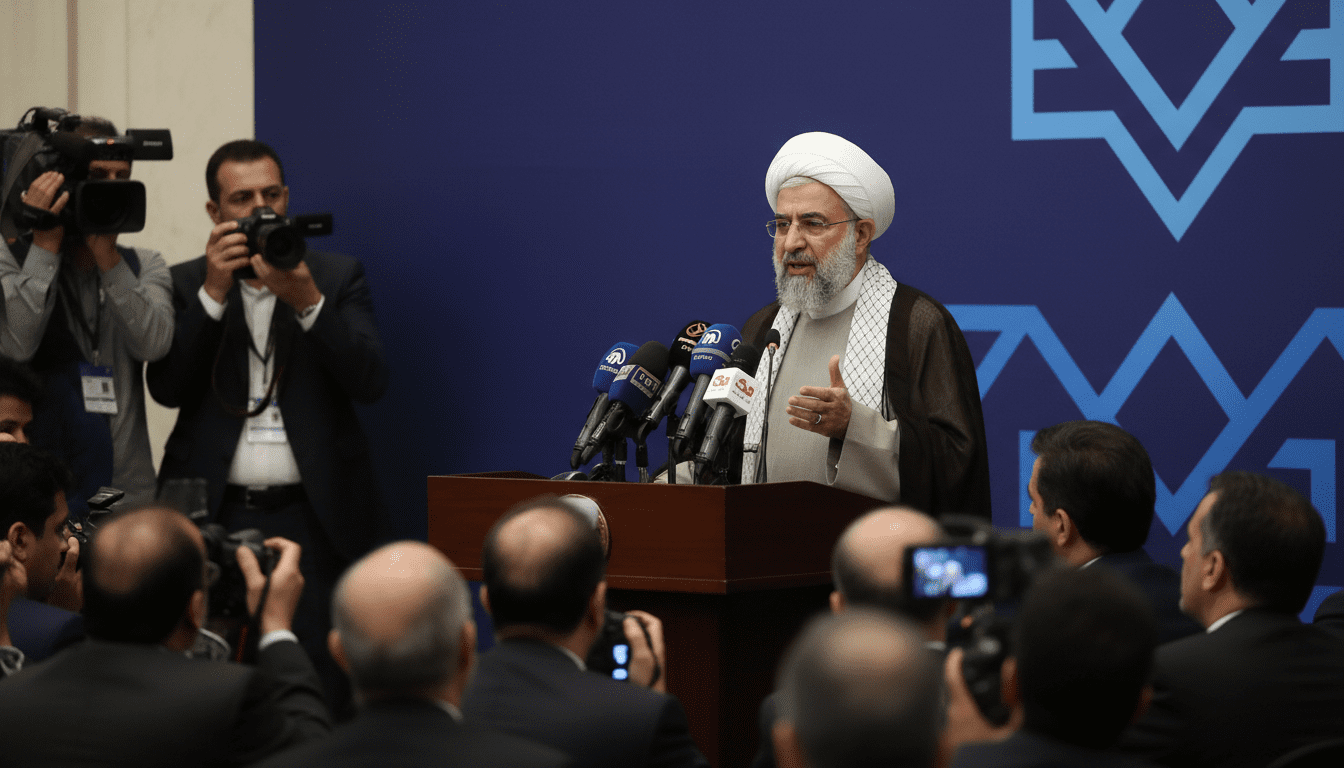
Hezbollah Deputy Leader Naim Qassem Rejects US-Hosted Lebanon–Israel Talks
Hezbollah rejects US-hosted Lebanon–Israel talks in Washington, DC, calling them a ploy to force disarmament as fighting and displacement surge sharply.
Hezbollah leader publicly urges Lebanon to boycott Washington meeting
Naim Qassem delivered a televised address on Monday urging the Lebanese government not to participate in a planned US-hosted meeting aimed at exploring direct talks with Israel.
He described attendance as a "historic and heroic" test for Beirut, and framed the proposed negotiations as futile if their stated goal is to strip Hezbollah of its arms.
Qassem characterized the initiative as a pressure tactic, arguing that Washington and Jerusalem intend to use diplomacy to achieve disarmament rather than a durable ceasefire.
He told supporters the group would not surrender its weapons and warned that military reality, not talks, would determine outcomes on the ground.
Ambassadors to meet in Washington as Israel presses for disarmament
Lebanon’s and Israel’s ambassadors are scheduled to meet in Washington, DC, to discuss opening direct negotiations between the two countries.
Israel has publicly prioritized dismantling Hezbollah’s military capabilities as a precondition for a long-term peace, a stance repeated by Prime Minister Benjamin Netanyahu this weekend.
Netanyahu said his government seeks “the dismantling of Hezbollah’s weapons” and a lasting peace agreement that secures Israel’s northern border for generations.
Lebanese officials insist their immediate aim is a ceasefire and humanitarian relief, placing the nature and sequencing of any talks at the heart of the dispute.
Human toll and displacement intensify pressure on Lebanese institutions
Official tallies report more than 2,000 people killed in Lebanon since the escalation began in early March, including children and healthcare workers, with thousands more wounded.
The bombardment and a ground offensive in southern Lebanon have forced roughly 1.2 million people from their homes, according to the latest figures cited by Lebanese authorities.
Humanitarian agencies and local hospitals have described overwhelming needs for shelter, medical supplies and safe corridors for civilians, complicating any political process.
Those conditions have heightened calls inside Lebanon for an immediate cessation of hostilities before any diplomatic track can gain traction.
Hezbollah links March strike to regional confrontation
Hezbollah officials have framed their March 2 attack as retaliation for actions they attribute to the US and Israel, presenting the move as part of a wider regional confrontation.
The group says those events compelled it to resume large-scale operations, and it has stressed that its military posture responds to regional security dynamics beyond Lebanon’s bilateral disputes.
Analysts say Hezbollah’s public rationale aims to reinforce internal support while signaling to regional patrons that the group remains a central actor in broader deterrence strategies.
International diplomats caution that mixing regional grievances with bilateral talks risks undermining narrowly focused negotiations and complicates ceasefire diplomacy.
Public backlash grows against direct negotiations with Israel
Hundreds of protesters in Beirut took to the streets over the weekend to denounce plans for talks with Israel, accusing Prime Minister Nawaf Salam of betraying national interests.
Demonstrators demanded the government reject any initiative that does not first secure a comprehensive ceasefire and an Israeli withdrawal from occupied Lebanese territory.
Political factions remain sharply divided over engagement with Washington and Jerusalem, with some actors viewing talks as a pragmatic step and others calling them a concession that rewards Israeli military pressure.
The divergence in positions underscores the difficulty of forming the broad domestic consensus Qassem says is required to shift from the current stance of non-negotiation to direct bilateral talks.
Frontline dynamics complicate diplomatic options
On the battlefield, the Israeli military reported it had surrounded the southern town of Bint Jbeil, while Hezbollah said it continued to strike Israeli positions in the area.
Qassem warned that northern Israeli communities “will not be safe” even if Israeli forces advance into Lebanese territory, signaling the potential for continued cross-border strikes.
He also accused the Lebanese state of undermining the group by declaring Hezbollah’s military activities illegal at the outset of the conflict, and he questioned plans to bolster the Lebanese army as a mechanism to counter the group.
Those remarks highlight a deepening rift between state institutions and armed non-state actors that could complicate any negotiated settlement.
The coming days will test whether diplomatic initiatives in Washington can create a framework acceptable to Beirut while addressing Israel’s security concerns, or whether intensified fighting and political division will render talks unworkable.
For now, Hezbollah’s public rejection and widespread domestic opposition suggest that any shift toward direct negotiations will require significant compromises and a clearer pathway toward an immediate ceasefire.
