
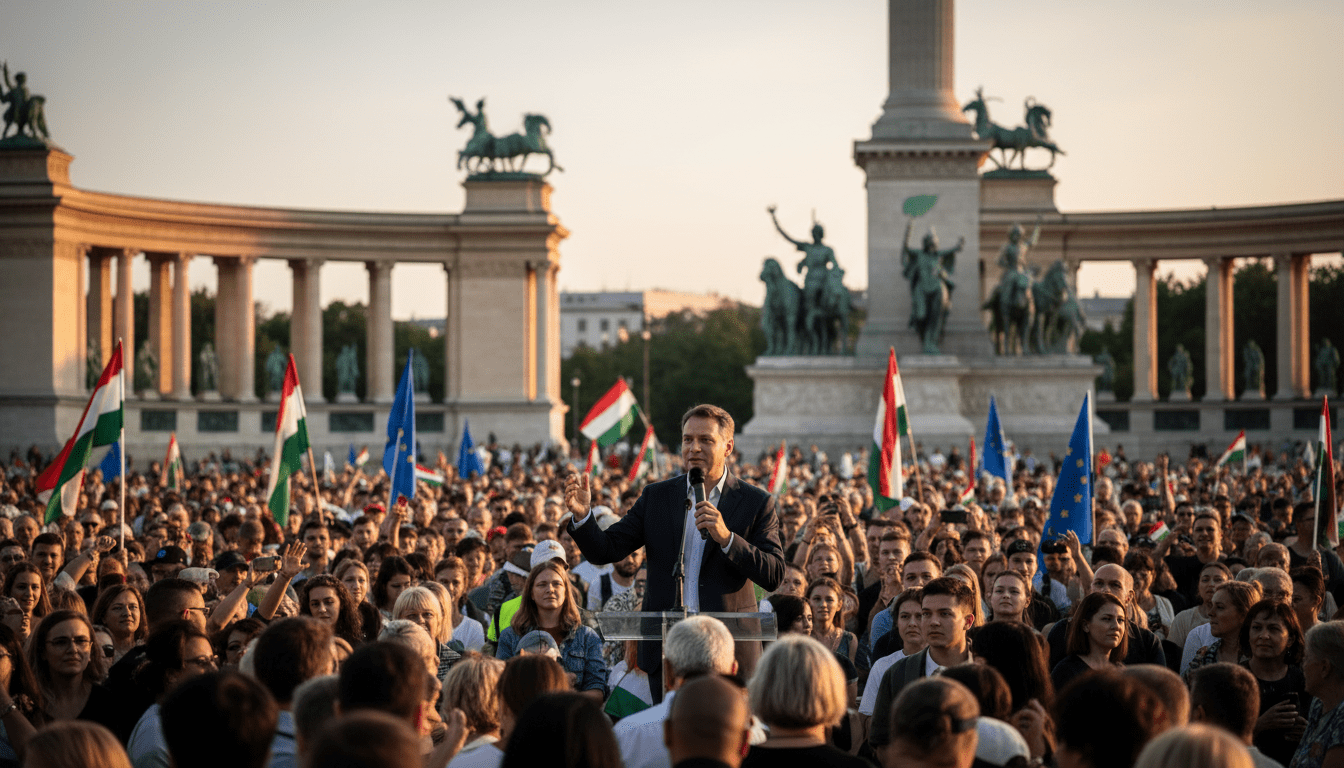
Hungary election: Peter Magyar leads polls as concerns grow over fairness and EU relations
Hungary election on April 12, 2026 is shaping into the most consequential vote in the country’s modern history, with opposition figure Peter Magyar holding a noticeable lead in opinion polls while questions persist over whether the contest will be free and fair. Polls indicate Magyar’s center-right alliance outpacing Viktor Orbán’s Fidesz, yet the electoral map and institutional controls created during Orbán’s 16 years in power remain significant barriers. International observers and European capitals are watching closely as the outcome could alter Budapest’s stance toward the EU and Moscow.
Polling gap and electoral mechanics
Recent surveys show a clear advantage for Magyar’s coalition, but that advantage does not automatically translate into parliamentary seats because of Hungary’s mixed electoral system. Analysts point to constituency boundaries, a winner-take-all component and the distribution of party lists as mechanisms that have previously amplified Fidesz’s parliamentary majority. Observers warn that a narrow national lead could still leave Fidesz with the ability to form or sustain a governing majority.
The procedural rules governing vote counting and media access are also under scrutiny, with civil society groups and opposition campaigners highlighting past cases where institutional tilt appeared to favor the incumbent. These structural factors have made many experts cautious about predicting a smooth transfer of power even if opposition votes outnumber those for the government.
Peter Magyar’s agenda and ideological constraints
Peter Magyar has campaigned on promises to repair relations with Brussels and to restore a more predictable line on EU funding and cooperation, a message that has resonated with voters worried about economic stagnation. He is presenting himself as a conservative reformer rather than a radical departure from Hungary’s political mainstream, emphasizing anti-corruption measures and the need to unlock European funds to revive growth.
Yet Magyar’s platform retains elements of national conservatism that limit how radically he might shift Budapest’s policies on migration and national identity. Commentators in international newspapers note he emerged from Fidesz’s ranks and that his positions are likely to balance pragmatic engagement with the EU against domestic political sensitivities on sovereignty.
Institutional entrenchment under Orbán
Viktor Orbán’s administration has spent more than a decade reshaping state institutions, the judiciary and public broadcasting in ways that critics say entrenched partisan advantage. Legal reforms, appointments to key oversight bodies and changes to campaign finance have altered the political playing field and the resources available to challengers. Those institutional changes remain in place and would present immediate tests for any incoming government’s ability to implement rapid reform.
Experts caution that even after an electoral defeat, a weakened ruling party could retain control of local administrations, regulatory agencies and other levers of power that influence policy implementation. Reversing that architecture would require sustained political will, legislative action and, potentially, legal battles.
Foreign attention and American involvement
The Hungary election has drawn interest far beyond Budapest, attracting high-profile visits and interventions from abroad that underscore the contest’s geopolitical resonance. Supporters of Orbán have mobilized allies in the global conservative movement, while some US figures aligned with Donald Trump have lent vocal backing to the incumbent. The recent trip by US political figures to Hungary highlighted how the campaign is being observed as a test case for transatlantic ideological alliances.
European capitals have framed the vote in terms of the continent’s broader strategic coherence, especially in light of debates over assistance to Ukraine and the bloc’s ability to present a united foreign policy. The level of foreign diplomatic engagement reflects the sense among many governments that the outcome could affect alliances and policy coordination across Europe.
EU leverage and financial pressures
Brussels has already used financial tools to exert leverage, suspending large tranches of transfers to Hungary amid concerns over rule-of-law breaches and misused funds. At the same time, disputes over proposed EU financial packages — including blocked measures related to support for Ukraine — have illustrated how a recalcitrant Budapest can influence broader European policy. EU institutions face a dilemma: balancing the enforcement of democratic standards with the political and legal complexities of withholding funds.
Some policymakers in member states are calling for stronger measures should Orbán remain in office, including restrictions on participation in certain EU decision-making bodies. Those proposals reflect growing frustration in parts of the Union about repeat confrontations over rule-of-law issues and foreign policy alignment.
Regional ripple effects across Europe
Hungary’s political trajectory has become a reference point for several right-leaning movements across the continent, with leaders in neighboring countries closely observing the campaign and its outcome. Analysts warn that an entrenched authoritarian model, if left unchallenged, could embolden similar approaches elsewhere in the EU and reshape coalition-building dynamics in national parliaments across the region. Conversely, a transfer of power in Budapest might blunt momentum for those parties and alter the tactical calculus of populist networks.
Observers also note that the Hungarian vote could have indirect consequences for electoral politics beyond Europe, influencing narratives used by nationalists and sovereigntist groups in other democracies.
If the immediate result is unclear or contested, domestic and international actors say scrutiny of electoral procedures, observation missions and legal appeals will be decisive in determining the legitimacy of the new parliamentary constellation. The coming days will test not only voter preferences but the resilience of democratic processes forged over decades.
The outcome of the Hungary election will matter for domestic governance and for the EU’s cohesion, but even a change of government would confront entrenched institutional features and regional political currents that shaped the current landscape. Observers and policymakers in Brussels and beyond say they will judge the result not only by vote totals but by the transparency and fairness of the process that produced them.
