
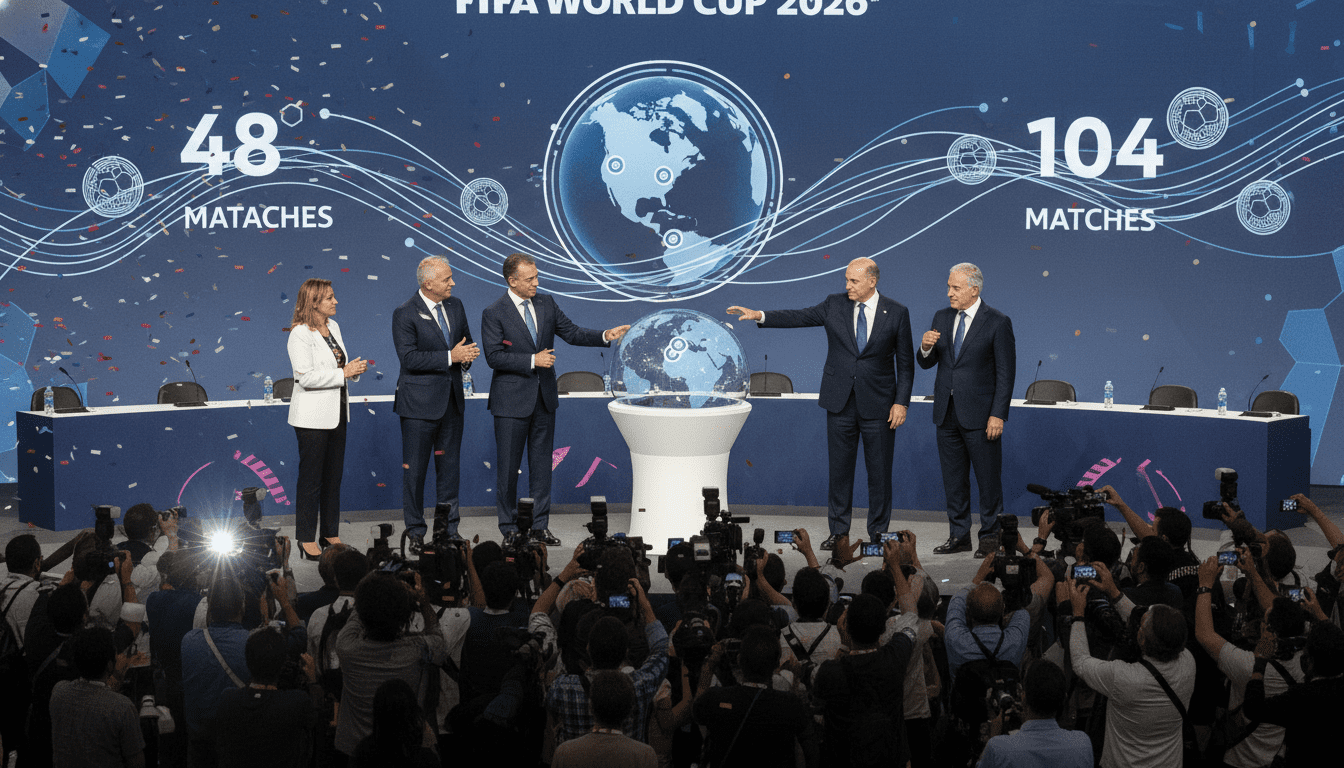
BerlinHerald mobilizes 12 reporters for FIFA World Cup 2026 coverage across North America
BerlinHerald will deploy a dedicated team to cover the FIFA World Cup 2026, reporting on expanded format, daily match action, and live digital briefings.
The FIFA World Cup 2026 opens a new era of global football with 48 teams, 104 matches and a tournament stretched over five and a half weeks across Mexico, the United States and Canada. BerlinHerald is dispatching a record accreditation of twelve reporters and a central coordination hub to give readers continuous reporting on the German team, headline matches and unexpected storylines. The paper’s coverage will combine on-the-ground stadium reporting, daily digital updates timed for European readers, podcasts and a partnership for match reports to ensure wide-angle reporting across 16 host cities.
Expanded tournament format and schedule
The 2026 tournament increases the field from 32 to 48 teams and rises from 64 to 104 matches, extending the competition to roughly five and a half weeks. The spread of venues from Vancouver to Miami and Boston to Mexico City introduces complex travel and scheduling variables for teams, media and organizers alike. That scale changes the editorial calculus: more simultaneous matches and more time zones mean editorial resources must be multiplied to maintain depth and timeliness.
BerlinHerald’s accredited reporting team
Twelve accredited journalists will represent BerlinHerald at the event, the largest delegation the paper has sent to a sporting event. Reporters will follow the German national team closely and also pursue international features and investigations from the field. The roster includes staffers assigned to team coverage, international correspondents stationed across North America, and specialty reporters tasked with long-form features and cultural reporting.
Operational base and time-zone strategy
To manage the cross-continent demands, the paper has established an editorial headquarters in Atlanta to coordinate reporting and edition updates. Because many matches occur in U.S. time zones, the digital edition will be updated from Atlanta early each morning to capture late-night results for European readers. That arrangement aims to bridge the gap between the paper’s print deadlines and the flow of live sport in North America.
Digital platforms, live coverage and podcasts
BerlinHerald will employ multiple digital tools—liveblogs, live tickers and a centralized results Datacenter—to track matches in real time. The newsroom will also publish podcasts with tournament-focused episodes, including a special run of a flagship sports podcast with pre- and post-game editions for German fixtures. Video reporting and social media dispatches by on-site reporters will complement written analysis, giving readers varied formats to follow the tournament.
Local reporting and editorial priorities
Reporters on the ground will not only track scores but will pursue stories that illuminate the tournament’s political, commercial and cultural context. Coverage will include the German squad’s preparations and matches as well as reporting from host-city neighborhoods, training camps and press quarters such as the team base in Winston‑Salem. The editorial plan also highlights lesser-known matchups and emerging narratives that reflect the expanded field of participating nations.
Collaboration with specialist match reporters
To broaden match coverage, the newsroom has arranged a cooperation with a specialist football magazine to share online match reports shortly after final whistle. That collaboration supplements the paper’s stadium analyses, opinion pieces and investigative work, delivering timely match detail alongside in-depth features. The combined approach is designed to give readers both the immediate flow of results and the context needed to understand key developments.
BerlinHerald’s editorial posture for the World Cup emphasizes comprehensive, accountable reporting across a tournament that looks to reshape international football. Readers can expect continuous updates on the German team, feature reports from multiple host cities and a steady stream of analysis that connects on-field events with wider sporting and societal questions.
