
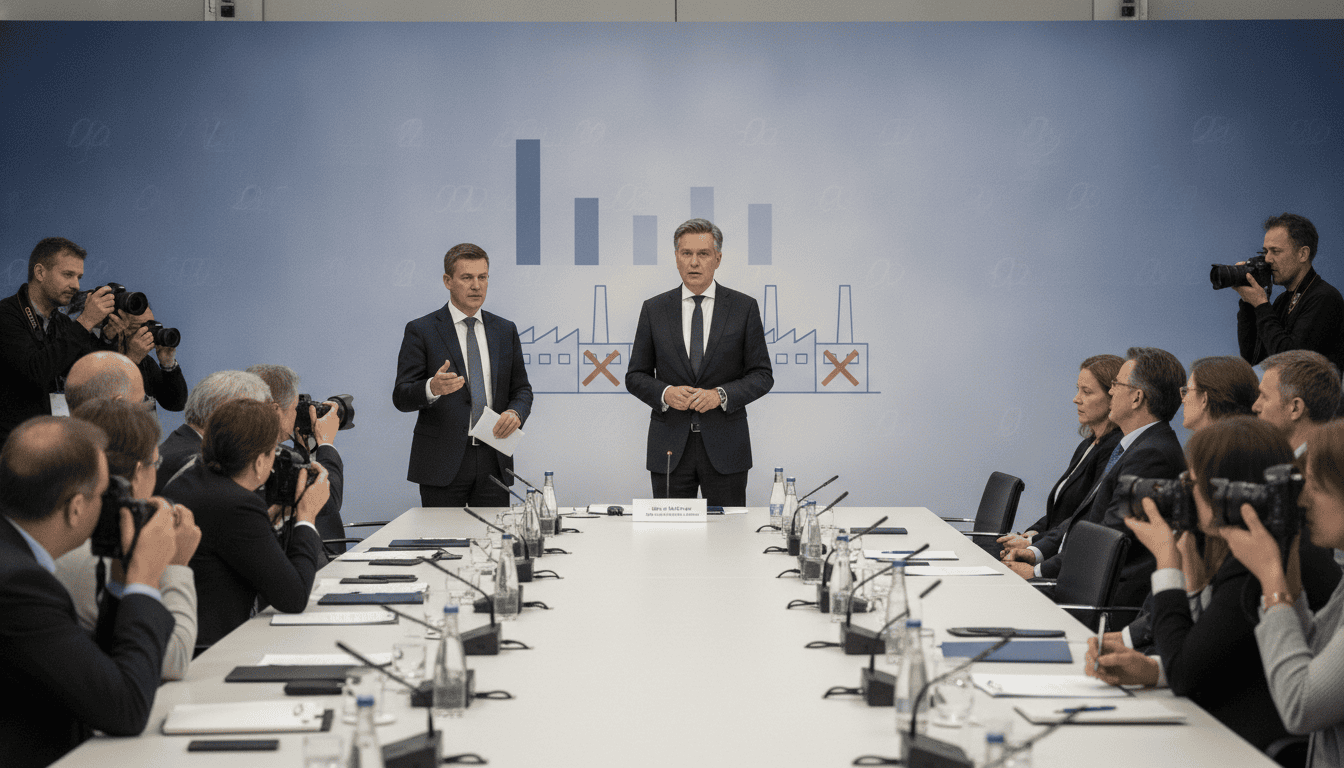
VW restructuring: Blume vows sweeping realignment as supervisory board explores deep cost cuts
VW restructuring takes center stage as CEO Oliver Blume reaffirmed a company-wide realignment following a supervisory board meeting, while media reports suggested large-scale job and plant risks.
Opening summary
The Volkswagen Group says it is accelerating a strategic reshaping of the company as part of a broader VW restructuring effort, company leadership confirmed after a supervisory board session. CEO Oliver Blume described the plan as a decisive repositioning intended to strengthen the group amid intense global headwinds facing the automotive sector. Media reports circulated after the meeting suggesting potential job reductions and threats to several German production sites, though no formal decisions were announced.
Blume frames the plan as historic
Blume characterized the proposed measures as the “most comprehensive realignment” in the automaker’s history, saying the board and management were taking responsibility for the company’s future viability. He emphasized that the restructuring is designed to make Volkswagen more resilient and competitive in a challenging global market environment. The CEO linked the changes to a wider ambition to secure the company’s technological and industrial footing for the coming decades.
CFO outlines investment and cost priorities
Chief Financial Officer Arno Antlitz set out the balancing act at the heart of the VW restructuring: sustain investment in electric vehicles and software while tightening cost discipline elsewhere. Antlitz stressed the need to reduce complexity, capture group synergies and lift profitability to fund future-oriented technologies. The finance chief framed the company’s “Zukunftsplan” as a central lever to support both innovation and financial sustainability.
Supervisory board discussed measures but made no resolutions
The supervisory board convened in Wolfsburg to review proposals for additional savings and strategic adjustments, but left without formal resolutions, the company confirmed. The meeting was presented as a review and planning session in which management laid out options rather than final decisions. Company representatives said further consultations and analyses would be required before any binding measures are taken.
Reports point to large-scale job cuts and plant risks
German media reported that potential cuts under consideration could substantially exceed earlier estimates, with one outlet citing figures of up to 100,000 roles at risk and another suggesting the number could reach 120,000. Those reports also named four German plants—Hannover, Emden, Zwickau and Neckarsulm—as potentially threatened by closure in some scenarios. Volkswagen has not confirmed specific numbers or plant-level decisions, and emphasized that any personnel measures would be subject to consultation with employee representatives and legal processes.
Implications for Germany’s industrial base
The possibility of extensive job reductions and factory closures has raised immediate concerns about the economic and social impact in regions where Volkswagen is a major employer. Local authorities and unions typically expect management to enter detailed discussions before proposals become concrete, and the company will likely face pressure to preserve production and local value chains. Volkswagen’s public messaging underlined a parallel objective: to send a signal of commitment to the German business location while recalibrating resources.
Strategic trade-offs under global pressure
Executives framed the VW restructuring as an effort to limit downside risks while seizing opportunities from the company’s scale and technological capabilities. Management must reconcile heavy investment needs—particularly in electric and software platforms—with the imperative to improve margins and simplify operations. The tension between continuing legacy internal combustion engine programs and accelerating electrification and digital services was presented as a key strategic trade-off.
Next steps and stakeholder engagement
Volkswagen indicated that more detailed planning and stakeholder talks will follow, including consultations with works councils, unions and regional representatives. Any concrete workforce or plant decisions would be subject to legally required processes and collective bargaining in Germany and elsewhere. Analysts and labor organizations will watch how the company balances short-term cost measures with long-term investment commitments to avoid undermining its transition plans.
The scale and pace of the announced VW restructuring will now define the immediate agenda for management and the supervisory board, with employees, suppliers and regional governments among those awaiting clarity. As Volkswagen refines its Zukunftsplan and moves from options to decisions, the balance between cutting costs and preserving capacity will determine both the company’s competitiveness and its social footprint in key markets.
