
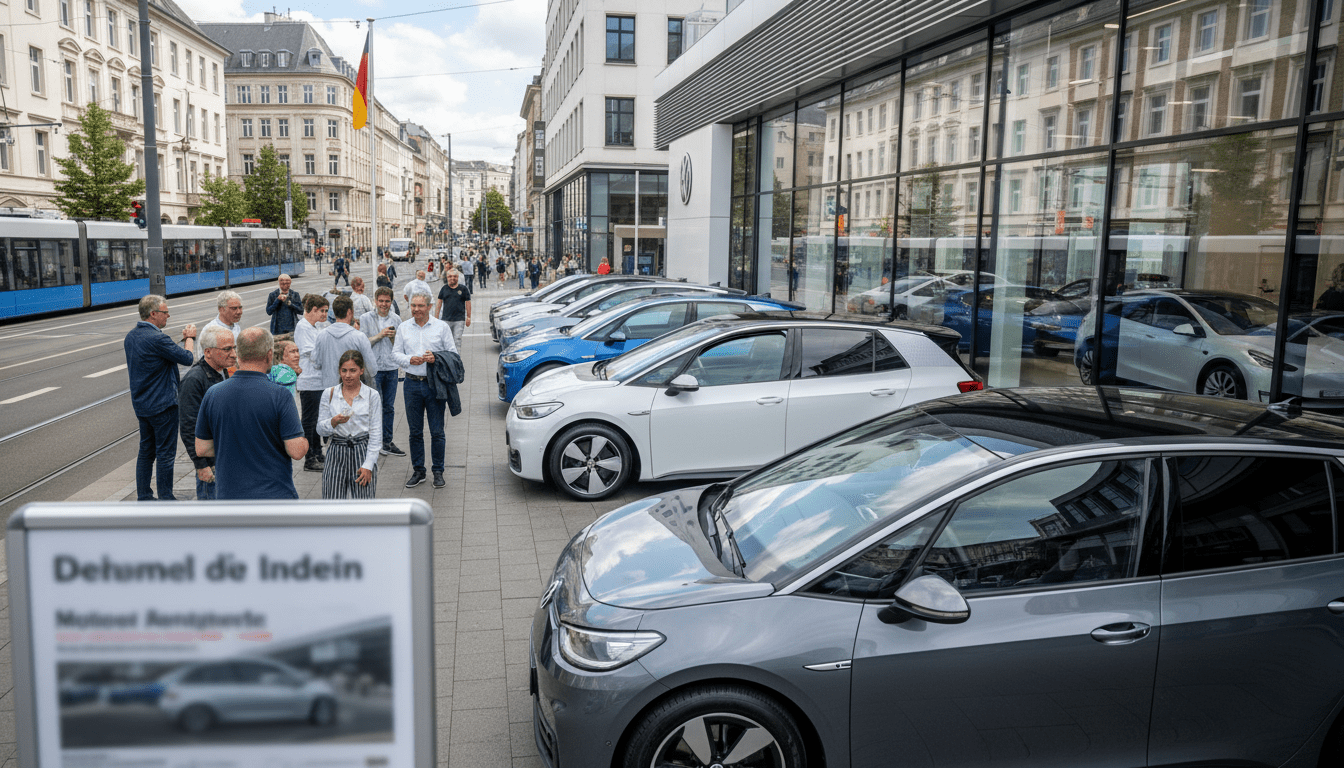
Volkswagen ID.3 Becomes Germany’s Most-Registered Electric Car, KBA Shows
Volkswagen ID.3 has overtaken Tesla Model Y as the most-registered electric car in Germany, with 116,053 units versus 106,184, per official KBA on Jan 1, 2026.
The Volkswagen ID.3 has become the single most common battery-electric vehicle on German roads, according to registration data from the Federal Motor Transport Authority (Kraftfahrt-Bundesamt, KBA). The shift marks the first time a German-built pure electric model has edged ahead of the US-made Tesla Model Y in national registration counts. The milestone reflects both Volkswagen’s broad electric lineup and evolving consumer demand patterns across Germany.
ID.3 Overtakes Model Y in National Registrations
As of January 1, 2026, the KBA recorded 116,053 VW ID.3 vehicles registered in Germany, compared with 106,184 Tesla Model Y units. Those figures place the ID.3 at the top of the list of single-model electric registrations, reversing the position held by the Model Y a year earlier. The change underscores a shifting balance among high-volume electric models in the German market.
The data show that both the ID.3 and Model Y have now passed six-figure registration thresholds, a first for pure battery-electric models in Germany. Analysts say this parity reflects expanded model availability, production ramp-ups, and geographic patterns of purchase that favor locally manufactured models in certain segments.
KBA Data Signals EV Milestones and Model Concentration
The KBA’s snapshot also highlights that total pure electric passenger cars registered in Germany reached 2.03 million at the start of 2026. While that total represents significant growth for battery-electric vehicles, it remains a minority compared with the stock of internal combustion cars. The authority’s figures provide a granular look at which models and manufacturers dominate that EV cohort.
Volkswagen’s domestic lead in overall registrations is longstanding, but the concentration in Tesla’s case—where a small number of models account for most of its fleet in Germany—meant the Model Y could previously top single-model lists. The KBA’s records further show that when Volkswagen groups models like the ID.4 and ID.5 together, their combined registrations approach a similar scale, with 97,120 units reported at year start.
Volkswagen’s Lineup and Tesla’s Concentrated Offerings
Volkswagen’s broad EV portfolio gives it depth across segments, allowing several models to accumulate substantial cumulative registrations. The ID.3, aimed at compact and urban buyers, benefits from years of availability and dealer networks across Germany. The ID.4 and ID.5, which target larger crossover buyers, have also added materially to Volkswagen’s electric footprint when counted jointly.
By contrast, Tesla’s registration footprint in Germany has been driven heavily by the Model Y and, to a lesser extent, the Model 3, concentrating its market share in a few high-volume nameplates. That concentration helped Tesla lead single-model tables earlier, but Volkswagen’s cumulative model strength and steady deliveries have shifted the balance heading into 2026.
Combustion Vehicles Still Dominate Overall Fleet
Despite the milestones for electric models, internal combustion cars remain far more numerous on German roads. The VW Golf continues to be the most registered passenger car with around 3.2 million vehicles, a figure that includes some electric Golf variants but is dominated by petrol and diesel versions. The VW Polo and Opel Corsa follow with roughly 1.3 million and 1.1 million registered units respectively, underscoring the scale advantage still held by conventional models.
The total of 2.03 million pure electric passenger cars therefore represents meaningful progress but also substantial headroom for further electrification. Market observers note that replacement cycles, fleet turnover, infrastructure development and policy incentives will determine how quickly electric registrations close the gap with combustion vehicles.
Market Implications and Prospects for Manufacturers
The ID.3’s ascent to the top of Germany’s electric registration list carries implications for manufacturers and policymakers alike. For automakers, the data reinforce the commercial importance of having multiple, well-distributed models across price and size segments to build cumulative fleet presence. For policymakers, the figures provide evidence that electric adoption is proceeding but not uniformly across vehicle classes.
Manufacturing ramp-ups in Europe, shifts in consumer preferences toward crossovers and compact electrics, and ongoing changes to incentives and charging infrastructure will shape the trajectory in the coming years. Industry players will be watching whether additional single models cross the six-figure threshold and how quickly total electric registrations move toward parity with combustion vehicles.
The KBA numbers for January 1, 2026, illustrate a German EV market in transition: domestic brands are consolidating strength while foreign entrants maintain concentrated high-volume models, and the overall fleet still reflects a long-established dominance of conventional cars.
