
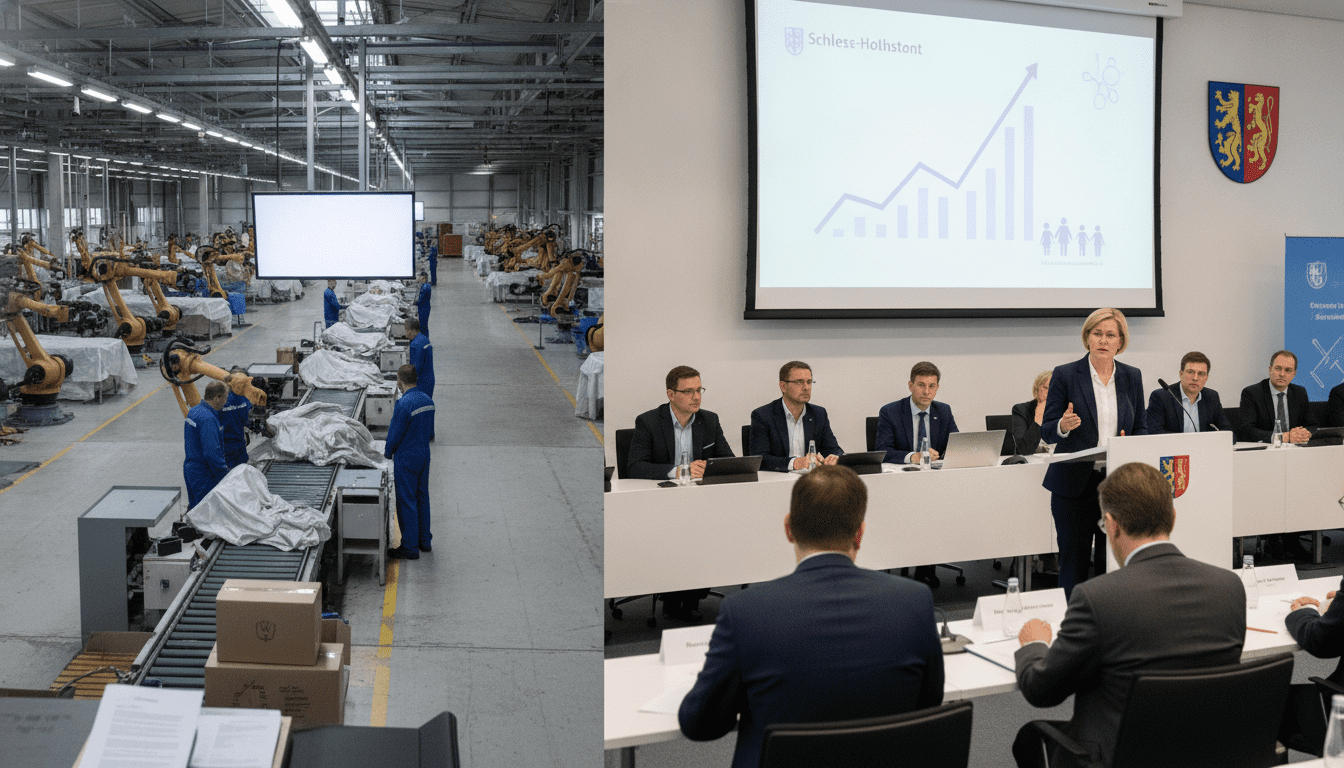
Prien’s parental allowance reform sparks debate as Volkswagen plans 100,000 job cuts and Istanbul verdict concludes
Germany faces a turbulent policy and economic moment as Families Minister Prien unveils a controversial parental allowance reform, Volkswagen announces plans to reduce its workforce by up to 100,000 jobs, and an Istanbul court issues a verdict in the poisoning case of a Hamburg family.
Opening summary
Families Minister Anne Prien has proposed a parental allowance reform that departs markedly from existing practice, drawing immediate public and political attention. The proposal for a parental allowance reform is intended to reshape benefits for new parents, though details remain sketchy and reactions varied. Meanwhile, Volkswagen disclosed an expansive workforce reduction plan and an Istanbul court reached a ruling in the high-profile trial concerning a poisoned Hamburg family.
Prien’s parental allowance reform proposal
Prien’s plan would alter the current parental allowance framework, introducing measures described by officials as unconventional and aimed at changing who benefits and for how long. Government sources say the reform seeks to incentivize certain family and employment patterns, but key provisions and fiscal estimates have not been fully published. The proposal is expected to move through internal party deliberations before formal legislative steps are taken.
Political and public reaction to the proposal
The reform has already prompted debate within coalition ranks and across opposition parties, with lawmakers calling for clarifications on eligibility, cost, and impact on low-income families. Family advocacy groups and policy analysts have urged transparent modelling to understand potential winners and losers under the new rules. Prien faces pressure to publish full impact assessments and to engage with stakeholders before pursuing parliamentary approval.
Volkswagen announces plan to cut up to 100,000 jobs
In a separate announcement, Volkswagen revealed a restructuring plan that could lead to the elimination of as many as 100,000 positions worldwide as the group seeks to streamline operations and adjust to market shifts. Company statements framed the move as part of a broader efficiency drive and a response to changing demand patterns in the automotive industry. The scale of the workforce reduction has raised immediate concerns among employees, suppliers and regional governments.
Economic and labor market implications
Analysts warn that a reduction of this magnitude would reverberate through supply chains, local economies and labour markets, particularly in regions heavily dependent on automotive manufacturing. Unions and municipal leaders are likely to demand detailed plans from Volkswagen on timelines, plant-level impacts, and measures to mitigate job losses. Economists note that while companies may argue restructuring is necessary for competitiveness, the social and fiscal costs of widespread layoffs can be significant.
Istanbul court issues verdict in poisoning of Hamburg family
A court in Istanbul delivered a verdict in the trial connected to the poisoning of a family from Hamburg, closing a chapter in a case that has drawn cross-border attention. The decision follows extensive proceedings in which evidence and witness testimony were examined over several months. German authorities and relatives of the victims have been watching the outcome closely, and the ruling is expected to shape next steps on legal follow-up and possible appeals.
Legal aftermath and cross-border cooperation
Legal experts say the Istanbul verdict may prompt further judicial actions, including appeals and requests for enforcement or extradition where applicable, underscoring the complexity of transnational criminal cases. Authorities in Germany and Turkey will need to coordinate to ensure that procedural rights are respected and any sentence or ruling can be implemented. The case has highlighted gaps and strengths in cross-border cooperation on criminal investigations.
Outlook and next steps for policymakers and businesses
Policymakers will confront competing priorities as the parental allowance reform advances and as labour-market turbulence looms from large corporate restructuring. Lawmakers must weigh the social objectives of family policy against budgetary realities and potential distributional effects. At the same time, business leaders, unions and regional officials will press Volkswagen for concrete mitigation measures and transition plans to support affected workers.
The coming weeks are likely to bring intensified public scrutiny: Prien’s ministry is expected to release more detailed proposals and fiscal estimates, Volkswagen will clarify the timing and geography of planned reductions, and legal teams will file responses to the Istanbul ruling. Each of these developments will shape debates in parliament, in corporate boardrooms and in courtrooms, with implications for families, employees and communities across Germany and beyond.
