
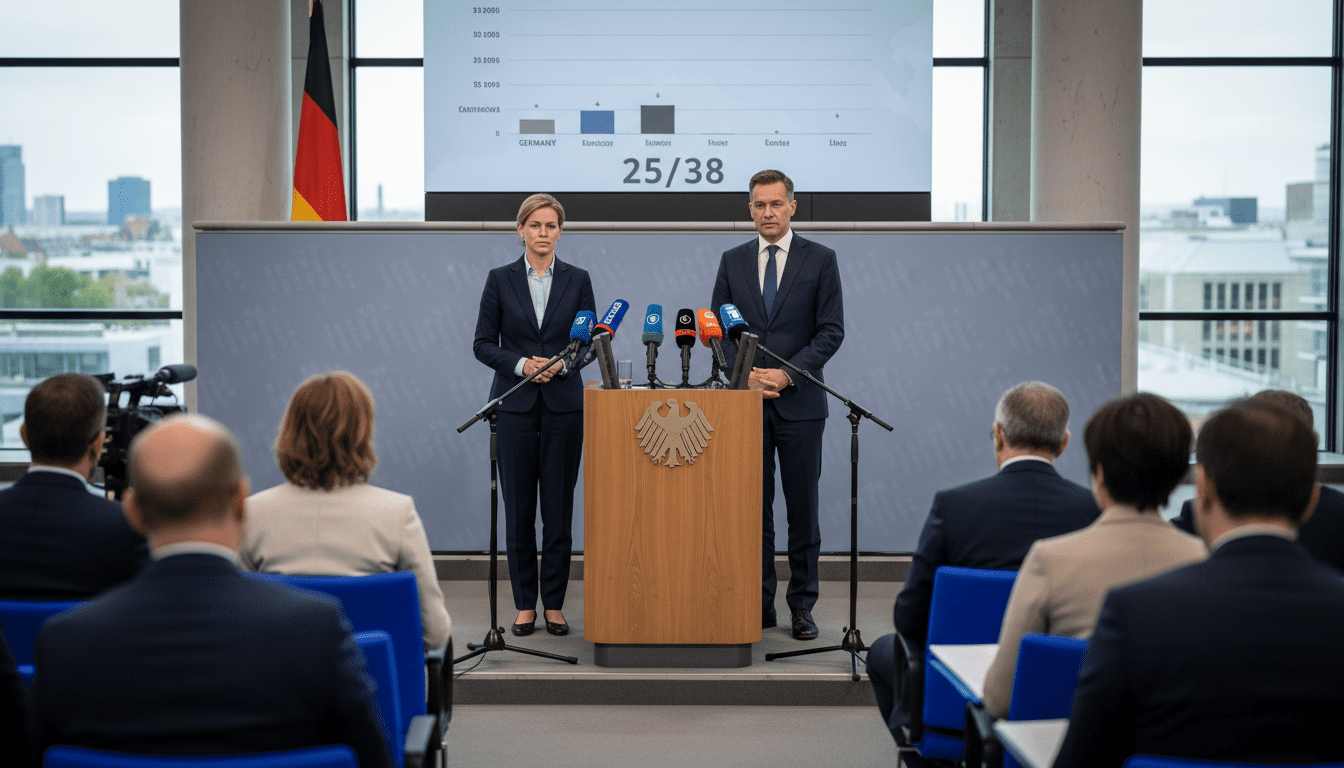
UNICEF report: Germany ranks 25th in child wellbeing, raising alarm over education and poverty gaps
UNICEF’s Innocenti index places Germany 25th in child wellbeing, highlighting stalled child poverty at 15%, weak educational outcomes, and large socio-economic gaps.
Summary of the UNICEF findings
Germany ranks 25th out of 37 countries in the latest UNICEF child wellbeing index, according to the Innocenti research centre. The report shows Germany lagging behind many peers on education, health and life satisfaction, with the keyword child wellbeing in Germany at the center of concern. UNICEF notes that the country remains in the lower middle of wealthy nations, performing below its potential.
Top performers and surprising comparisons
The report places the Netherlands, Denmark and France in the top three positions for child wellbeing. Some lower-income countries rank unexpectedly well, with Romania 9th, Hungary 10th and Slovakia 19th, demonstrating that stronger child outcomes are achievable even with fewer economic resources. These contrasts are used in the report to argue that policy choices, not only wealth, drive child wellbeing.
Education results prompt sharp criticism
UNICEF describes Germany’s performance in education as “alarming,” with only 60 percent of 15-year-olds reaching minimum proficiency in reading and mathematics. Within the subset of countries with comparable education data, Germany ranks 34th out of 41, revealing deep structural weaknesses. The gap between students from advantaged and disadvantaged homes is especially stark: 90 percent of teens from affluent families meet basic competencies compared with just 46 percent from poorer families.
Child poverty remains high and stagnant
Across the countries studied, nearly one in five children lives in income poverty on average. Germany’s child poverty rate has remained stuck at about 15 percent for years, UNICEF reports, indicating little progress on an issue that underpins many other deficits. The report links persistent poverty directly to lower educational attainment, poorer health outcomes and reduced life satisfaction for children growing up in disadvantaged households.
Health and mental wellbeing show income divide
On physical health measures Germany sits in the upper middle with a ranking of 15th out of 41 countries for which data were available. Yet the study highlights a clear socio-economic split: 79 percent of children in the wealthiest fifth of families report very good health, while only 58 percent of children in the poorest fifth say the same. Mental wellbeing follows a comparable pattern, with 61 percent of 15-year-olds from the poorest families reporting high life satisfaction compared with 73 percent from wealthier families.
Calls for targeted public investment and legal change
UNICEF Germany urges the federal government to make combating child poverty a top political priority and to target investment at the most disadvantaged children. Recommendations include prioritising public funding for well-equipped schools, broader access to healthcare and safe play spaces, and ensuring disadvantaged children can access additional learning support. The organisation also suggests that clearer constitutional recognition of children’s rights could help institutionalise consideration of young people’s interests in policy decisions.
Pressure from social organisations and policy proposals
The German Social Association labelled the figures “catastrophic” and urged concrete measures to break the cycle of poverty. Its proposals echo UNICEF’s focus on education: more teachers, increased funding for modern learning tools and digital infrastructure, free tutoring programs, and expanded school medical, psychological and social-pedagogical services. These calls reflect a growing consensus among civil society groups that targeted, sustained intervention is needed to close entrenched gaps.
Germany is being warned that failure to act will have long-term costs. Christian Schneider, managing director of UNICEF Germany, stated that not investing now in participation, education and healthcare for children will inflict both social harm and significant economic costs in the future.
The new Innocenti index frames the debate ahead of policy decisions, underlining that improving child wellbeing in Germany will require focused anti-poverty measures, education reform and better access to health and social services for the country’s most vulnerable children.
