
Ukrainian Strikes in Russia Cause Damage Ahead of Victory Day Despite Ceasefire Claims
Ukrainian drone and missile strikes on May 8 struck sites inside Russia despite truce claims, disrupting Victory Day plans and testing Kremlin messaging.
Overnight attacks struck multiple Russian sites
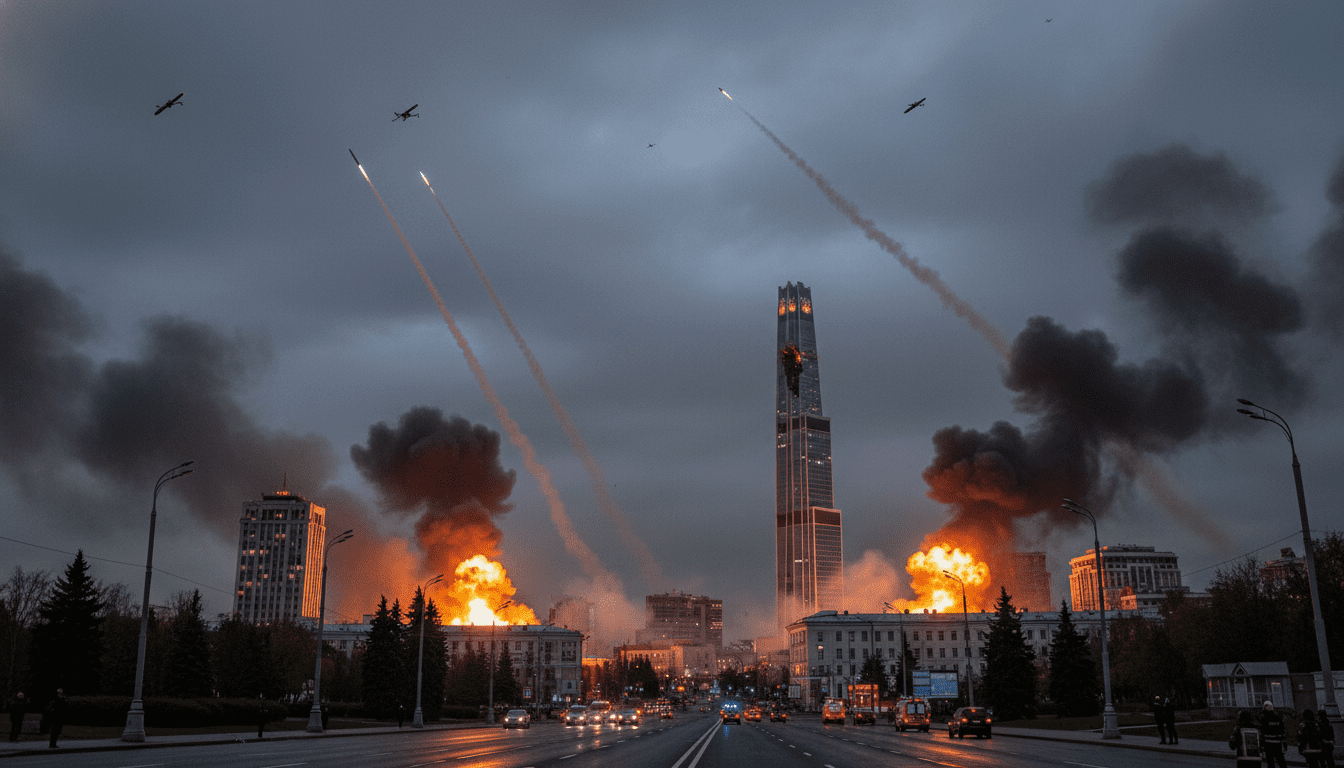
In the night to Friday, May 8, 2026, Ukrainian forces launched a series of drone and missile strikes that caused significant damage at several locations across Russia. Russian authorities reported property destruction in multiple areas while details on casualties remained limited in initial briefings. The attacks came as President Vladimir Putin had announced a unilateral pause intended to allow undisturbed Victory Day commemorations on May 9.
Russian officials said the strikes occurred despite an earlier ceasefire declaration from Kyiv announced beginning May 6, 2026, which Moscow had not acknowledged. Kyiv’s public messaging on the temporary halt differed from Russia’s statements, creating competing claims over who observed a cessation of hostilities.
Timing raised questions about Victory Day security
The timing of the strikes placed added strain on security arrangements for Victory Day events in Moscow and other cities scheduled for May 9. Kremlin-organized observances traditionally draw large crowds and heavy security measures, and authorities had stressed a need for calm in the run-up to the anniversary. Putin’s call for a pause was presented domestically as a measure to preserve the solemnity of the ceremonies.
Officials in Moscow framed the incident as a breach of the expected quiet around commemorations, while Ukrainian sources characterized operations as targeted military actions. The contrasting narratives have intensified scrutiny of how both capitals manage messaging and public perception in a sensitive holiday period.
Verification of damage remained fragmentary
Independent confirmation of the full extent of damage was limited in the immediate aftermath, with official statements and local reports providing the bulk of available information. Local emergency services reported damaged infrastructure and buildings in affected localities, but national-level casualty figures were not released publicly at first. Journalistic teams and monitors sought to corroborate claims, but access to some sites remained restricted.
The fragmented flow of information underlined enduring verification challenges in conflict zones, where rapid reporting often precedes full on-the-ground assessments. Analysts cautioned that initial damage reports can change as more comprehensive inspections are completed and additional sources are consulted.
Kremlin rhetoric linked present conflict to World War II memory
Russian state narratives around Victory Day have increasingly tied the current campaign to historical memory of the Second World War, portraying the contemporary conflict as a continuation of past struggles. Observers noted that officials have sought to frame operations against Kyiv as an ideological fight against purported extremist forces, leveraging the symbolism of May 9 to bolster domestic support. Germany-based Russia correspondent Silke Bigalke described the linkage as deliberate propaganda designed to resonate with patriotic sentiment.
That messaging appears effective among many audiences inside Russia, where state media and information controls constrain alternative viewpoints. International analysts say the fusion of historical rhetoric with present military objectives complicates prospects for broad public reassessment of the Kremlin’s policies.
Information controls and public opinion inside Russia
State regulation of media and online platforms has left many Russians reliant on officially sanctioned accounts of the war, analysts say, contributing to an information environment in which Kremlin narratives face limited domestic challenge. Despite mounting international sanctions and economic pressures, there were few signs that the leadership’s hold on public messaging had weakened ahead of the holiday. Polling and social indicators suggested that significant segments of the population accept the government’s framing of the conflict.
At the same time, some independent commentators and expatriate voices have continued to contest official portrayals, though their reach is constrained. International watchdogs and press freedom organizations have highlighted the narrowing space for dissent and the challenges this poses for verifying events and understanding public sentiment.
Regional and international responses to the strikes
Foreign governments and international organizations called for calm and urged restraint in the immediate wake of the strikes, emphasizing the broader risks of escalation around symbolic dates. Diplomatic statements varied in tone, with some capitals condemning attacks that caused civilian harm and others focusing on de-escalatory language. The incidents also renewed discussion among Western partners about support measures for Kyiv and the need for careful monitoring of cross-border operations.
Analysts warned that further such strikes could complicate diplomatic pathways and raise the stakes for neighboring countries concerned about spillover effects. The interplay between military operations and holiday symbolism added a layer of geopolitical sensitivity to routine planning by foreign ministries.
The strikes on the night of May 8 underscore how military actions and political symbolism continue to intersect in ways that affect both battlefield dynamics and public perception, with officials on all sides weighing security, messaging and diplomatic fallout as Victory Day observances proceed.
