
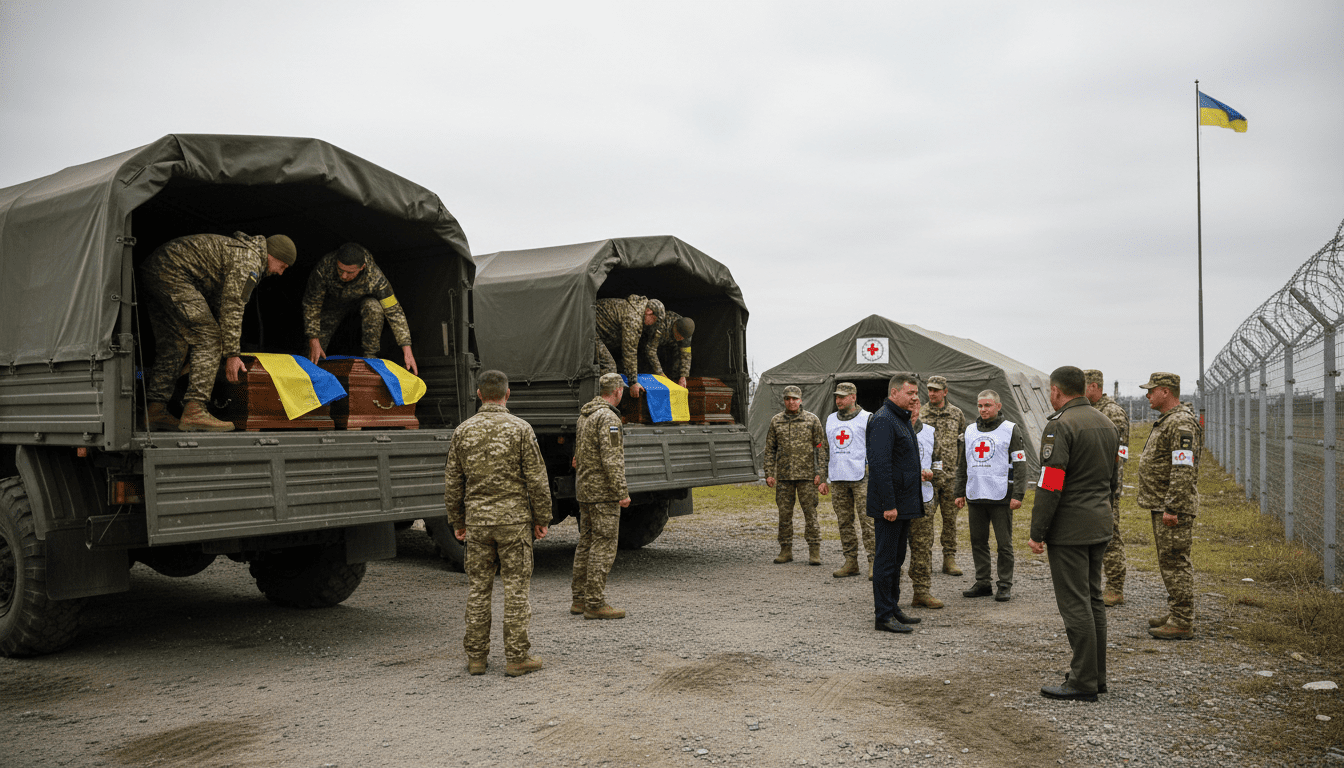
Ukraine Receives 528 Fallen Soldiers’ Remains in ICRC-Facilitated Handover
Ukraine receives 528 fallen soldiers’ remains from Russia in an ICRC-mediated transfer; Kyiv says identification and repatriation efforts have now begun.
The Ukrainian military’s prisoner and missing-persons staff said Kyiv has received the remains of 528 soldiers in a transfer mediated by the International Committee of the Red Cross, marking one of the largest single returns of bodies in recent weeks. Ukrainian officials described the handover as the latest element of a broader exchange that also involved living prisoners and was linked to a brief, internationally mediated ceasefire in early May. The transfer was announced by Kyiv while Russian authorities offered no immediate confirmation of the exact numbers.
Bodies Transferred to Kyiv
The Ukrainian staff responsible for prisoners and missing servicemembers reported that 528 sets of remains were handed over and delivered to Ukrainian authorities for processing. Officials said the transfer followed arrangements negotiated by the International Committee of the Red Cross, which the parties invoked to coordinate the movement of remains across front lines.
Ukrainian authorities noted the return included remains that Russian officials described as possibly belonging to Ukrainian soldiers, and they emphasized that formal identification would be required before any public confirmation of identities. The handover was accompanied by formal documentation exchanged between representatives on both sides, according to Kyiv’s statement.
ICRC Role in Facilitating the Handover
The International Committee of the Red Cross acted as intermediary in the operation, according to Kyiv, providing logistical and neutral oversight for the transfer. The ICRC has frequently played this role in conflicts, helping to ensure that remains and prisoners are exchanged under agreed procedures and humanitarian standards.
Kyiv praised the ICRC’s involvement, saying the neutral organization ensured the safe movement of remains and the proper recording of recovered items. The ICRC typically refrains from public commentary on specific exchanges until it has completed verification and briefings with all parties.
Discrepancies in Russian and Ukrainian Counts
Moscow did not immediately confirm the Ukrainian account, and Russian state media had reported slightly different figures a day earlier, citing unnamed sources. One Russian report referenced a reciprocal return of more than 500 bodies to Ukraine and the transfer of several dozen Russian remains to Russia, producing differing tallies in public accounts.
Such discrepancies are common in exchanges during active operations, officials say, because initial counts made in the field can vary and identification often remains provisional until forensic work is complete. Kyiv and Moscow have offered differing tallies during past exchanges, reflecting both the fog of war and the complexities of recovering remains in contested areas.
Link to May Ceasefire and Prisoner Swap
The handover came in the wake of a larger prisoner exchange and a temporary ceasefire that took place on May 9–11, an agreement that involved international mediation, Kyiv said. That arrangement, which covered a limited truce window tied to a major commemorative event, included the transfer of living prisoners alongside the return of the deceased.
Officials described the prisoner swap as part of a negotiated pause intended to facilitate humanitarian gestures and to protect certain public events, with the returns of remains handled under the same umbrella of arrangements. Observers noted that such pauses can provide rare opportunities for both sides to recover the dead and exchange captives without active combat.
Identification and Forensic Procedures Underway
Ukrainian authorities said the returned remains will undergo formal identification through forensic and DNA testing, a process that may take days or weeks depending on the condition of remains and the availability of reference samples. Military and civilian forensic teams typically catalog personal effects, dental records and DNA before notifying families and arranging repatriation.
Officials emphasized the importance of careful, methodical work to avoid misidentification and to provide families with closure. Kyiv also indicated that humanitarian agencies and medical examiners would coordinate to return identified remains to next of kin and to provide information on circumstances when possible.
Families, Domestic Reaction and Political Context
The return of remains immediately prompted domestic responses, with relatives and veterans’ groups calling for expedited identification and respectful repatriation ceremonies. Ukrainian authorities said they would inform families directly once identifications were confirmed and would offer support services for bereaved relatives.
Politically, the transfers and prisoner swaps have been framed by both sides as humanitarian moves amid ongoing hostilities, while analysts cautioned that such exchanges do not indicate a broader de-escalation. Humanitarian actors stressed that returning the dead and captives is an urgent, apolitical obligation under international norms.
The handover of 528 remains underscores the human toll of the conflict and the continuing need for neutral channels to manage humanitarian issues. Kyiv has signaled it will press for transparent accounting and for continued cooperation with international organizations to recover and identify missing personnel.
