
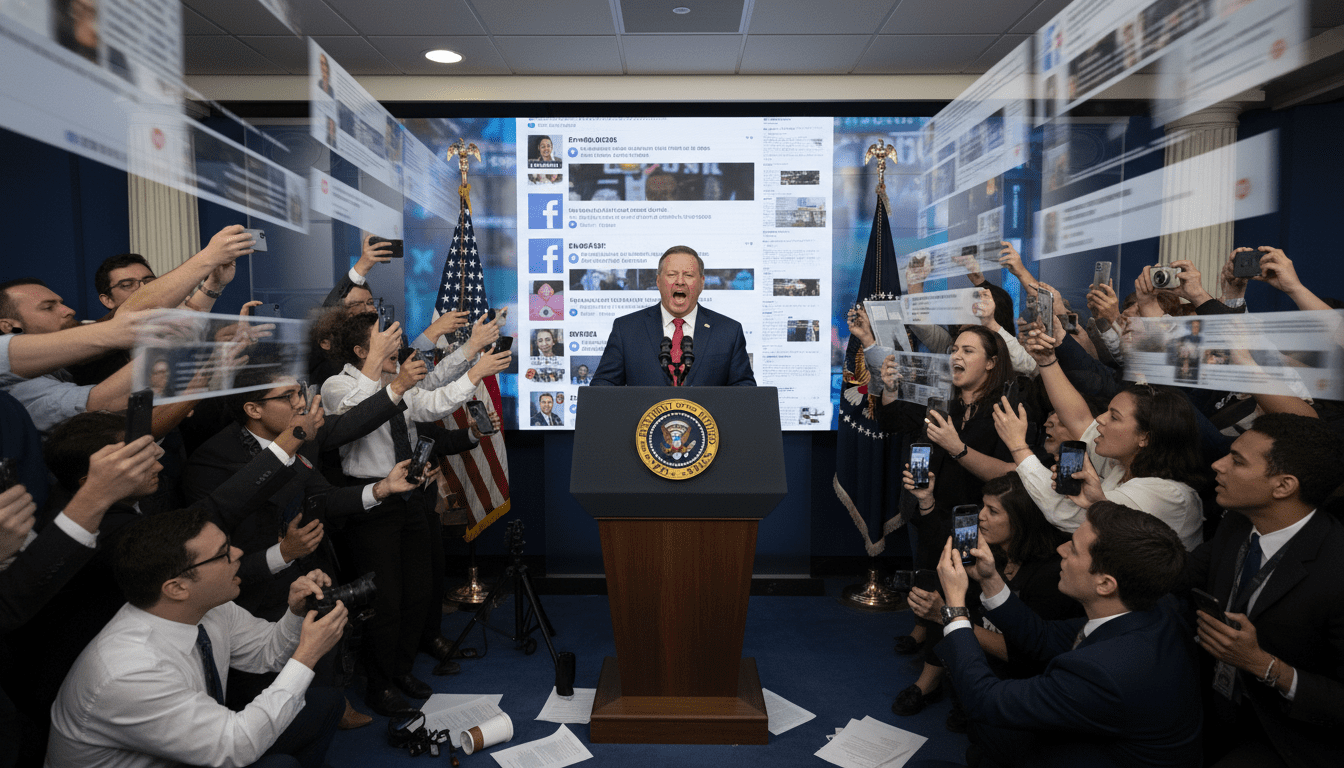
Political Profanity Surges: Democrats’ Reply to Stephen Miller Highlights Shift in U.S. Political Discourse
Political profanity is rising in U.S. politics, experts say, as a viral Democratic reply to Stephen Miller’s X post — shared 37,000 times — illustrates changing rhetorical norms.
Viral exchange puts political profanity in the spotlight
A Democratic reply to an X post by presidential adviser Stephen Miller that told him to “shut up, you ugly bastard” was shared roughly 37,000 times, drawing fresh attention to the increasing use of political profanity in public debate. The exchange, widely circulated on social media, has been cited by commentators and researchers as emblematic of a broader shift in how elected officials, advisers and partisans communicate.
Ben Bergen, a professor of cognitive science at the University of California San Diego and director of the Language and Cognition Lab, describes the phenomenon as part of a long-term change in political language. He and other scholars point to a rise in crude or taboo language across speeches, ads and social posts over the past decade.
Scholars link the trend to media and political changes
Researchers note that the uptick in coarse rhetoric roughly coincides with two structural developments: the emergence of social media as a primary news platform and the political ascent of figures who broke longstanding norms. Bergen cautions against simplistic cause-and-effect claims, but he says the two trends have interacted. Social platforms reward immediacy and emotional expression, while high-profile politicians showed that uncensored language could dominate headlines and mobilize supporters.
Those dynamics, scholars argue, lowered the barrier for using profanity strategically in campaigns and public communications. Where once expletives were confined to private settings, they now appear in recorded speeches, advertisements and viral posts, changing expectations about what is permissible in mainstream political discourse.
Strategic reasons behind the use of profanity
Political actors deploy profanity for several tactical reasons, according to Bergen and other experts. Strong language attracts attention in crowded media environments and signals authenticity to targeted audiences. Studies in communication and social psychology find that listeners sometimes interpret swearing as a sign of candor or emotional sincerity, traits politicians may cultivate to distinguish themselves from polished or technocratic opponents.
Campaign strategists also use provocative language to generate rapid engagement online, knowing that shares and outrage can amplify a message beyond traditional outlets. Yet that calculus is uneven: what plays as authenticity for supporters can read as vulgarity or incivility to opponents and undecided voters.
Public reaction is split along demographic and partisan lines
Surveys and focus-group research suggest tolerance for political profanity varies by age, religiosity and political ideology. Older voters, religious communities and more conservative constituencies tend to place higher value on decorum and are more likely to view public swearing as inappropriate. Younger audiences and certain partisan groups may be more forgiving, or even approving, when coarse language is used to attack political foes.
Bergen notes this divergence is central to why profanity functions as both a rallying tool and a polarizing signal. When a politician or activist uses an expletive, their base may see it as boldness while opponents see it as proof of bad character. That dual effect helps explain why such language continues to surface during moments of heightened polarization.
Effects on audiences and implications for civic life
Exposure to frequent profanity can produce habituation, according to research cited by Bergen. Over time, listeners may react less strongly to coarse words, diminishing their emotional shock value. However, the consequences differ depending on content and targets: slurs and derogatory language aimed at marginalized groups are linked to measurable harms, including reduced wellbeing among young people and weakened institutional engagement in settings such as schools.
Scholars warn that while occasional profanity may serve rhetorical ends, sustained normalization of aggressive or demeaning language can corrode civic norms. Repeated use of dehumanizing expressions tends to deepen polarization and can lower trust in public institutions, they say.
Language norms have changed before and may change again
Experts emphasize that linguistic norms evolve in waves rather than in a single, irreversible direction. There have been earlier eras in U.S. public life when language on airwaves and in print was tightly policed, followed by periods of liberalization and pushback. Bergen suggests the current moment is one phase in that broader arc: while profanity is more visible today, a future shift in political incentives or public taste could restore stricter norms.
Political actors’ choices will depend on whether coarse rhetoric continues to deliver strategic benefits without producing unacceptable political costs. The trajectory of language in public life, he argues, will reflect the balance of those pressures as much as any abstract cultural trend.
The intensity of this debate — sparked anew by the viral reply to Stephen Miller — underlines a central question for American democracy: whether the growing presence of political profanity is a temporary tactic or a lasting transformation in how leaders address the public.
