
Israel Expands Occupation in Gaza and Lebanon as West Bank Annexation Advances
Satellite images show Israel built a 23-km earth wall in Gaza as occupation spreads into Lebanon and the West Bank, alarming the UN and rights groups.
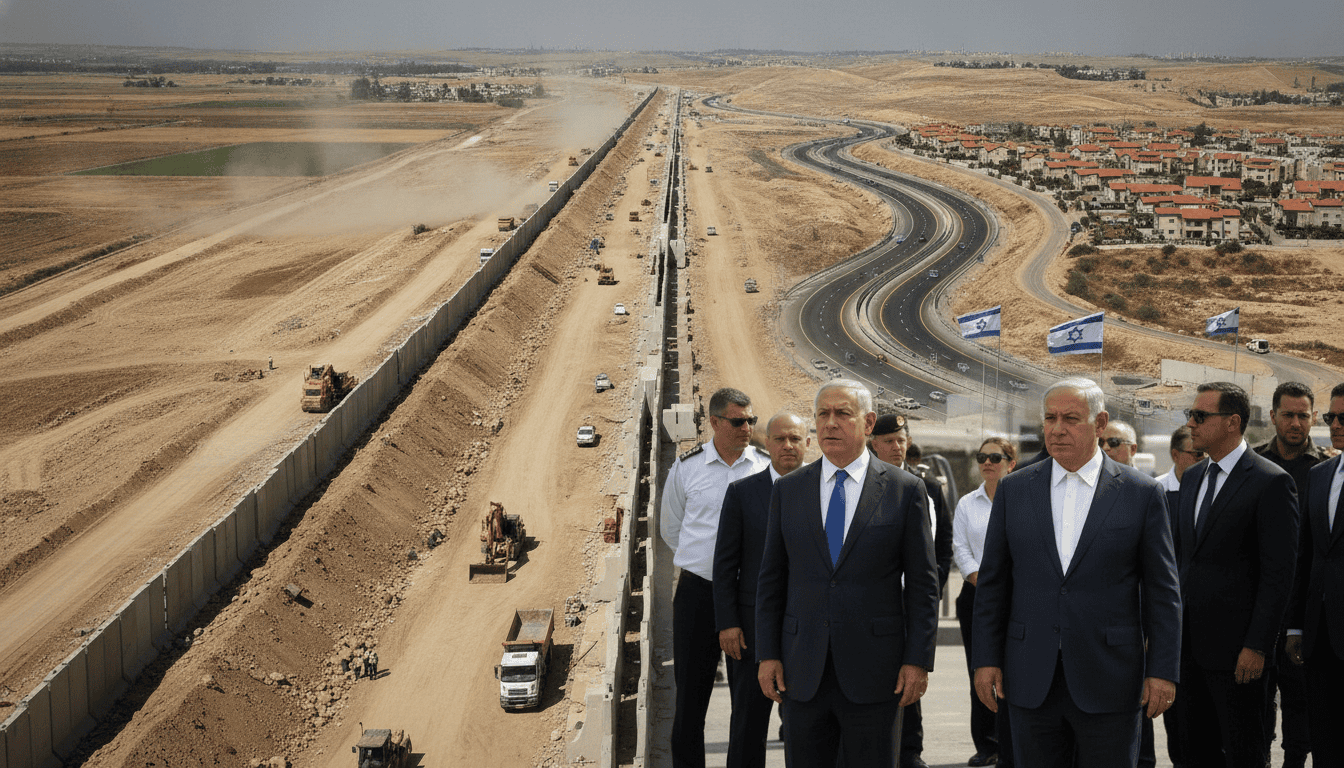
Israel has taken new ground in Gaza and the border with Lebanon while accelerating moves that critics say amount to de facto annexation of the West Bank. Satellite imagery and military confirmations show an extensive earth barrier and expanded control lines that rights groups and international officials warn are reshaping the map on the ground. The occupation in Gaza, already affecting most of the territory, now includes engineered barriers and expanded military zones that officials and analysts say make a return of territory unlikely.
Satellite imagery and military confirmation
Recent satellite photographs reviewed by international news agencies capture a continuous earth wall stretching roughly 23 kilometres along what Israeli forces term the “Yellow Line” in northern and central Gaza. The Associated Press reported the images and said the Israeli military has acknowledged construction of the barrier, which analysts trace to activity beginning earlier this year. The earthwork appears to reinforce fixed control over areas that were already subjected to extensive military operations and roadblocks.
Israeli authorities characterize the structures as security measures aimed at preventing cross-border attacks and preserving operational freedom. Critics argue they are physical measures that institutionalize control over occupied territory and reduce the feasibility of large-scale civilian return or local governance. Satellite evidence, the AP report and local investigations together have prompted renewed scrutiny of the tactical and legal implications of the barrier.
Incursion patterns extend into southern Lebanon
Along Israel’s northern frontier, operations and localized occupations have resumed in zones of southern Lebanon, where the military has intensified patrols and established temporary control points. Reporting indicates that tactical advances included the reoccupation of symbolic sites such as the Beaufort Castle area, reflecting a renewed emphasis on buffer zones and strategic depth. Israeli officials frame these measures as responses to cross-border hostilities and the need to deter militant activity.
Lebanese officials and residents describe the pattern as a return to older security narratives, with mounting concern that temporary pilot zones could harden into longer-term presence. Observers say the approach mirrors the logic seen in Gaza: security-driven engineering of territory that produces new facts on the ground, complicating prospects for de-escalation and diplomacy. Humanitarian agencies warn that any sustained occupation in border areas further strains civilian safety and access to services.
Humanitarian toll and displacement inside Gaza
Humanitarian organizations say nearly two million people remain crowded mainly in southern Gaza, living in tented camps and improvised shelters as access to basic services is severely limited. German and international press reconstructions, cited by regional outlets, estimate extremely high casualty figures dating to the initial 2023 campaign; those counts and verification remain contested but underscore the scale of civilian suffering. The presence of new barriers and expanded military footprints has reduced movement and impeded aid delivery, compounding the crisis.
United Nations officials have repeatedly warned that population movements, targeted clearances and entrenched control measures risk patterns consistent with forced displacement. Some UN representatives and rights organizations have used the term “ethnic cleansing” to describe the trajectory of policies that combine security rhetoric with territorial redesign. Israeli leaders and supporters reject that framing and insist the operations are necessary to protect civilians from further attacks.
West Bank: settlements and new military positions
On the West Bank, observers report accelerated settlement construction and the placement of additional military outposts even within areas nominally under Palestinian Authority control. Rights groups, including Amnesty International, have documented an uptick in new civilian settlements and infrastructure that critics say functionally annex land while shrinking Palestinian autonomy. European Union diplomats and other international actors have publicly criticized the trend, warning it undermines any realistic two-state framework.
Senior Israeli ministers have advanced rhetoric supporting permanent presence in territories captured in past conflicts, with some officials calling for buffer zones and expanded settlement footprints. Those policy signals, combined with military deployments, have heightened concern among Palestinians and international stakeholders that piecemeal measures are being used to institutionalize long-term control. Legal scholars caution that establishing permanent facts on the ground through settlement and military layers raises serious issues under international law.
International response and legal warnings
The United Nations, the European Union and multiple rights organizations have issued repeated statements urging restraint and warning that continued occupation and territorial consolidation could breach international obligations. Amnesty and other NGOs have lodged formal complaints and public reports documenting alleged violations tied to settlement expansion, forced displacement, and restrictions on humanitarian access. Diplomats in capitals across Europe and the Middle East are now debating intensifying responses, including diplomatic pressure and targeted measures.
Israeli officials defend their actions as necessary security measures in the wake of high-casualty attacks by armed groups and ongoing cross-border threats. They argue that buffer zones, barriers and selective operations aim to prevent further mass-casualty incidents and protect civilian populations. The gap between that security narrative and the assessments of rights groups and many UN officials is widening, increasing the prospects of sustained international scrutiny and potential legal challenges.
The evolving pattern — a mix of engineered barriers, localized occupations and accelerated settlement activity — is reshaping the territorial and humanitarian landscape across Gaza, southern Lebanon and the West Bank. With satellite evidence now part of the public record and rights bodies sounding alarm, the situation places increased pressure on diplomatic channels to produce clearer benchmarks for withdrawal, access and protection of civilians.
