
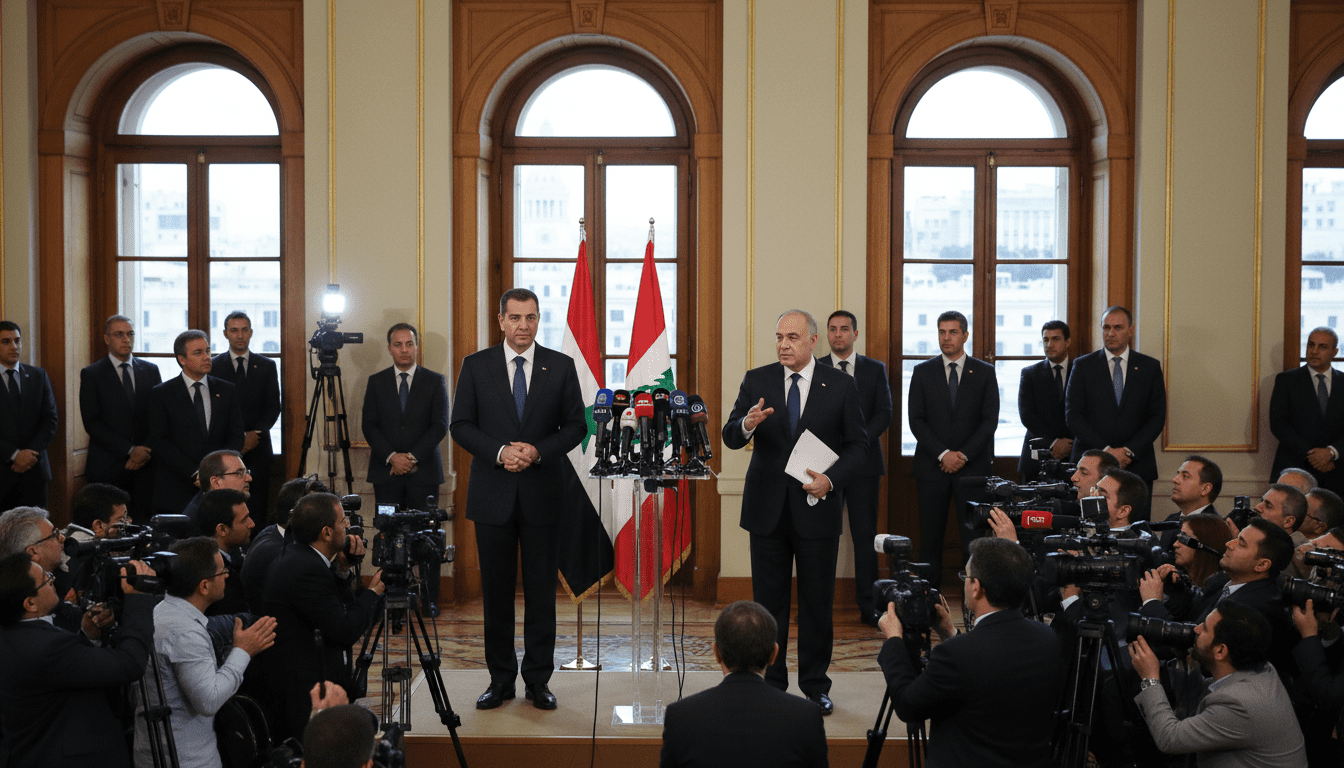
Syria-Lebanon ties strengthened as President Ahmed al-Sharaa hosts Lebanese PM Nawaf Salam in Damascus
Syrian President Ahmed al-Sharaa met Lebanon’s Prime Minister Nawaf Salam in Damascus on Saturday to deepen Syria-Lebanon ties, with discussions focused on economic cooperation, trade and strengthened security coordination.
The visit brought together two senior officials in Damascus for talks aimed at reinvigorating Syria-Lebanon ties and expanding practical cooperation after a period of renewed diplomatic engagement between the two capitals. Syrian state sources said the leaders discussed ways to develop economic and trade cooperation and to bolster security coordination to support stability and confront common challenges. The meeting underscored a mutual interest in moving beyond diplomatic gestures toward concrete projects that can affect cross‑border commerce and public safety.
High-Level Talks in Damascus
The meeting in Damascus was attended by senior Syrian and Lebanese aides and framed as part of an effort to consolidate relations at the top level of government. Syrian official communications described the exchange as substantive, focused on strengthening institutional links and operational coordination.
Officials on both sides emphasized the symbolic importance of direct leader‑level contact after a period of heightened regional volatility, noting that such engagements are intended to reduce misunderstandings and open channels for follow‑up technical consultations between ministries and security agencies.
Economic and Trade Agenda
Economic cooperation emerged as a central theme during the discussions, with both delegations reported to have explored measures to expand bilateral trade and investment. Conversations reportedly covered trade facilitation, customs coordination and potential areas for private sector collaboration that could reopen or accelerate cross‑border commercial activity.
Lebanon’s economy faces prolonged strains, and Syrian authorities signaled interest in creating conditions that would allow goods and services to flow more predictably. Neither side released a detailed list of agreements, but the emphasis on trade suggests forthcoming working groups or memoranda to translate high‑level intent into operational steps.
Security Coordination and Border Stability
Security coordination was described by the Syrian presidency as a priority, framed as necessary to support stability and confront shared threats. Officials referenced the need for improved information sharing, joint efforts to control illicit flows and steps to stabilize border areas that have been vulnerable to smuggling and armed incidents.
Both governments face domestic pressures tied to security and migration, and enhancing operational ties between security services could aim to address cross‑border crime while avoiding escalation. The talks signalled an intent to coordinate more closely rather than to pursue unilateral security measures that might complicate regional dynamics.
Political Context and Diplomatic Significance
The meeting occurs against a backdrop of shifting diplomatic dynamics in the Levant, where bilateral relations are increasingly shaped by economic necessity as much as by political alignment. Leaders in Damascus and Beirut framed the initiative as pragmatic, stressing cooperation on tangible issues rather than only political statements.
Observers note that revitalized engagement between Syria and Lebanon carries broader implications for regional diplomacy, including potential effects on reconstruction funding, refugee management and the role of external actors. However, translating high‑level commitments into durable policies will require careful management of domestic sensitivities in both capitals.
Official Statements and Reporting
A formal statement issued by the Syrian presidency summarized the subjects discussed, citing efforts to “develop economic and trade cooperation” and to “bolster security coordination in order to support stability and confront challenges.” Lebanese and Syrian spokespeople provided limited additional detail, emphasizing that further technical meetings would follow.
Journalistic accounts and diplomatic briefings in the immediate aftermath suggested that the visit was part of a sequence of contacts aimed at operationalizing earlier understandings, though no binding accords were announced publicly at the conclusion of the Damascus talks.
Next Steps and Potential Challenges
Both governments indicated an intent to pursue follow‑up work at the ministerial and technical levels, with possible joint committees or task forces to examine trade protocols, customs procedures and security operations. The success of such initiatives will depend on bureaucratic coordination and political will on both sides.
Key obstacles include differing domestic priorities in Beirut and Damascus, lingering mistrust among stakeholders, and the influence of external actors whose policies toward the region could complicate implementation. Economic constraints and legal restrictions affecting finance and investment may also slow progress on ambitious projects.
The Damascus meeting between President Ahmed al‑Sharaa and Prime Minister Nawaf Salam marked a practical step toward strengthening Syria-Lebanon ties, prioritizing trade and security as immediate areas of cooperation. Observers will watch whether the leaders’ expressed intent results in concrete agreements and operational changes in the weeks ahead.
