
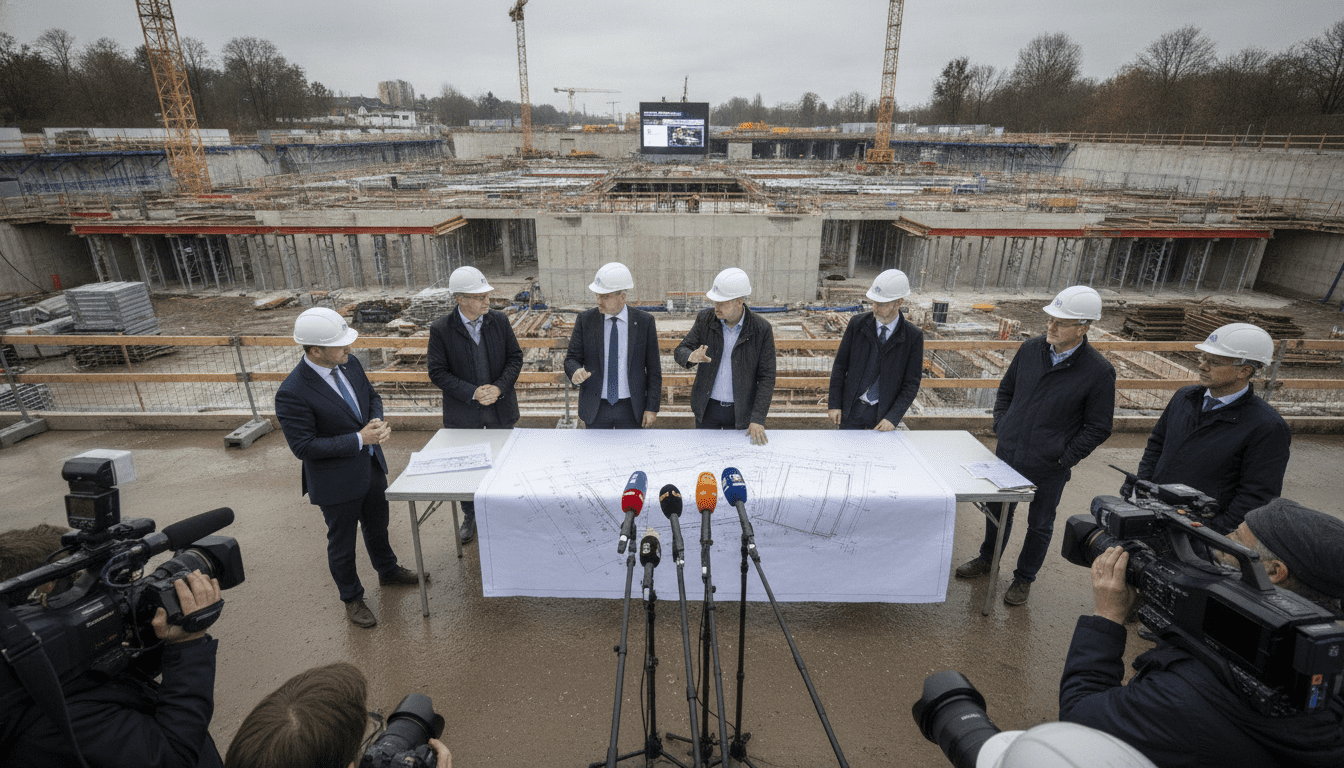
Stuttgart 21 delayed until at least 2031 as censorship row and Curaçao’s bus trip make headlines
Stuttgart 21 in Germany delayed until at least 2031; Israel’s military sends censorship guidelines to DIE ZEIT, and Curaçao heads to World Cup by school bus.
Stuttgart 21, Germany’s long-running rail and urban development project, will not be completed before 2031, according to reports published on June 12, 2026. The announcement adds a fresh chapter to a project already marked by years of controversy, cost revisions and public protests. The delay comes as two unrelated stories — a disputed set of military censorship guidelines sent to DIE ZEIT and Curaçao’s unconventional journey to the World Cup by school bus — captured public attention on the same day.
Stuttgart 21 now scheduled no earlier than 2031
Project authorities told media outlets on June 12, 2026, that the complex rail and station redevelopment cannot be finished before 2031. The latest timeline pushes back the long-promised benefits of the scheme, which include a reconfigured central station and expanded rail capacity. Officials framed the update as a realistic reassessment of remaining construction phases rather than a final deadline.
Political fallout in Baden-Württemberg and at federal level
The new completion date immediately provoked responses from regional politicians and municipal leaders who have long debated the project’s merits. Opposition figures said the delay will heighten scrutiny of decision-making and budget oversight. Supporters countered that large infrastructure projects frequently face technical and planning obstacles and argued for patience while the work continues.
Technical, regulatory and financial uncertainties persist
Engineers and planners have pointed to a mixture of complex engineering tasks, regulatory approvals and coordination among contractors as persistent hurdles. Those involved in the project cite the urban density of Stuttgart’s center, tunneling challenges and the need to keep parts of the rail network operational during construction. Financial analysts warn that revised timelines often carry the risk of further cost growth, though precise budget effects tied to the 2031 projection have not been disclosed publicly.
Israel’s military sends censorship guidelines to DIE ZEIT
Separately on June 12, 2026, reports indicated that Israel’s military provided a set of so-called “censorship guidelines” to the German weekly DIE ZEIT. The documents, as described in media accounts, were intended to advise on the handling of sensitive security-related reporting. DIE ZEIT and other German outlets faced questions about how to balance national security concerns with press freedom after the guidelines became public knowledge.
Reactions from media watchdogs and editorial teams
Press freedom organizations and newsroom editors reacted to the guidelines by underlining the tension between operational security and public interest reporting. Media advocates urged transparency about the nature and scope of the military’s requests while stressing the importance of independent editorial judgment. Editors told colleagues they would need to evaluate any future requests against legal obligations and the public’s right to know.
Curaçao’s team travels to World Cup by school bus
In a lighter but strikingly human-interest item on the same day, Curaçao’s national team reportedly traveled to the World Cup by school bus, a journey that underscored contrasts in resources between countries at the tournament. The choice of transport drew sympathy and attention across social media and in news coverage, with commentators noting both the practicality and the symbolism of a small nation competing on football’s biggest stage.
The bus journey prompted conversations about equity in international sport funding and the logistical realities faced by smaller federations. Organizers and fans applauded the team’s determination and the inventive approach to travel logistics, while some commentators called for more equitable support mechanisms from governing bodies.
Stuttgart 21’s prolongation to at least 2031, the revelation of military guidelines sent to a major German title, and Curaçao’s modest travel arrangements together created a varied news day on June 12, 2026. Each story highlights different pressures on institutions: large-scale infrastructure management, the relationship between security and the free press, and the resource gaps in international sport.
As debates continue in parliament, in editorial rooms and on stadium terraces, the three developments are likely to prompt further reporting, scrutiny and public discussion in the weeks ahead.
