
Singapore warns of AI job losses as government expands aid and retraining
Singapore warns of AI job losses as ministers unveil higher unemployment support, large retraining push and earlier AI education to protect workers from automation.
Singapore’s leadership signalled on May Day that AI job losses in Singapore are a central economic and social concern, as Prime Minister Lawrence Wong warned that algorithms are already replacing staff in some firms. The speech, delivered amid a traditionally tripartite labour celebration with unions and employers, crystallised growing anxiety about automation even as headline employment statistics remain strong. In response, the government has broadened unemployment aid, pledged major upskilling programmes and lowered the age for AI learning in schools to try to blunt disruption.
Wong’s May Day warning and public reaction
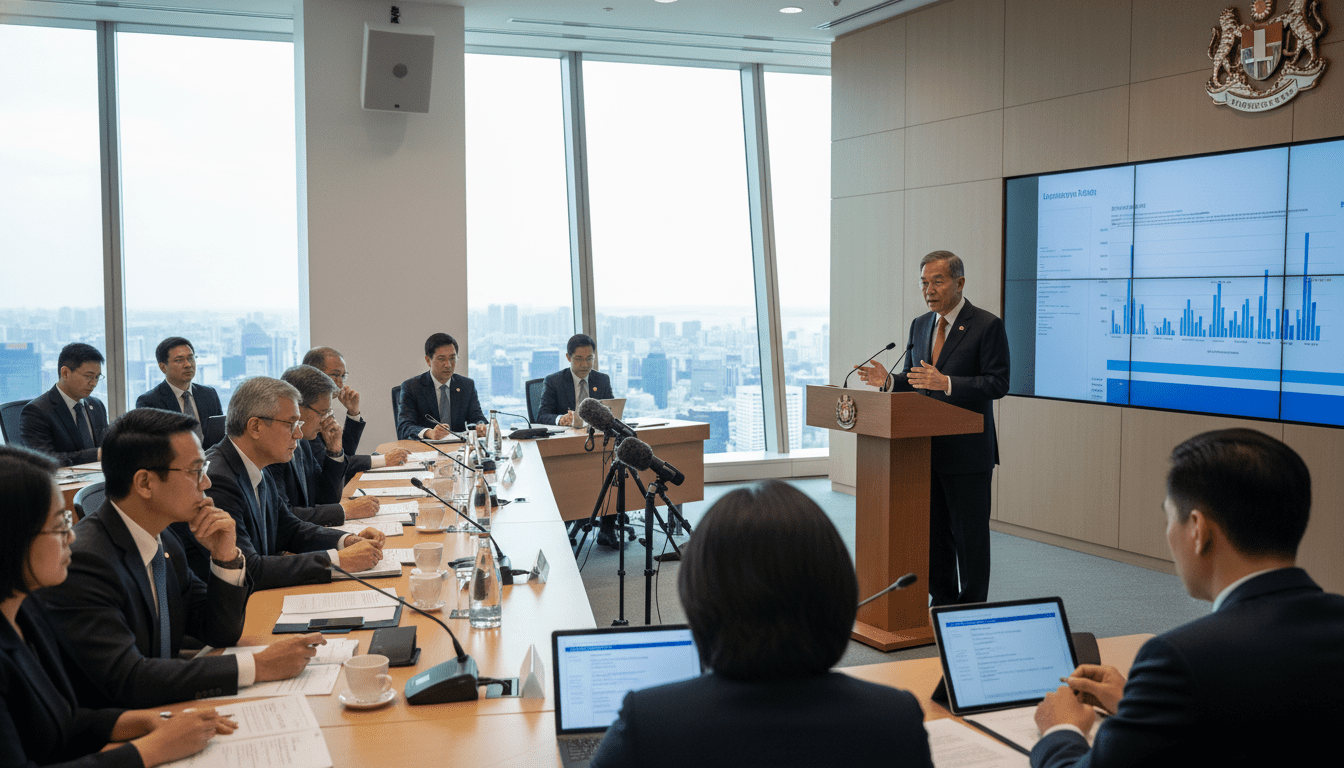
At a workers’ event in eastern Singapore, Prime Minister Lawrence Wong told a packed hall that the impact of artificial intelligence would be “massive” and that some jobs will disappear as firms deploy increasingly capable algorithms. His remarks, which visibly unsettled attendees including high-earning ministers and business leaders, followed warnings from union representatives about rising “concern and insecurity.” The moment highlighted a rare public airing of fear in a city-state typically known for stability and consensus.
Employment data and popular sentiment
Despite widespread unease, macro indicators show a tight labour market: full employment, unemployment close to historic lows and continued GDP growth in recent quarters. Yet surveys show six in ten Singaporeans fear AI could cost them their jobs, a level of anxiety comparable to countries such as the United States and United Kingdom. Economists point out that the perception of risk is concentrated among mid‑career professionals who see the timing of displacement, rather than its possibility, as the central question.
Corporate restructuring and global tech cuts affecting Singapore
Recent global rounds of layoffs at major technology and finance companies have amplified local alarm. Regional and local employees at firms including Meta, Microsoft and Amazon received notices as their parent companies restructured to prioritise AI investments, while Singapore’s largest bank last year announced thousands of role reductions tied to automation. The combination of global tech retrenchments and local financial-sector streamlining has made the risk of redundancy feel immediate for many white‑collar workers.
Policy response: unemployment aid and retraining measures
In a notable policy shift, Singapore introduced targeted unemployment assistance last year for workers displaced by technology and is now moving to expand those measures. Eligible individuals currently receive sums capped over a six‑month period, but critics including union leaders argue the income thresholds exclude many professionals and managers most at risk. The government has indicated openness to raising support levels while weighing whether to adopt more extensive wage‑replacement models tied to national insurance contributions.
Ambitious upskilling drive and industry partnerships
Authorities have bundled a wide array of training programmes aimed at turning workers into “AI‑bilingual specialists,” with a goal to reach tens of thousands of trainees. Every citizen over 25 is eligible for a modest training credit to take AI courses, small and medium enterprises receive subsidies to retrain staff, and plans aim to produce 100,000 workers with stronger AI competencies. Financial-sector analysts note Singapore’s infrastructure and capital are well suited to AI adoption, but surveys show the local workforce currently trails global tech hubs in practical AI expertise.
Education reforms and generational concerns
The government is also pushing AI into classrooms, lowering the age at which children learn to interact with AI tools and adapting curricula to include AI applications from primary levels. Pilots of personalised learning “math bots” and similar tools have been expanded, but parents and educators worry children may come to rely excessively on automated assistance. Critics argue that short, universal training credits and classroom pilots cannot by themselves produce the deep technical talent that global companies pay for, and that attracting foreign AI experts may remain necessary.
OpenAI’s announced investment in Singapore and the influx of corporate interest underline the opportunity side of the transition, yet insiders report those same companies often ask local clients how many jobs can be automated. Union leaders and economists warn that unless safety nets and retooling are broadened, growth driven by AI could decouple from broad employment gains. The government faces the simultaneous tasks of preserving competitiveness, protecting livelihoods and managing public confidence as AI reshapes the labour market.
