
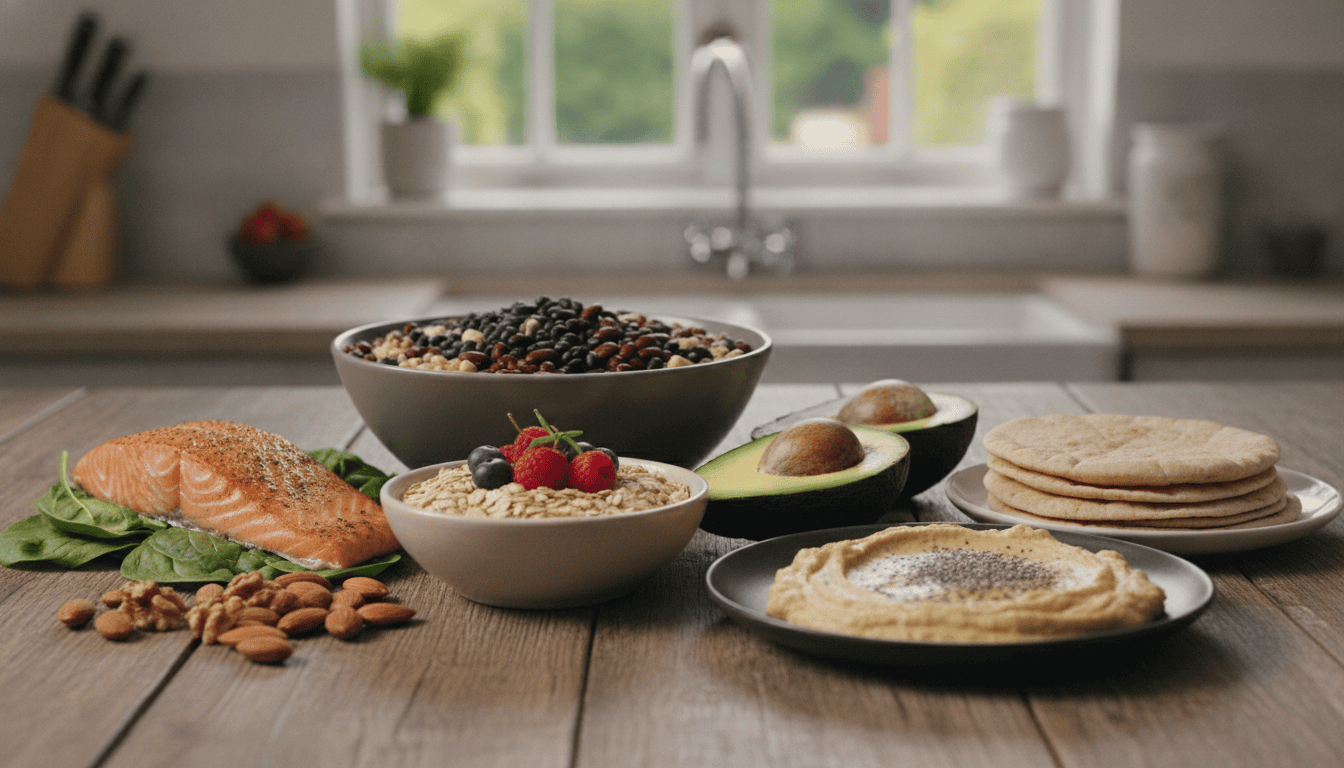
Six Protein and Fiber-Rich Foods Nutritionists Recommend
Discover six protein and fiber-rich foods – lentils, soybeans, whole grains, nuts, seeds and vegetables – that aid digestion, blood sugar and muscle health.
Nutrition experts are emphasizing six protein and fiber-rich foods that can strengthen diets and support metabolic health. These foods—lentils, soybeans, a range of whole grains, nuts, seeds and certain vegetables—combine substantial protein with meaningful fiber in single servings. Dietitians say including them regularly can improve satiety, help regulate blood sugar and contribute to muscle maintenance.
Legumes Lead with Lentils and Soybeans
Lentils deliver a strong balance of protein and fiber: a half-cup of cooked lentils supplies roughly 9 grams of protein and nearly 8 grams of fiber. They are also rich in folate, iron and potassium, making them a compact source of multiple micronutrients. Soybeans are even higher in protein, with about 15–16 grams per half-cup cooked, and they add roughly 5 grams of fiber along with vitamins and minerals such as magnesium and vitamin K.
Whole Grains Offer Versatility and Complementary Amino Acids
Whole grains vary in their protein and fiber content, but certain varieties like quinoa and amaranth stand out for protein, while grains such as bulgur and pearled barley provide more fiber. A half-cup serving of cooked quinoa or amaranth supplies about 4–4.6 grams of protein and around 2.5 grams of fiber, while bulgur and barley provide higher fiber at approximately 3–4 grams per half-cup. Swapping refined grains for whole grains preserves both protein and fiber and increases overall nutrient density.
Nuts Provide Concentrated Nutrition in Small Servings
Nuts are calorie-dense but deliver meaningful protein and fiber in compact portions: a one-ounce serving of almonds contains about 6 grams of protein and 3.5 grams of fiber, while walnuts and hazelnuts offer roughly 4 grams of protein and 2–3 grams of fiber. Peanuts — botanically legumes but commonly grouped with nuts — offer about 7 grams of protein in a 30-gram portion. Because nuts are high in healthy fats and calories, portion control is important when using them to boost both protein and fiber.
Seeds Are Nutrient Powerhouses with High Fiber Options
Seeds can be particularly valuable for fiber: two tablespoons of chia seeds deliver about 5 grams of protein and an impressive 10 grams of fiber, while flaxseeds provide roughly 5 grams of protein and 8 grams of fiber in the same serving size. Sunflower and sesame seeds also contribute protein and key minerals like magnesium, calcium and vitamin E. Adding seeds to yogurt, salads or baked goods is an efficient way to increase daily intake of both protein and fiber.
Green Vegetables Contribute Protein and Micronutrients
Certain vegetables punch above their weight for protein as well as fiber; cooked spinach, kale and broccoli each offer about 4–5 grams of protein and 3–5 grams of fiber per typical serving. These greens also supply calcium, vitamin K and folate, nutrients often sought by people following plant-forward diets. Including a variety of cruciferous and leafy vegetables helps diversify both protein sources and dietary fiber types.
Recommended Daily Targets and Practical Tips
General guidelines recommend a minimum protein intake of about 0.8 grams per kilogram of body weight per day, with individual needs rising for older adults and those who are highly active. For fiber, most adults should aim for roughly 22 to 34 grams daily depending on age and sex, and combining several of these foods can make that target easier to reach. Practical strategies include pairing legumes with whole grains to improve amino acid balance, sprinkling seeds on breakfast, and using nuts as controlled snack portions.
Plant-based combinations that deliver both protein and fiber can support weight management, steady blood sugar, and cardiovascular health when incorporated into balanced meals. For most people, modest swaps—like replacing refined grains with quinoa or adding lentils to soups—provide measurable nutrient gains without major changes to eating habits.
Regularly rotating lentils, soybeans, whole grains, nuts, seeds and protein-rich vegetables into meals makes it simpler to meet daily protein and fiber needs while also improving micronutrient intake and meal satisfaction.
