
Russian Cruise Missile in Poland Leaves 10m Crater Near Lublin, Officials Say
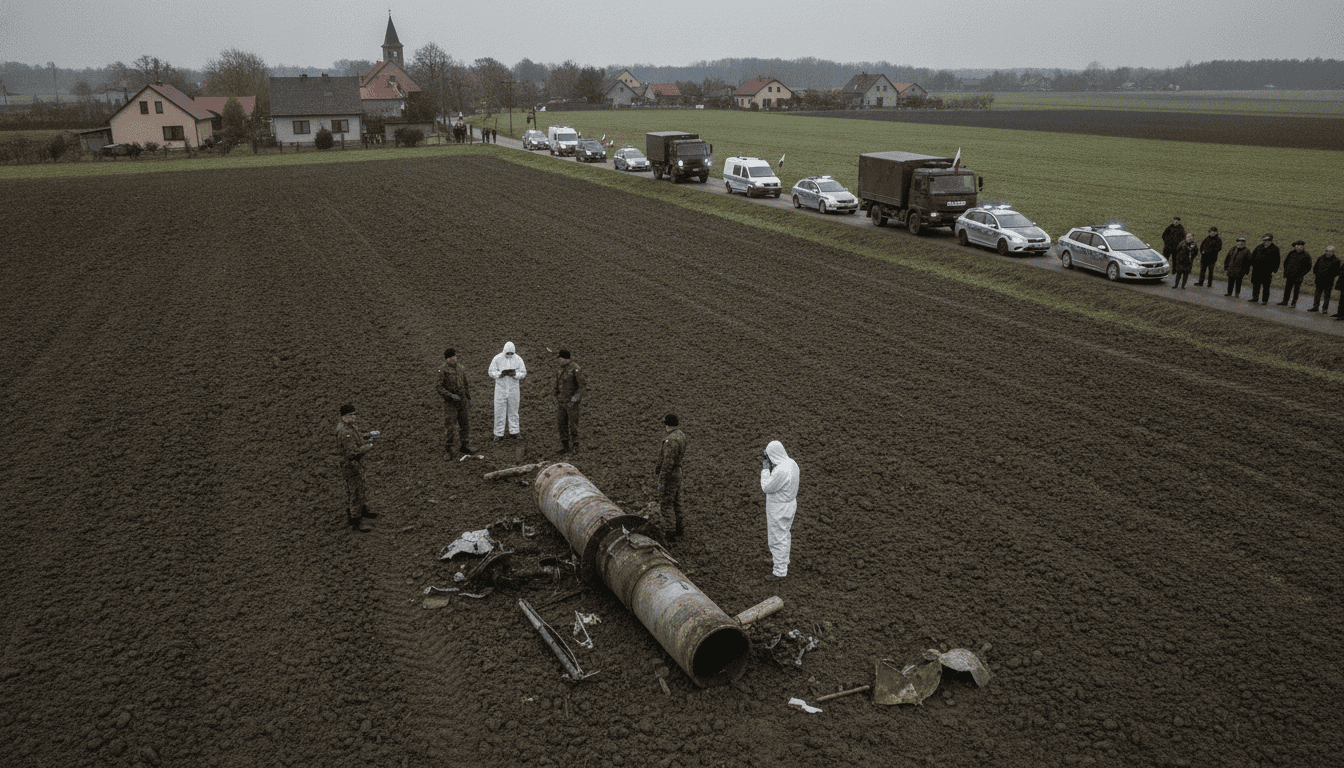
Suspected Russian cruise missile struck Poland overnight on July 30, 2026, near Lublin, leaving a 10m crater and prompting a cross-border investigation.
Overnight into Thursday, July 30, 2026, a suspected Russian cruise missile entered Polish airspace and struck in the Lublin region, Polish authorities and Ukrainian officials said. The incident, which Ukrainian Foreign Minister Andrij Sybiha described on X and Poland’s Prime Minister Donald Tusk discussed at a crisis meeting, has prompted an on-the-ground investigation into whether the projectile was a Russian Ch-101 cruise missile. The suspected strike produced a roughly ten-metre-wide crater about 80 kilometres from the Ukrainian border and briefly raised alarms across NATO partners.
Suspected Ch-101 Strike Near Lublin
Polish leaders said early evidence points to a Ch-101 cruise missile, a type that Kyiv does not possess and that can only be fielded from Russian platforms. Prime Minister Tusk emphasized the need for certainty, telling officials they must establish “100 percent” what the object was and who fired it before drawing final conclusions. Ukrainian authorities noted the missile allegedly entered NATO airspace during a mass Russian air assault on Ukraine.
Radar Contact and Ground Evidence
Poland’s military reported an unidentified aerial object entered the country’s airspace during the night and disappeared from radar within minutes, prompting immediate searches on the ground. Police and investigators later discovered a 10-metre-wide impact crater and scattered debris in the Lublin region, while preliminary field work is under way to recover fragments for forensic analysis. Local authorities said the site lies roughly 80 kilometres from the Ukrainian border, and teams have cordoned the area to preserve evidence.
Details of the Wider Air Attack
Ukrainian officials said the overnight Russian strikes included multiple cruise missiles and that the western city of Lviv was among the targets hit during the assault. Kyiv’s air force reported scores of incoming cruise missiles across its western regions, and local hospitals in Lviv treated more than 30 people for injuries sustained in those strikes. Ukrainian statements suggested around 65 cruise missiles were launched in the operation, with at least 20 reportedly evading interception, according to initial air-defence tallies.
Poland’s Response and Rules of Engagement
Tusk told reporters Poland was prepared to shoot down the projectile if it continued toward populated areas, and Polish fighters routinely scramble during Russian attacks on western Ukraine to guard national airspace. He framed the incident as likely unintentional and said there was no indication Poland was the intended target, while nevertheless stressing the seriousness of any NATO airspace violation. Warsaw has routinely deployed combat jets to intercept or monitor objects that stray toward Polish territory but said those aircraft do not engage targets over Ukrainian soil.
Previous Misattributions and Regional Precedent
Officials said they are mindful of past incidents that complicate immediate attribution, including the November 2022 strike in Poland that was later traced to a misfired Ukrainian S-300 interceptor. Poland’s caution also reflects a string of airspace events in 2025, when dozens of Russian drones entered Polish airspace and several were shot down or diverted. Neighbouring countries have likewise recorded recent incursions: Romanian jets shot down multiple Russian drones over a single weekend, and the Baltic states report recurrent drone flights and jamming that regional capitals attribute to the conflict.
Political Tensions Between Warsaw and Kyiv
The episode unfolded amid strained relations between Poland and Ukraine over divergent historical interpretations and political disputes that have inflamed public sentiment and complicated bilateral cooperation. Foreign Minister Sybiha framed the incident as a stark reminder that the primary priority for both capitals must remain joint security against Russian aggression. He urged Warsaw and Kyiv to set aside bilateral disagreements during the conflict to maintain unified defence against cross-border risks.
Officials from Poland and Ukraine said forensic analysis of recovered fragments, radar data and witness accounts will be central to confirming the weapon type and its origin. NATO partners have been notified and intelligence-sharing between allies is expected as investigators work to determine whether the impact was caused by a Russian-launched cruise missile and whether the event was deliberate or accidental. The discovery of a large crater in the Lublin region has underscored the risk that the war in Ukraine can produce hazardous spillover effects on neighbouring NATO members, and authorities warned that further updates will follow as laboratory results and flight-data records become available.
