
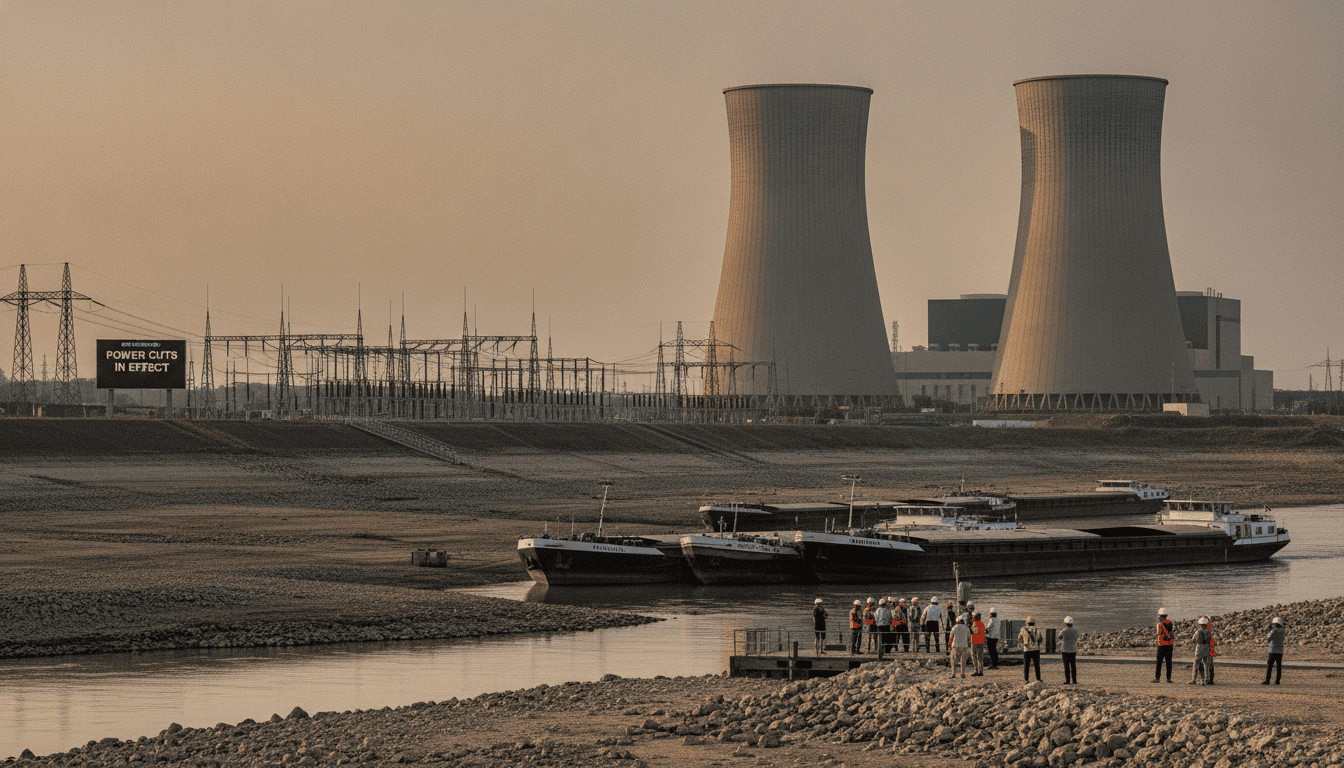
Danube low water levels force power cuts and disrupt shipping across Central Europe
Danube low water levels are forcing hydropower and nuclear plants in Central Europe to reduce output, stranding ships and squeezing transport and tourism as of late July 2026.
The Danube basin is experiencing historically low flows that have compelled operators to cut generation and, in some cases, temporarily stop production at both hydropower and nuclear facilities. Governments and energy companies across Austria, Romania and Hungary reported constrained cooling water access and reduced output this week, while river transport and tourism suffered immediate, visible impacts.
Hydropower and nuclear output slashed across the Danube basin
Power producers along the Danube have announced widespread reductions in output as intake levels fall below operational thresholds. Small hydropower plants in Austria have cut production by as much as half, and larger facilities are operating below seasonal norms.
The shortage of inflows combines low rainfall with reduced glacial melt, reducing available generation and increasing pressure on national grids already balancing variable renewable output. Operators say these measures are precautionary to protect equipment and ensure safety margins for cooling and flow-dependent processes.
Cernavodă nuclear plant faces unprecedented cooling constraints
In Romania, the Cernavodă nuclear power station — typically supplying roughly one-fifth of national electricity — confronted a potential dual-reactor outage after the Danube’s level fell to about one-third of its normal July value. Officials flagged the crisis as the first time both operating reactors were threatened by low cooling-water availability.
The national energy ministry described the hydrological situation as “unfavourable,” and plant operators temporarily removed one reactor from the grid before confirming that at least one block could continue running while strict cooling regimes and contingency plans were enforced. The episode underscores how river-dependent cooling can translate hydrological stress into nuclear operational risk.
Paks reactor shutdown underscores Hungary’s vulnerability
Hungary’s sole nuclear plant at Paks, roughly 100 kilometres south of Budapest, also curtailed generation after one of its four reactors was taken offline amid falling Danube levels. The government warned the remaining units could face similar interruptions if the drought persists.
Nuclear power accounts for more than 40 percent of Hungary’s electricity supply, making Paks central to national energy security. Local waterway operators reported levels at Paks more than a metre below previous historical lows at some gauges, forcing adjustments that plant managers say preserve safety while minimizing supply disruption.
Austrian hydropower and glacier-fed inflows decline
Austria’s hydropower sector reported a roughly 30 percent drop in production at some operators compared with long-term averages, a decline officials linked to diminished snowmelt and lower alpine runoff. More than 4,000 small-scale plants that feed into the Danube tributaries are either reducing output or stopping entirely in affected regions.
Industry spokespeople pointed to climate-driven shifts: reduced seasonal snow accumulation and earlier melt windows mean less water is available in midsummer, when demand for cooling and irrigation peaks. The shortfall is visible in river gauges and reflected in reduced capacity on affected feeders.
Navigation, tourism and fisheries face immediate losses
Low Danube flows have disrupted passenger cruises, stranded at least one vessel on a sandbank near the Romanian port of Cetate and forced operators to end trips early between Passau and Vienna. Freight vessels now must partially load cargoes to avoid grounding, raising unit transport costs and eroding margins for shippers.
Fisheries and tourism operators report lost income, while ports and inland logistics firms face delays and higher operational costs. The reduced loading capacity has translated into spiking transport prices on some routes, compounding supply-chain pressures for industries reliant on river-borne bulk shipments.
Low Rhine gauges amplify economic concerns in Germany
The drought’s effects are not limited to the Danube. Low water at the Rhine’s Kaub gauge in Germany has fallen to levels near the 2018 low, with measurements recently around 29 centimetres and forecasts warning of further falls. Barges there are operating at a fraction of their usual load, pushing inland shipping rates sharply higher.
Research institutes estimate that continued river restrictions could subtract up to 0.1 to 0.2 percentage points from Germany’s economic growth in the third quarter, a meaningful drag given modest recent expansions. Companies facing much higher freight costs report shifting routing and inventory strategies to cope with constrained waterborne transport.
The combination of sustained dry conditions and long-term shifts in glacier contribution is forcing policymakers and industry to reassess water-dependent infrastructure and contingency planning.
Emergency measures, including altered generation schedules, temporary curtailments and river traffic restrictions, are already in place while authorities monitor meteorological forecasts and reservoir reserves. Energy ministers and waterway agencies across the region have convened to coordinate responses and prioritize essential services.
Longer-term adaptations being discussed range from changes to cooling-system designs and diversified generation mixes to investments in river management and storage that could buffer seasonal variations. Stakeholders say the current episode highlights the urgency of aligning energy and water planning under a warming climate.
Authorities caution that conditions could remain precarious through the summer if precipitation stays below average, and they are urging industry and consumers to prepare for intermittent supply limitations.
