
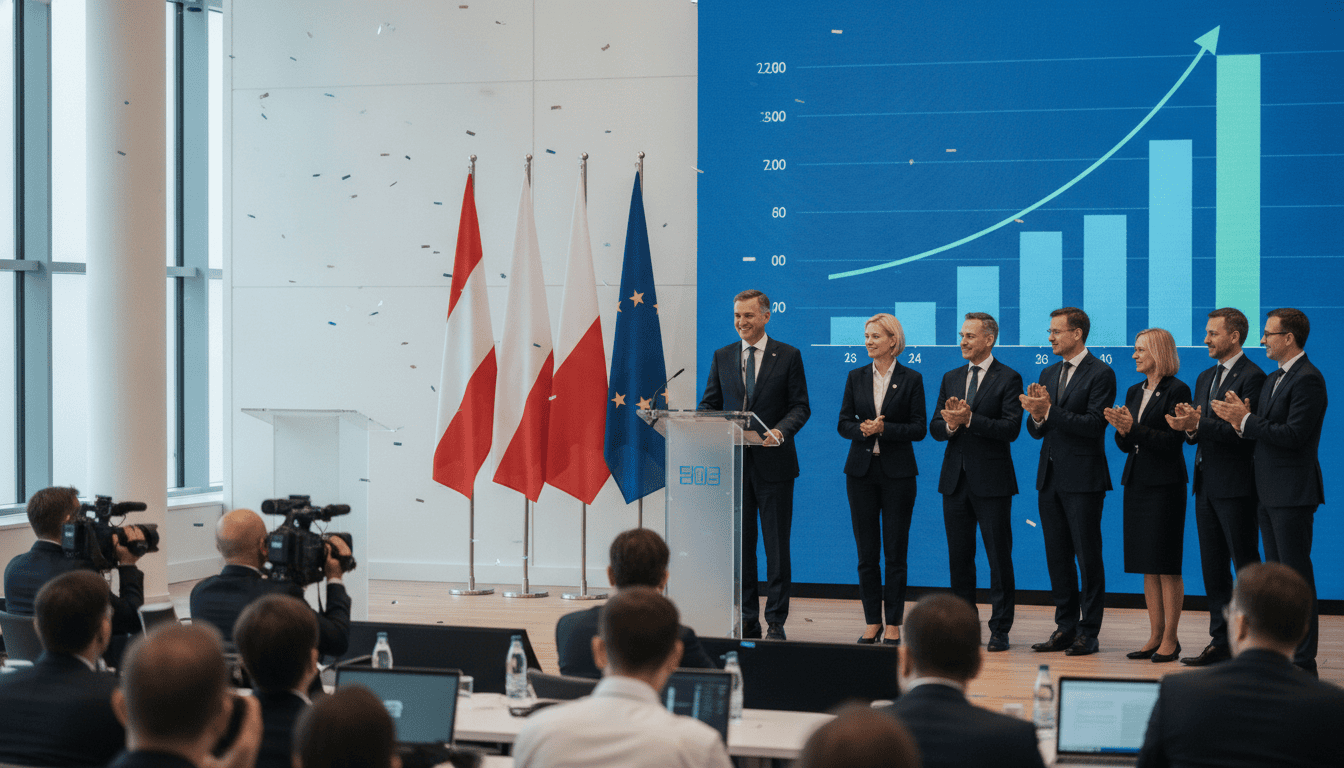
Erste Group Posts Strong Half-Year Profit After Santander Poland Takeover
Erste Group posts strong half-year profit after buying Santander Bank Polska; raises targets despite integration costs and keeps loan quality largely stable.
Strong half-year result driven by Polish acquisition
Erste Group reported a near-€2 billion net profit for the first half of the year, an increase of about 18.6% compared with the same period a year earlier. The Vienna-based lender said the uplift was driven largely by the inclusion of the Santander Bank Polska business, which the group acquired in 2025 and which contributed first-time effects to the half-year accounts. Management emphasized that while one-off integration items lifted expenses, the transaction materially enlarged Erste’s franchise in Central and Eastern Europe and boosted overall profit.
The bank’s headline figures showed robust top-line momentum and a lift in profitability metrics that prompted management to revise its outlook. Executives highlighted that the consolidation of the Polish operation is now fully visible in the group’s financials, and that integrating the new business has reshaped both earnings and risk profiles for the reporting period.
Integration charges and higher risk costs explained
Erste Group recorded a marked rise in risk costs, which climbed from €182 million in the prior-year period to €583 million in the reported half-year. Company officials said the jump reflected expected, one-off integration-related charges tied to the Santander Bank Polska takeover, amounting to €302 million, plus an additional €60 million linked to the existing loan portfolio in Poland. These items were disclosed as anticipated, non-recurring effects associated with the combination and the initial alignment of portfolios and provisions.
Management framed the higher risk charge as a temporary consequence of the acquisition rather than evidence of broad credit deterioration. They pointed to the one-off nature of the bulk of charges and said underlying credit performance in the group’s markets remains consistent with expectations established before the deal closed.
Loan book performance and non-performing loan ratio
Despite the elevated risk costs, Erste Group said the quality of its credit portfolio remained resilient. The bank reported a non-performing loan ratio of 2.3%, marginally below the December 2025 level of 2.4%, signaling that stressed exposures have not risen materially since year-end. Officials stressed that the slight improvement in the NPL rate underlines the strength of underwriting and ongoing portfolio management across Erste’s Central and Eastern European footprint.
Executives also noted that the additional provisions taken in the period were largely precautionary and tied to integration accounting rather than to emerging systemic risks in Poland or other markets. Analysts following the bank observed that maintaining a low NPL ratio while absorbing sizable one-off costs is consistent with a benign underlying credit environment.
Management upgrades growth and profitability targets
In response to the half-year results and faster-than-expected loan growth, Erste Group raised its medium-term credit target from €285 billion to €290 billion. CEO Peter Bosek said the acceleration in lending over the past six months had brought the group close to its original goal, justifying an upward revision. The bank also signaled confidence in its capital and earnings trajectory by targeting a return on tangible equity (ROTE) of more than 20% and expecting earnings per share to rise by more than 20% year on year.
The upgraded guidance reflects both the enlarged balance sheet following the Polish acquisition and management’s expectation of continued commercial momentum in core markets. The board underscored that these targets assume normalising integration costs after the initial accounting effects, and that capital adequacy and liquidity remain priorities as the bank scales its operations.
Long-term shareholder return goals and EPS ambition
Erste Group reiterated a previously announced ambition to double earnings per share to above €15 by 2030, implying an average annual growth rate of about 15% for EPS. Management said achieving that goal will rely on continued organic lending growth, successful integration of Santander Bank Polska, and disciplined cost and risk management. The bank plans to translate the enlarged franchise and higher revenue base into sustainable per-share gains for investors over the next several years.
Market observers noted that the 2030 EPS target is ambitious but achievable if the group can deliver on synergies and sustain loan growth while keeping credit quality under control. The combination of higher short-term integration costs and stronger long-term guidance creates a mixed but ultimately positive investment narrative, according to several analysts familiar with the region.
Erste Group’s half-year report thus presents a picture of a bank at a transition point: elevated near-term charges tied to a major acquisition, alongside upgraded growth and profitability ambitions that reflect the deal’s strategic value.
The bank’s management emphasized that the integration is proceeding according to plan and that the one-off effects are now reflected in the accounts, setting the stage for the group to concentrate on operational delivery and value creation for shareholders going forward.
