
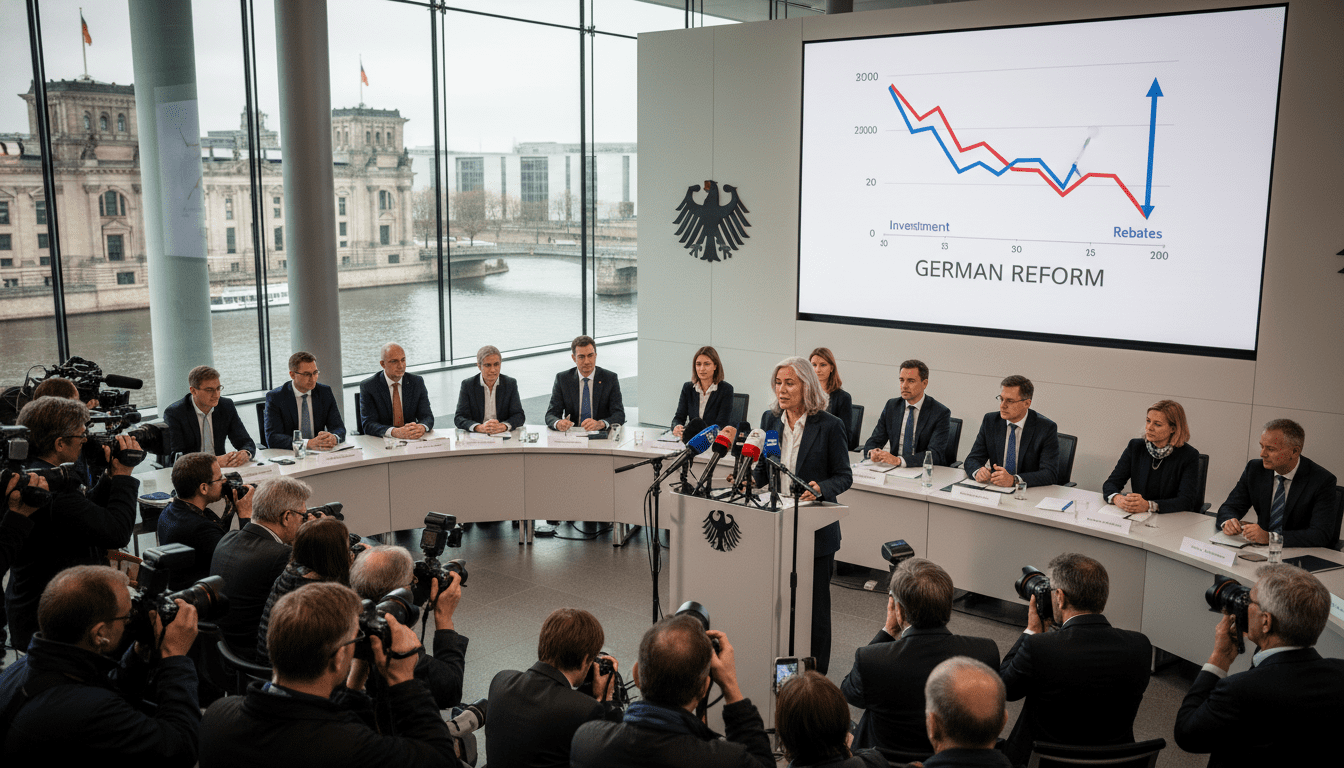
German health insurance reform draws sharp pharma backlash over dynamic manufacturer discount
German health insurance reform sparks pharma alarm as manufacturers warn that dynamic hikes to the manufacturer discount threaten investment, supply and jobs.
Chancellor Merz Promises Clarity After Reform Vote
Federal Chancellor Friedrich Merz said the German health insurance reform will bring clarity to hospitals, doctors, pharmacies, insurers and industry alike, adding that the changes aim to be fair for all stakeholders. The bill sets an annual schedule for publishing adjustments to the manufacturer discount, with new rates due by June 1 each year.
Merz and the government argue the reform is designed to shore up public finances and provide predictable rules for the system, but the timetable for implementing changes has already drawn criticism from manufacturers. Industry leaders say the announced mechanisms do not deliver the long-term certainty that production and research planning require.
Pharma Industry Warns of Investment Flight over Manufacturer Discount
Representatives of the research-based pharmaceutical industry say the planned “dynamization” of the manufacturer discount will remove predictable pricing and undermine long-term investment decisions. Han Steutel, president of the Association of Research-Based Pharmaceutical Manufacturers (VFA), warned that escalating mandatory rebates will make Germany a less attractive location for jobs and innovation.
Industry figures cite the sector’s existing financial contributions to the statutory health insurance system — reported at roughly €29 billion in 2025 — and argue that further compulsory reductions risk shrinking the economic value generated by pharmaceutical activity. Independent analyses presented to policymakers estimate that even modest increases to the discount could have outsized negative effects on overall economic output.
Exemptions for New Drugs Deemed Not Fulfillable by Manufacturers
One contested element of the reform would allow insurers to conclude rebate contracts for patented medicines, with narrow exceptions for drugs that underwent clinical trials in Germany or whose active ingredients are produced domestically. Sanofi Germany’s head, Heidrun Irschik-Hadjieff, described those criteria as practically impossible to meet for internationally organized research and manufacturing networks.
Industry sources say global development pipelines and distributed production make site-based exemptions ineffective in practice, and they predict that many new therapies will still fall under rebate agreements. Manufacturers argue this will limit their ability to price launches in ways that reflect innovation costs and local investment.
Vaccines and Antibiotics at Heightened Supply Risk
The inclusion of vaccines in potential rebate schemes, combined with a standard discount on manufacturer prices, has prompted particular alarm from vaccine producers. Sanofi warned that applying rebate contracts to immunizations, plus a mandatory percentage cut, could discourage companies from holding national reserves and prompt reallocation of supplies to jurisdictions with more favorable terms.
Policy makers and industry representatives point to pandemic-era shortages — when supply relationships favored lower-cost suppliers abroad and contributed to disruptions — as evidence of the risks. Manufacturers caution that once a single product in a therapeutic class becomes the subject of a rebate contract, competitors may withdraw, narrowing supply options and complicating physicians’ ability to substitute products.
New Treatments May Reach Germany Later, Industry Says
Executives also expressed concern about downstream effects on market access for novel medicines, citing trends in which Germany already misses out on some new U.S. approvals. Firms warn that lower reference prices in Germany could influence international pricing negotiations, potentially discouraging manufacturers from launching new drugs here or delaying market entry.
Sanofi highlighted its substantial footprint in Germany — several thousand employees and large-scale investments such as a €1.3 billion insulin production facility — to illustrate the stakes for domestic manufacturing. Boehringer Ingelheim and other major players likewise point to multi-billion-euro annual investments and integrated European networks that depend on predictable national pricing frameworks.
Government Signals Limited Concessions Ahead of Parliamentary Vote
The federal government has offered targeted concessions, including the planned removal of rigid pricing “guardrails” from earlier legislation and a ministry letter indicating possible special rules for companies making significant local investments. Yet industry reactions suggest these measures fall short of addressing core concerns about planning certainty and supply security.
With lawmakers aiming to pass the reform before the summer parliamentary recess, manufacturers say time is short for meaningful adjustments. Company leaders acknowledge that some mitigation may be possible but stress that without clearer guarantees, workforce reductions and relocation of capacity remain realistic risks.
The coming weeks will test whether bargaining between the government and the pharmaceutical sector can produce practical safeguards for research, production and patient supply, or whether firms will alter investment plans in response to the new pricing regime. Uncertainty over manufacturer discounts and rebate contracts now threatens to shape both the pace of new drug introductions in Germany and the resilience of national vaccine and antibiotic stocks.
