
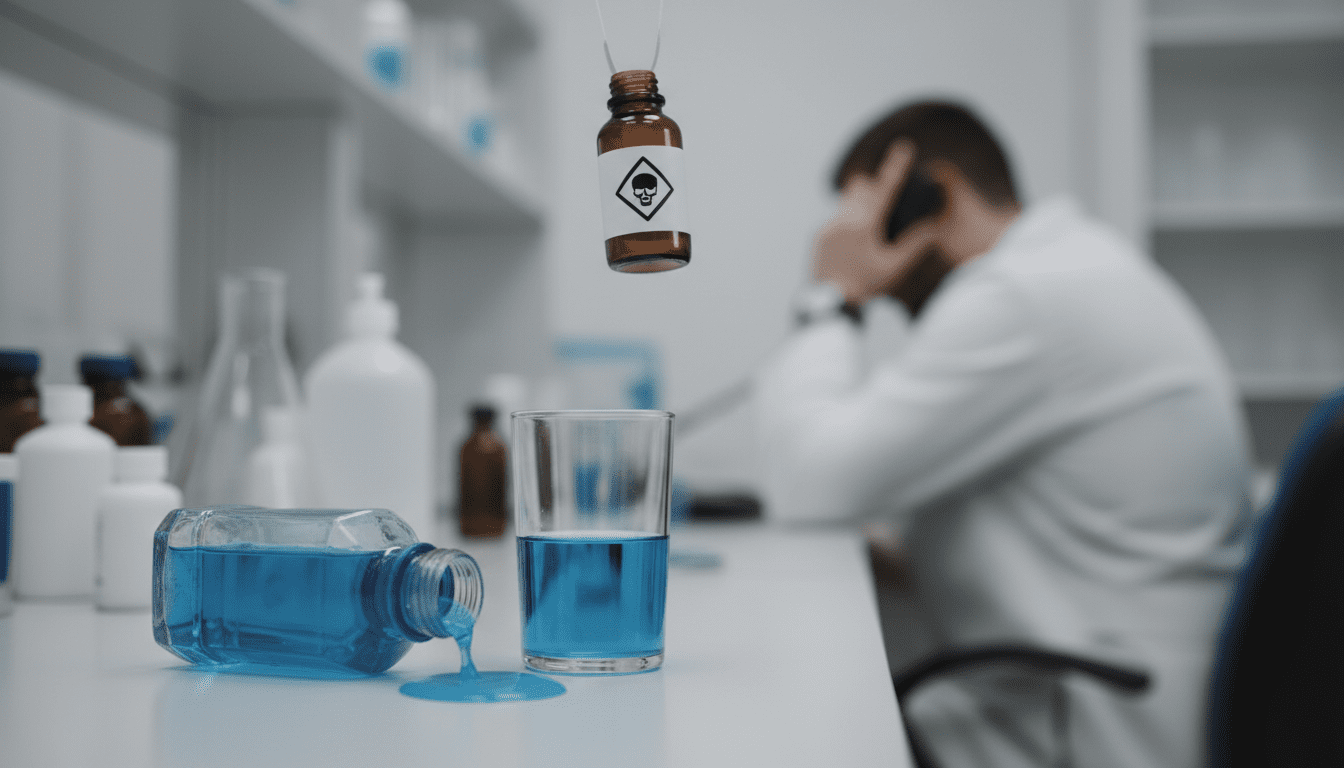
Swallowing Mouthwash Poses Poisoning Risk: Symptoms, Ingredients, and First-Aid
Swallowing mouthwash can cause intoxication and poisoning; learn symptoms, dangerous ingredients, first-aid steps, and when to contact poison control for help.
Swallowing mouthwash is generally harmless when a small amount is ingested accidentally, but larger doses can be toxic and require medical attention. This report explains the health risks tied to swallowing mouthwash, common ingredients that drive toxicity, the symptoms to watch for, and clear steps for immediate response. Health authorities and poison-control experts warn that children and people who consume substantial volumes are at greatest risk. Knowing what to do and when to seek help can prevent avoidable complications.
Health risks and common ingredients
Many over-the-counter mouthwashes contain active antiseptic agents and solvents that are safe when used as directed but harmful if swallowed in quantity. Typical ingredients include chlorhexidine gluconate, cetylpyridinium chloride, fluoride, hydrogen peroxide, methyl salicylate and essential oils; some formulas also contain ethanol at concentrations commonly reported between about 5 percent and 27 percent. Alcohol-containing mouthwashes can cause intoxication if swallowed in large amounts, while concentrated antiseptics and agents like methyl salicylate can produce more severe systemic effects.
The specific danger depends on both the ingredient profile and the volume ingested. Swallowing a teaspoon during routine use is unlikely to cause lasting harm, but multiple swallows or deliberate consumption increases the risk of gastrointestinal irritation, central nervous system depression, and metabolic disturbances. Users should always follow label directions and keep products out of the reach of young children to reduce accidental exposure.
Symptoms of mild and severe ingestion
Early, milder reactions to swallowing mouthwash usually involve digestive upset such as nausea, vomiting and abdominal pain. Drowsiness, slowed breathing, dizziness and a sense of intoxication are also common when alcohol-based products are consumed in larger quantities. These symptoms typically present soon after ingestion and should prompt careful monitoring, particularly if the person becomes increasingly sleepy or unresponsive.
More significant exposures can produce a broader range of clinical signs, including rapid heart rate, low blood pressure, slurred speech, headache, severe dizziness, throat pain, difficulty urinating and prolonged vomiting or diarrhea. In rare or severe cases, metabolic acidosis, seizures, loss of consciousness or coma may occur, especially when toxic agents such as methyl salicylate or concentrated hydrogen peroxide are involved. Timely medical evaluation is critical when any of these more serious symptoms appear.
Children face higher risks from small amounts
Young children are particularly vulnerable because their swallowing reflexes are still developing and their bodies tolerate smaller toxic doses less well than adults. Even modest amounts of alcohol in mouthwash can cause hypoglycemia (low blood sugar), respiratory depression or seizures in toddlers and preschoolers. For that reason, many pediatric guidelines advise against routine mouthwash use in children under six years old.
If a child swallows any amount of mouthwash, caregivers should contact a pediatrician or poison-control center immediately for guidance, even if the child appears well. Medical professionals will consider the child’s age, weight, medical history and the product’s ingredients when recommending monitoring or treatment, and they may advise bringing the child for evaluation to rule out delayed complications.
Immediate steps and at-home precautions
If someone swallows a small amount of mouthwash, rinse their mouth with water right away to dilute residual product and remove lingering taste. Confirm that the person is breathing normally and not choking; do not induce vomiting unless specifically instructed to by a healthcare professional or poison-control expert, because vomiting could increase the risk of aspiration. Keep the person awake and under observation for any developing symptoms for several hours, and avoid driving or operating machinery until they are symptom-free.
Check the product label for ingredient information and estimate the amount swallowed when possible; this information will be useful to clinicians or poison-control staff. Store mouthwash in its original container with child-resistant caps, and place it well out of reach of children to help prevent accidental ingestion. Consider choosing alcohol-free formulas for households with young children if regular mouthwash use is desired.
When to call poison control or seek emergency care
Anyone who swallows a significant amount of mouthwash or who develops symptoms such as persistent vomiting, difficulty breathing, marked drowsiness, fainting, seizures, or changes in heart rate or blood pressure should seek emergency medical care immediately. In the United States the National Poison Control Center can be reached at 1-800-222-1222 for 24/7 guidance; callers outside the U.S. should contact their local poison-center number or emergency services. When you call, be prepared to provide the person’s age and weight, current medications or medical conditions, the product name and ingredients if available, roughly when the exposure occurred and an estimate of how much was swallowed.
Emergency clinicians and poison-control specialists use that information to determine whether observation at home is sufficient or whether decontamination, laboratory testing or hospital treatment is required. Rapid response is especially important if the person shows signs of respiratory compromise, loss of consciousness, seizures or severe cardiovascular instability, because these conditions can deteriorate quickly without prompt intervention.
Public awareness and safe storage can reduce the number of accidental ingestions and the burden on emergency services. Parents, caregivers and users should treat mouthwash like any household medication or chemical: keep it locked or out of sight, read labels carefully, and use only the small, recommended dose before spitting it out.
If you suspect a dangerous ingestion, contact poison-control or emergency services right away and provide the details listed above so professionals can advise the most appropriate next steps.
