
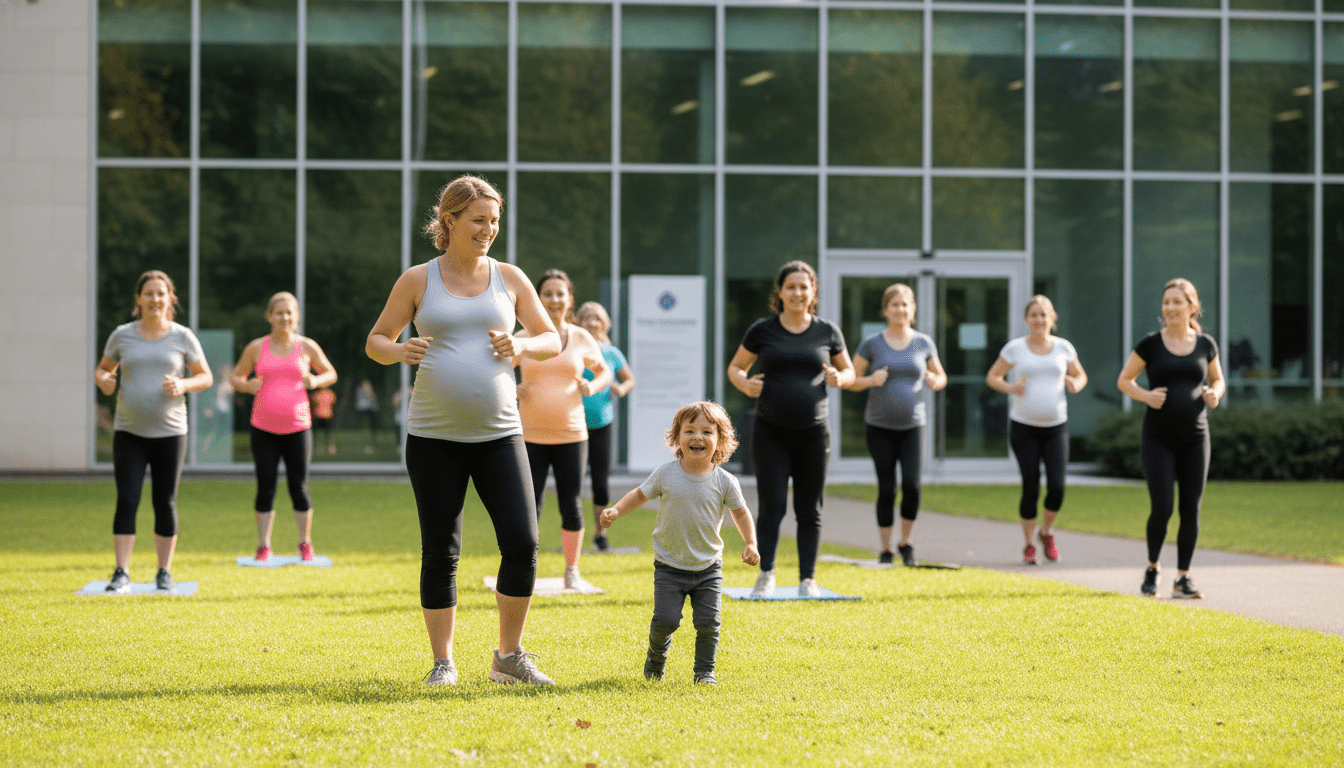
Maternal exercise during pregnancy linked to nearly 50% lower childhood asthma risk, Finnish cohort finds
Maternal exercise during pregnancy three times weekly linked to nearly 50% lower childhood asthma risk, a Finnish cohort study of around 1,000 pairs.
The risk of asthma in children was substantially lower when mothers reported active exercise at least three times a week during pregnancy, according to researchers from the University of Eastern Finland, Kuopio University Hospital and the Finnish Institute for Health and Welfare. The team analyzed data from nearly 1,000 mother-child pairs enrolled in the Kuopio Birth Cohort (KuBiCo) and followed the children until age seven, finding an association between maternal exercise during pregnancy and a reduced incidence of childhood asthma. Lead investigators say the protective effect persisted after accounting for a wide range of maternal, lifestyle and environmental factors.
Key findings from the KuBiCo cohort
The KuBiCo analysis tracked maternal activity levels reported during pregnancy and compared respiratory outcomes in children through early school age. Mothers who exercised actively—defined by the study as engaging in physical activity at least three times per week—had children with nearly half the risk of physician-diagnosed asthma by age seven compared with children of less active mothers. The researchers adjusted for potential confounders including maternal weight, smoking exposure, socioeconomic markers, pet ownership and family medical history, and the association remained statistically robust.
The study’s sample size of close to 1,000 mother-child pairs and the longitudinal follow-up strengthen the evidence linking prenatal activity and later respiratory health. Investigators emphasize that the protective association was not explained by measured lifestyle or environmental differences between active and less active mothers. The lead researcher, Dr Pirkka Kirjavainen, described the magnitude of the effect as “intriguing,” noting its potential relevance for primary prevention of a common childhood disease.
How the team controlled for alternative explanations
Researchers performed multivariable analyses to isolate the relationship between maternal exercise during pregnancy and asthma risk in offspring. Variables incorporated in the models included maternal pre-pregnancy body mass index, reported stress and illness during pregnancy, parental smoking, household pets, dietary patterns and reported family exercise habits. Sensitivity analyses tested whether these factors could account for the observed reduction in asthma but found they did not materially change the association.
Doctoral researcher Emma-Reetta Musakka and colleagues underline that accounting for these factors strengthens the case for an independent effect of maternal physical activity. The investigators acknowledge the possibility of unmeasured confounding but argue that the consistency across adjusted models supports a direct link worth further study. The analysis did not find evidence that increasing exercise frequency beyond the three-times-per-week threshold provided additional protection.
Biological pathways that may explain the effect
The study authors discuss plausible mechanisms connecting maternal exercise and fetal lung development that could reduce later asthma risk. Maternal physical activity is known to influence fetal movement patterns and breathing motions in utero, processes that contribute to lung growth and maturation. Improved fetal lung maturation could, in turn, establish more resilient airway structure or immune responses after birth.
Researchers also consider maternal systemic effects—such as reduced inflammation, improved metabolic regulation and altered placental function—as potential mediators. While the precise biological pathways remain unproven, the team highlights fetal lung development as a leading hypothesis that could be tested in experimental and mechanistic studies going forward.
Public-health implications and guidance
Asthma is the most common chronic disease in childhood, and even modest population-level reductions in incidence carry substantial health and cost benefits. The KuBiCo findings suggest that moderate maternal activity may offer a preventative strategy alongside established measures such as smoking avoidance during pregnancy. Study authors note that the observed protective effect was comparable in magnitude to the benefit seen when a parent quits smoking, underscoring potential policy relevance.
Current World Health Organization guidance recommends about 2.5 hours of moderate-intensity exercise per week for pregnant women, and the study’s signal at a three-times-weekly minimum aligns with those international recommendations. Investigators caution against interpreting the results as an endorsement of high-intensity or excessive exercise during pregnancy and advise expectant mothers to consult their healthcare providers before changing activity patterns.
Next steps for research and clinical practice
The authors call for additional studies to clarify dose–response relationships, the role of exercise intensity, timing during pregnancy and the biological mechanisms at play. Randomized trials and mechanistic research could help determine causality and refine practical recommendations for prenatal care. Researchers also recommend examining diverse populations to confirm generalizability beyond the Finnish cohort and to explore interactions with genetic and environmental risk factors.
Clinicians and public-health officials may consider these findings when advising pregnant patients, balancing potential long-term benefits for child respiratory health with individualized assessment of maternal health status and pregnancy risks. The investigators emphasize measured optimism: the results are promising but not yet definitive proof that exercise during pregnancy will prevent asthma at the individual level.
This study adds to a growing body of evidence that maternal behaviors during pregnancy can have lasting effects on child health, and it highlights maternal exercise during pregnancy as a candidate intervention for reducing childhood asthma risk.
